
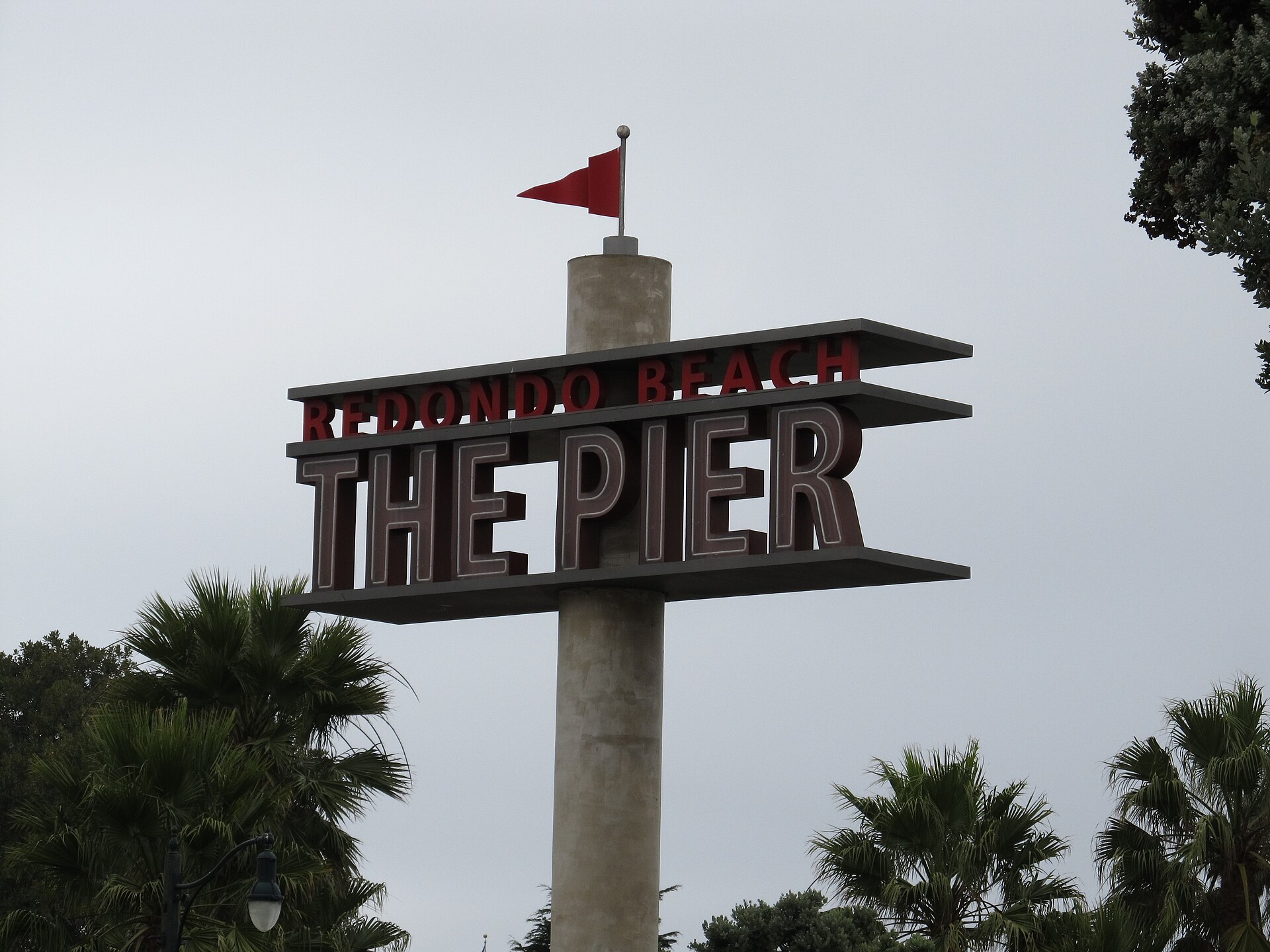
The Redondo Beach Pier does not run straight out to sea like most piers in Los Angeles. It loops: a broad concrete horseshoe that leaves the shore at the foot of Torrance Boulevard, curves over the water and comes back, with a fish market, seafood restaurants, bars and gift shops along the way and the boats of King Harbor tied up just to the north. It is the busiest stretch of waterfront in the South Bay and a short drive south of LAX, which makes it an easy first or last stop on a trip to Los Angeles.
This 2027 guide covers the pier’s long history of storms and rebuilding, what is on it now, King Harbor and its boat trips, the Seaside Lagoon, the beach and The Strand bike path, parking, and how the pier compares with its neighbor in Manhattan Beach. Tenants, boat schedules and parking rates below come from the pier’s and operators’ own websites as of November 2026; they change, so check before you go.
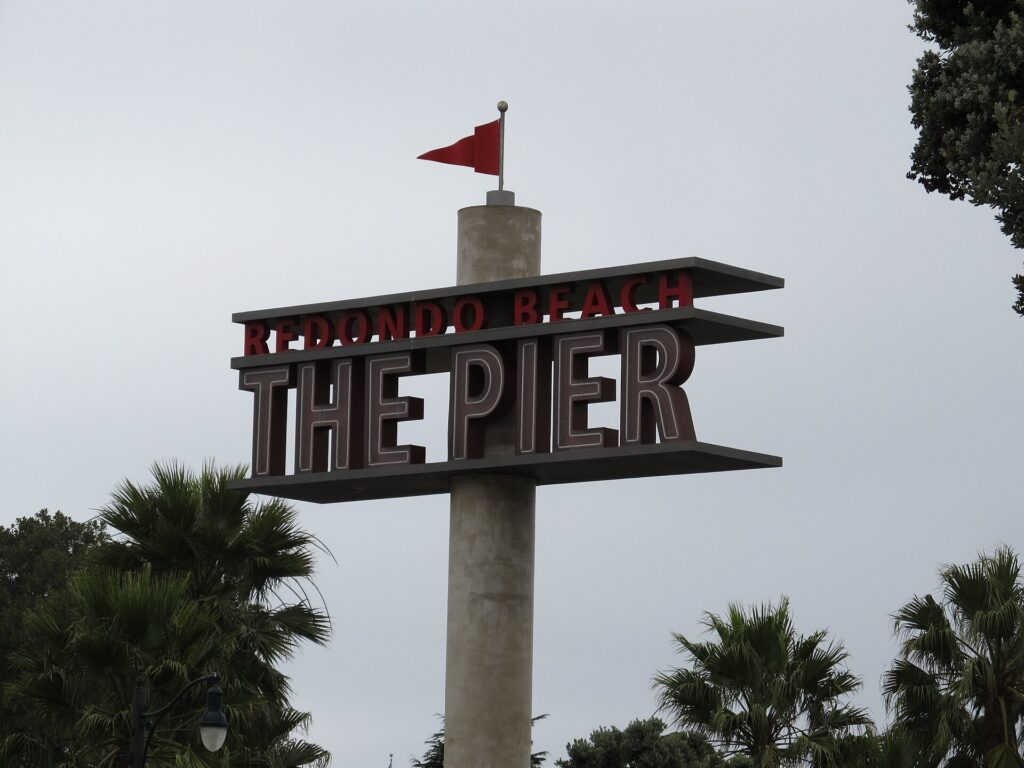
Redondo Beach Pier history: seven piers in one spot
Redondo Beach was a working port before it was a beach town. The first wharf, built around 1889, was used to move Pacific Northwest lumber from ships onto trains, and two more wharves followed by 1903. The grand Hotel Redondo opened above the shore in 1890 and was torn down in 1925. In 1907 Henry E. Huntington brought the Hawaiian surfer George Freeth to Redondo to give surfing demonstrations; Freeth is credited with introducing surfing to California and with founding the lifeguard association.
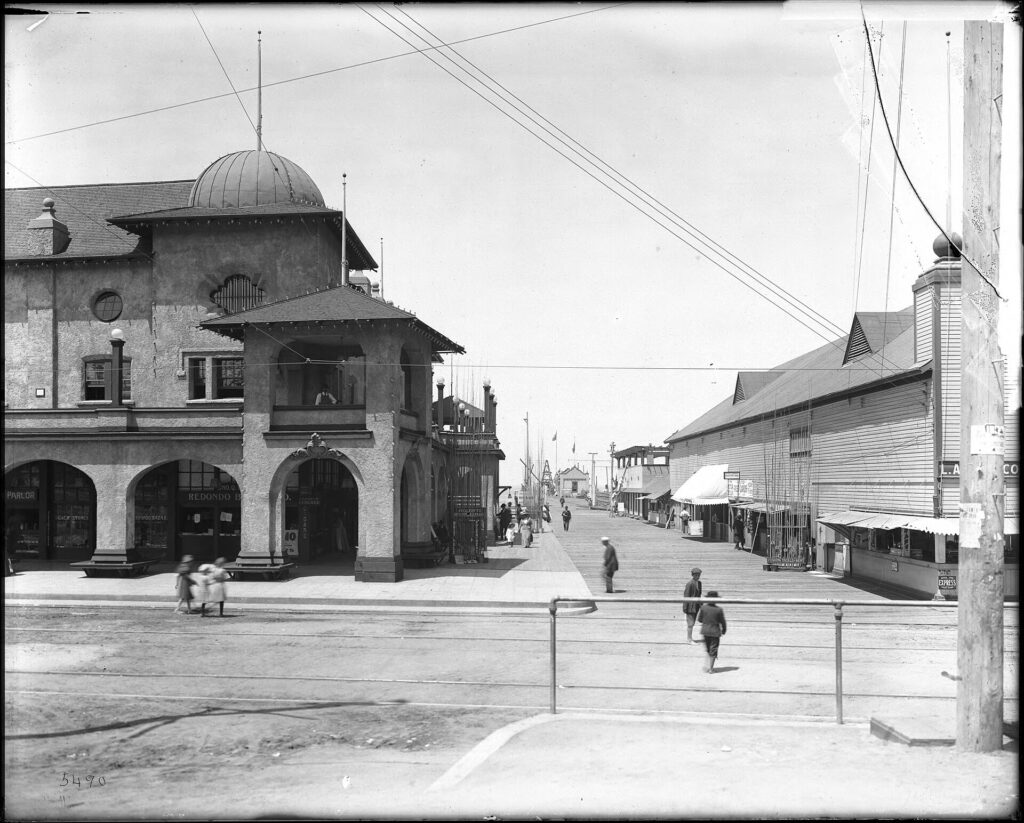
Storms kept knocking the piers down. Big damage is recorded in 1915, 1919 and 1925. A reinforced-concrete “Endless Pier” with two legs in a V shape opened in 1916 and was condemned in 1928. Its wooden replacement, the Horseshoe Pier of 1929, gave the waterfront the looped shape it still has today. Captain Hans C. Monstad’s straight wooden pier, built in 1925, was joined to the horseshoe in 1983, and part of it still connects to the current pier.
The 1988 storms and fire
The winter of 1988 brought two severe storms that battered the old wooden pier. Then, on May 27, 1988, an electrical short circuit started a fire that burned much of the horseshoe down to the waterline. The southern section stayed open, but the rest of the pier stayed closed until 1995.
The city held a ceremony to launch reconstruction in July 1993, and the new pier opened on February 11, 1995. This time it was built in concrete: about 70,000 square feet of deck standing 25 feet above the water on 202 concrete piles. The pier’s own history page calls it the seventh generation of pier in Redondo and the largest “endless” pier on the California coast.
Redevelopment disputes
The waterfront has been argued over for decades. In the 2010s the city pursued a large private redevelopment of the pier and harbor area; as part of that plan it bought out the lease of the Fun Factory, the arcade on the International Boardwalk, for about $9 million in 2017. The arcade closed in October 2019 after nearly 50 years, and the 525,000-square-foot mall project at the heart of the plan was later blocked. So do not come looking for a big arcade: the old one is gone and no replacement appears in the pier’s current business directory. Tenants change often, so check the pier’s online directory before you go.
What’s on the Redondo Beach Pier now
The pier is open 24 hours a day for walkers, anglers and customers; shop and restaurant hours vary. The pier’s official directory listed more than 50 businesses in November 2026, from seafood counters and Mexican restaurants to candy, churros, jewelry and souvenir shops. These are the best-known stops.
Quality Seafood
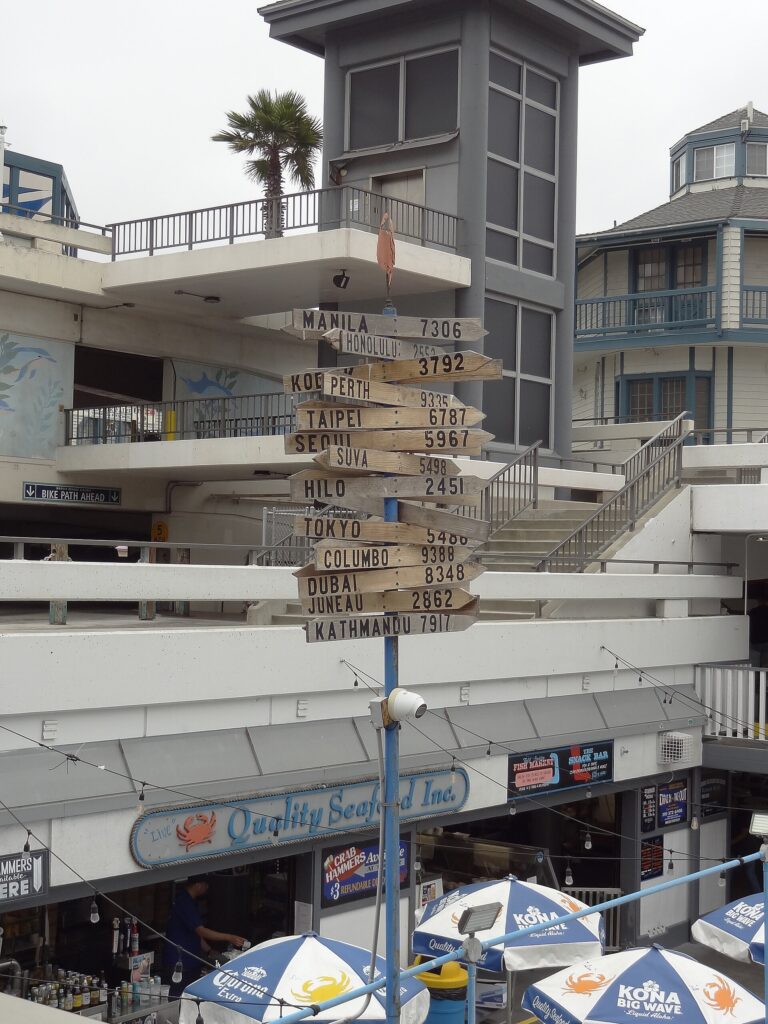
The pier’s best-known food stop is a seafood market, not a restaurant. Quality Seafood (130 International Boardwalk) has been run by the same family since 1953. It is a two-level market full of tanks: you choose live crab, lobster, shellfish or fish at the counter and it is cooked to order, while oysters are shucked in front of you. Time Out suggests ordering the harder-to-find items, such as purple sea urchin, live blue crab and locally caught rock cod. Food comes on trays, and you eat at the nearby tables or take it down to the beach.
Tony’s on the Pier
Tony’s on the Pier (210 Fishermans Wharf), also known as Old Tony’s, was opened in 1952 by Tony Trutanich Sr., a World War II veteran and commercial fisherman, and is now run by his son. Locals know it for its strong Mai Tais, served with a souvenir glass, and for its old-school nautical décor. The upstairs bar sits right over the beach, which makes it a good place for a drink at sunset even if you eat elsewhere.
Other restaurants and bars
- Kincaid’s (500 Fisherman’s Wharf): a fish, chop and steak house at the north end of the pier, the place for a sit-down dinner with a view.
- Pacific Fish Center & Restaurant and Redondo Beach Crab House: more seafood options, both in the current pier directory.
- El Torito, CalMex Cantina and El Cinco de Mayo: Mexican food and margaritas.
- The Slip Bar & Eatery, R10 Social House and Deep End Live: bars and a live-music venue for the evening.
- Pier Bakery & Churros, Boardwalk Candy and International Ice Cream: snacks for the walk.
Fishing and pier rules
You can fish from the pier without a license, because California allows free public fishing from pier structures. Fishing is only allowed in signed areas, mainly the southwest section, and Redondo Bait & Tackle on the pier sells gear and bait. A few other rules visitors often miss: dogs are not allowed on the pier, bikes must be walked (racks are available), and swimming inside the horseshoe is not permitted because there is no lifeguard there.
King Harbor: the marina next to the pier
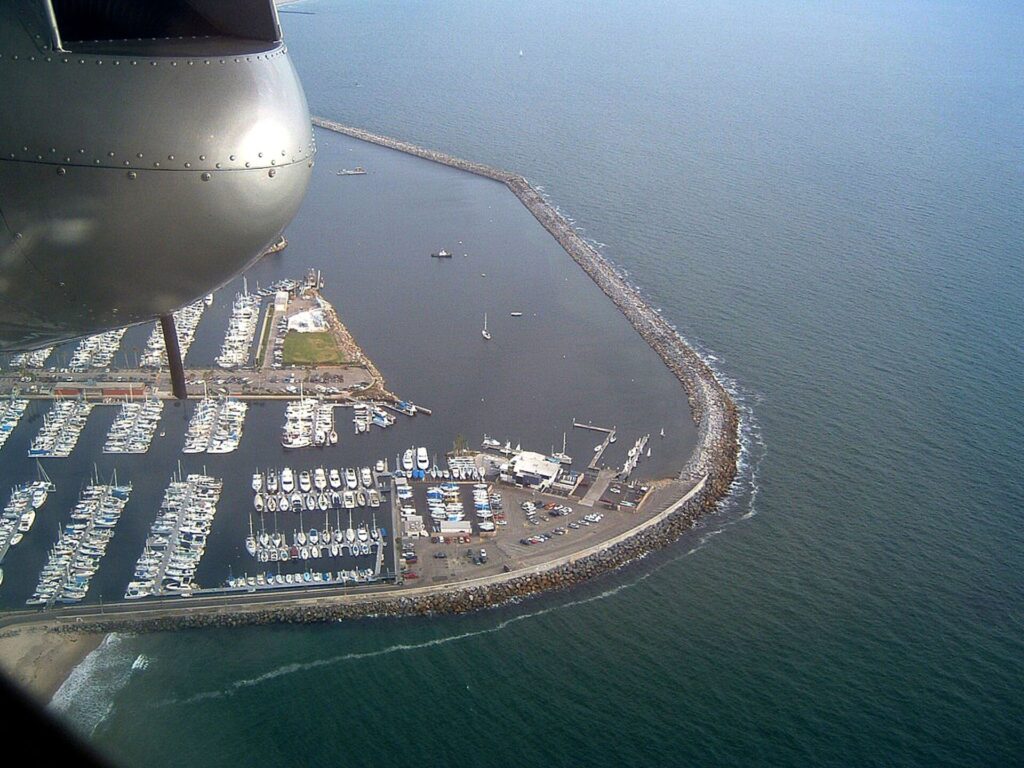
Just north of the pier, a long rock breakwater shelters King Harbor, a small-craft harbor at the southern end of Santa Monica Bay. The first piece of it was an L-shaped breakwater about 2,300 feet long, built in 1939 with Public Works Administration money from rock barged over from Catalina Island. The harbor was extended in the 1950s, when Congress authorized completion of the breakwater with the backing of Congressman Cecil R. King, for whom the harbor is named. Boat slips opened in the early 1960s, and the harbor was formally dedicated in 1966.
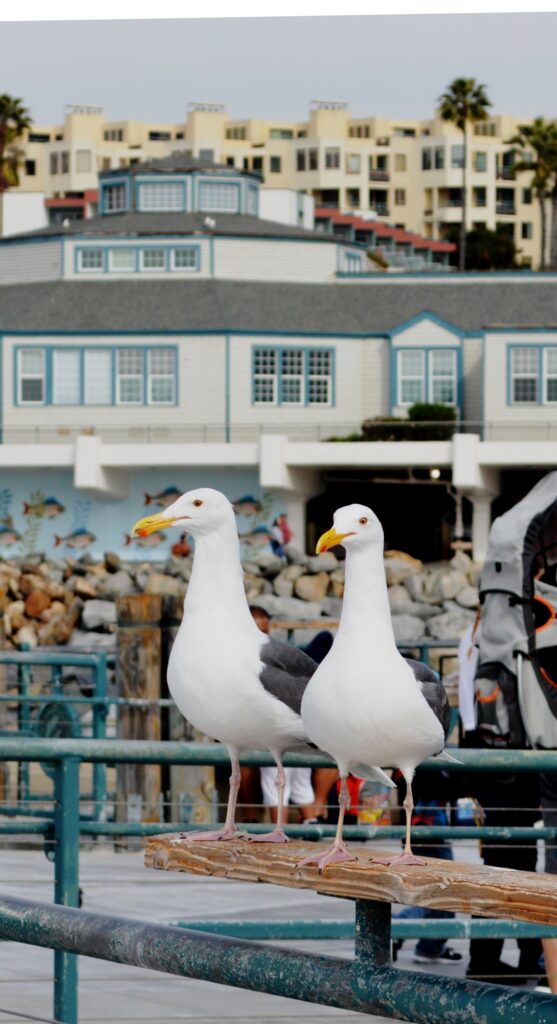
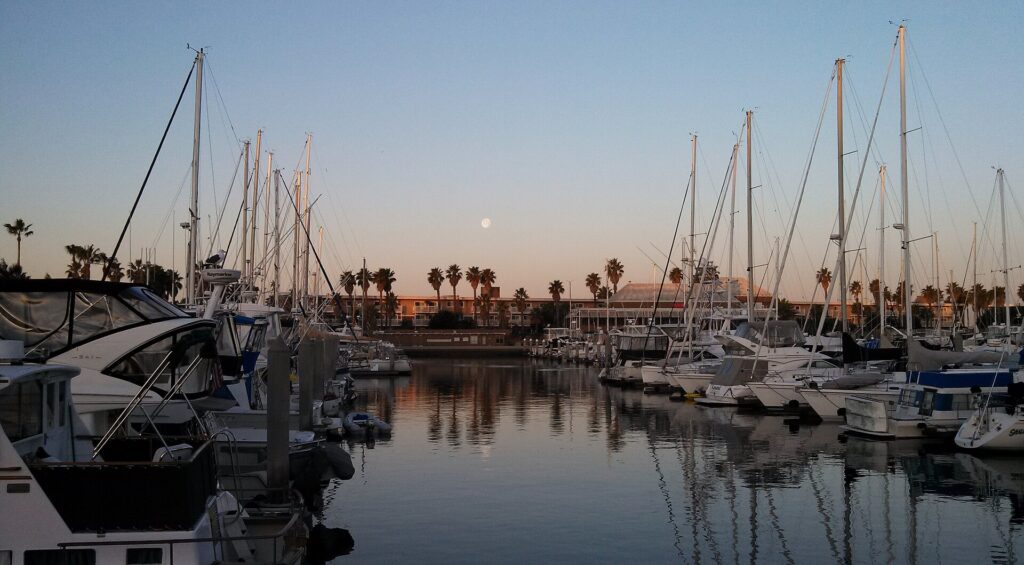
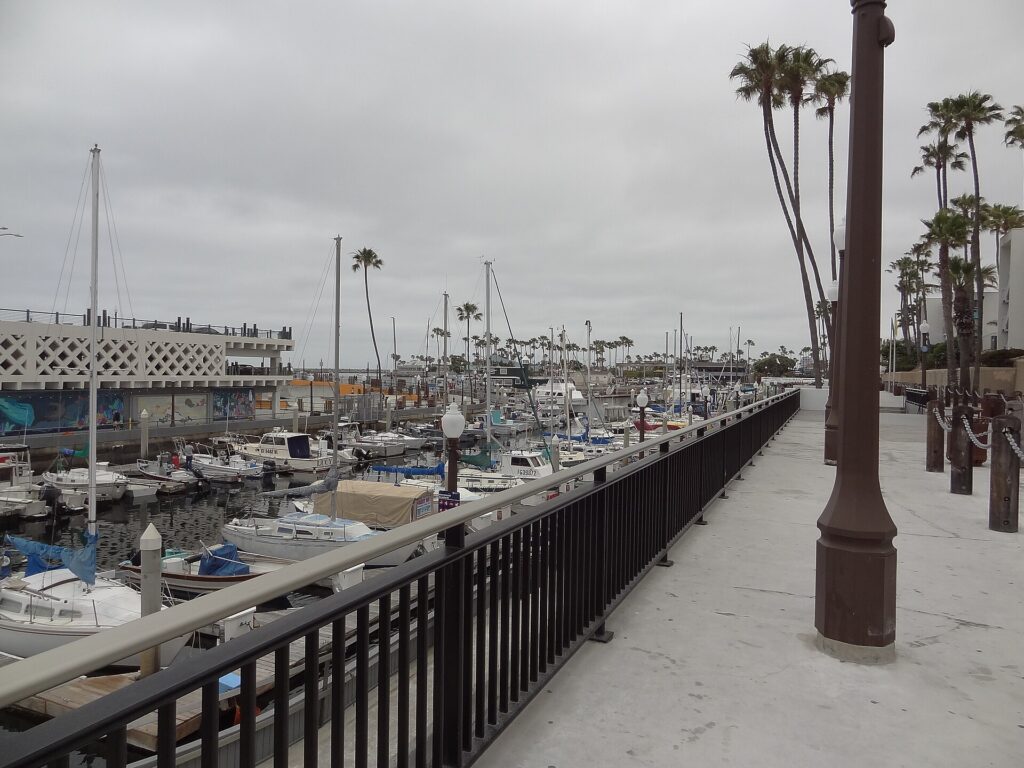
Today the harbor is lined with marinas, restaurants and hotels. A walk along the marina from the north end of the pier is one of the calmest things to do here: sailboats and fishing boats at the docks and gulls on the railings. California sea lions are often seen in King Harbor, hauled out on floats or swimming between the boats; give them space, since they are wild animals.
Whale watching and boat trips from the pier
Redondo Beach Whale Watch runs out of 140 International Boardwalk at the pier, sharing a fleet with Redondo Beach Sportfishing. Its trips include gray whale and dolphin cruises with an onboard naturalist, shorter daily coastal cruises, and private charters. The El Rey is its larger whale-watching boat; the Vámonos is a rigid-inflatable boat for small groups. The operator posts departure times on its reservation site, which changes with the season, and does not list fares on its homepage, so check the booking page for current prices.
The best months for whales are winter and early spring. According to LAist, whale-watching season off Los Angeles typically runs from December through May and peaks from January to March, when gray whales migrating between Alaska and Baja California pass close to the coast.
Redondo Beach Sportfishing also runs half-day trips on local waters, a good fit for families and first-time anglers, plus full-day trips to the islands. For a short look at the harbor itself, the Redondo Beach Glass Bottom Boat is listed in the pier’s directory. Boat trips depend on weather and sea conditions, so confirm with the operator on the day.
Seaside Lagoon
In King Harbor, just north of the pier, the city-run Seaside Lagoon (200 Portofino Way) is a fenced saltwater swimming lagoon holding about 1.5 million gallons of water drawn from the harbor side of the breakwater, with a small water slide and reservable picnic areas. It is a summer-only attraction: in November 2026 the city’s page showed it closed for the season. The lagoon is about 85 years old, and in 2026 the City Council approved and voted to pursue a rehabilitation funded by a $10 million state grant, with plans for a new entry, cabanas, restrooms and showers, fire pits, volleyball courts and a playground. Check the city’s page in spring for the next season’s dates.
The beach and The Strand bike path
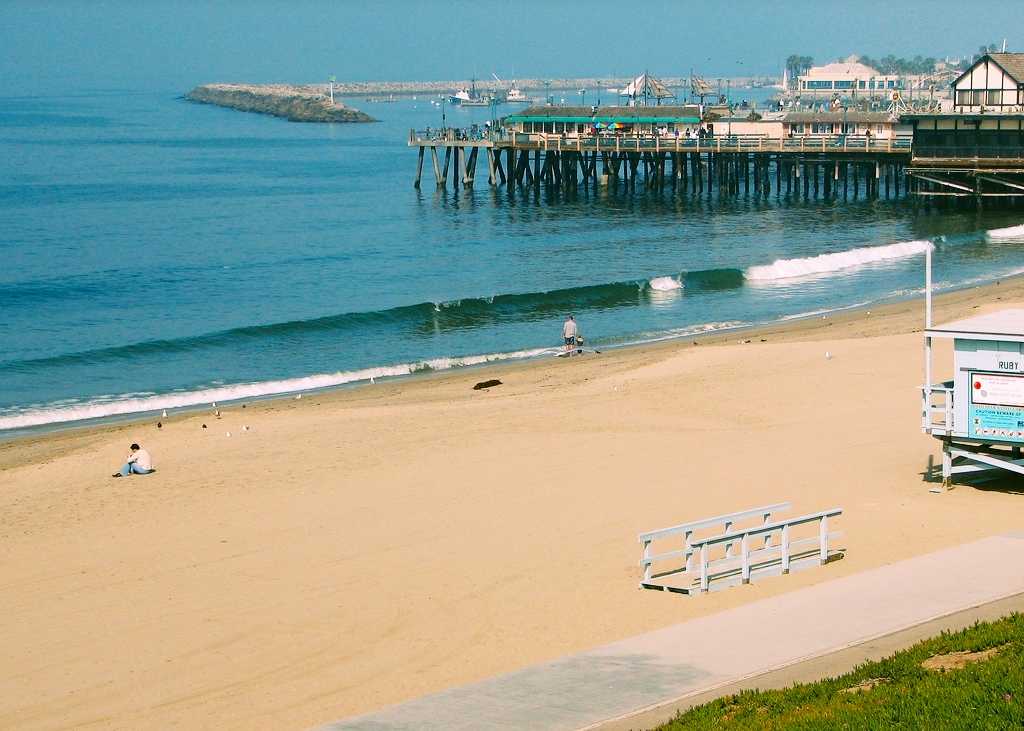
Redondo Beach itself starts at the south side of the pier and runs for more than a mile and a half south to Torrance Beach. It has lifeguards during daylight hours, volleyball nets, showers, restrooms and beach wheelchairs. If you want to swim, this lifeguarded beach just south of the pier is where to do it.
The Marvin Braude Bike Trail, which most people call The Strand, passes right through the pier area. The paved path runs 22 miles along the coast from Will Rogers State Beach in Pacific Palisades to Torrance Beach. Heading north from Redondo, it is a flat, easy ride or walk to the Hermosa Beach Pier and on to the Manhattan Beach Pier. Around King Harbor the path leaves the sand: Discover Los Angeles describes it joining a green bike lane, separated from traffic, on the harbor road and then running through the International Boardwalk, Fisherman’s Wharf and the pier, which gets crowded on weekends. South of the pier, the last stretch to Torrance Beach is about two miles. Beach E-Biking on the pier and several rental shops along The Strand rent bikes.
Redondo Beach Pier vs. Manhattan Beach Pier
The two piers are a short ride apart on The Strand but feel quite different. The Manhattan Beach Pier is a straight, simple concrete pier from 1920, about 922 feet long, with the small, free Roundhouse Aquarium at its tip, volleyball courts on the sand beside it and a walkable downtown up the hill. It is quieter and more about the view.
Redondo is busier and more of a waterfront: the horseshoe deck, live seafood, bars, fishing, a working harbor with boat trips and whale watching, and sea lions in the marina. Choose Manhattan Beach for a stroll and a nice lunch in town; choose Redondo if you want to eat crab with your hands, get out on the water, or watch the boats come in. With a couple of hours you can do both, and then continue north along the coast to the Santa Monica Pier or the Malibu Pier. Our guide to Los Angeles beaches covers the rest of the coastline.
Parking and getting there
Pier parking structures
The pier sits at the end of Torrance Boulevard, west of Pacific Coast Highway. Its address is 100–500 Fisherman’s Wharf, Redondo Beach, CA 90277. According to the pier’s official site, the parking options are:
- Pier parking structure, north: at 100–500 Fisherman’s Wharf, $2.25 per hour, 24 hours a day, every day, with elevators, restrooms and accessible parking.
- Pier parking structure, south: on N. Harbor Drive at Pacific Avenue, same $2.25 hourly rate.
- Redondo Beach Marina lot: 181 N. Harbor Drive, $2.25 per hour, closest for the harbor and boat trips.
- Metered street parking on Catalina Avenue and N. Harbor Drive.
From LAX and by public transit
The pier is a short drive south of LAX, so it pairs well with an arrival or departure day; our list of things to do near LAX has more ideas nearby. Without a car, Beach Cities Transit route 102 stops at the pier. The Metro C Line’s Redondo Beach station is inland, so you would still need a bus or a ride to reach the water.
If you would rather not drive and park at all, our private SUV tour and our classic car tour in a 1970 Cadillac DeVille convertible both start with hotel pickup.
Tips for visiting
- Go late afternoon. The pier looks out over the Pacific, and the bars above the beach are at their best around sunset.
- Visit on a weekday if you can. Weekends bring crowds to the boardwalk, the bike path and the seafood counters.
- Check boat schedules ahead in whale season. January to March is the peak, and departures depend on weather and sea conditions.
- Plan around your dog. Dogs are not allowed on the pier itself; the pier’s site suggests the Redondo Beach Dog Park instead.
Redondo Beach Pier: FAQ
Why is the Redondo Beach Pier shaped like a horseshoe?
The looped design dates to the wooden Horseshoe Pier of 1929, which replaced an earlier V-shaped concrete pier. After a fire destroyed much of the wooden pier in May 1988, the city rebuilt it in concrete in the same general shape, and the new pier opened on February 11, 1995.
How much is parking at the Redondo Beach Pier?
The pier’s north and south parking structures and the Redondo Beach Marina lot all charged $2.25 per hour, 24 hours a day, as of November 2026, according to the pier’s official site. Metered street parking is also available on Catalina Avenue and N. Harbor Drive.
When can you go whale watching from Redondo Beach?
Whale-watching season off Los Angeles typically runs from December through May and peaks from January to March, during the gray whale migration. Redondo Beach Whale Watch departs from 140 International Boardwalk at the pier; check its reservation site for current departure times and fares.
Do you need a fishing license on the Redondo Beach Pier?
No. California allows free public fishing from pier structures, so no license is needed on the pier. Fishing is allowed only in the signed areas, mainly the southwest section.