
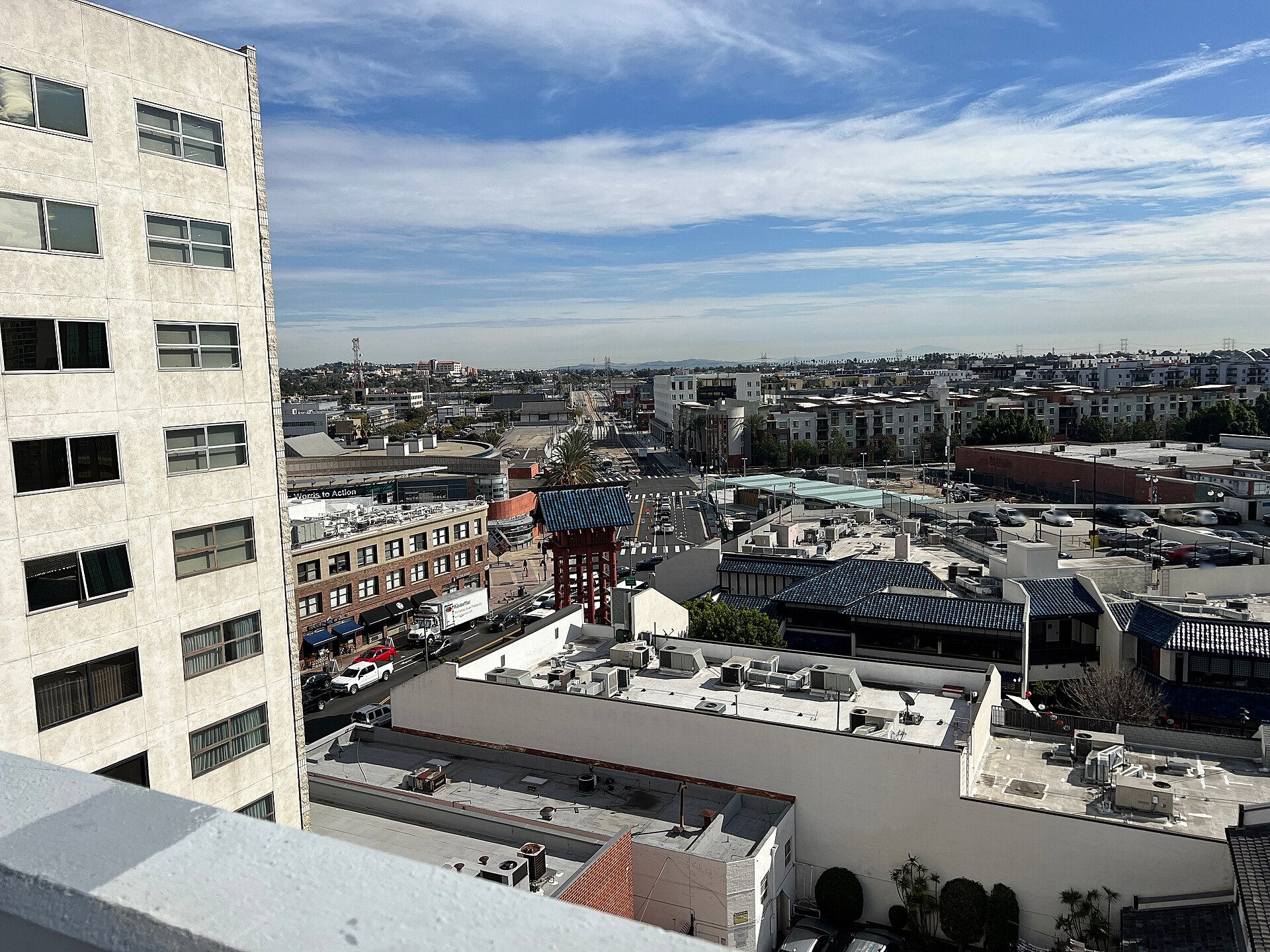
Little Tokyo, Los Angeles is one of the oldest Japanese American neighborhoods in the United States, and it sits a short walk from City Hall. In a few compact blocks you will find a 1925 Buddhist temple turned museum, a garden with a 170-foot stream, mochi made by the same family since 1903, and some of the city’s best-known ramen and udon counters. This guide covers the history, the sights worth your time in 2027, where to eat, the yearly festivals, and the practical side: trains, parking and how to combine Little Tokyo with the Arts District next door.
Hours, prices and exhibitions change, and several Little Tokyo landmarks have been under renovation or construction in 2025 and 2026, so please check each venue’s own website before you go.
A Short History of Little Tokyo
According to the National Park Service, the area that became Little Tokyo was first settled in 1885, when Hamanosuke “Charles Hama” Shigeta opened the Kame Restaurant on First Street. Japanese immigrants kept arriving through the early 1900s, and by 1942 the community had grown to more than 35,000 people, with its own temples, churches, newspapers, hotels and shops.
That world was emptied almost overnight in 1942. Executive Order 9066 forced more than 120,000 Japanese Americans and people of Japanese descent from the West Coast into camps. The Japanese Union Church on today’s Judge John Aiso Street was used as a “Civil Control Station” where residents were processed for removal, and the temple that now holds the Japanese American National Museum was used the same way. During the war years the neighborhood became Bronzeville, a predominantly Black community, and the Mikado Hotel on First Street operated as the Shreveport Hotel.
Families returned after the war and rebuilt. The neighborhood’s oldest business, Fugetsu-Do, is one example: the Kito family was incarcerated at Heart Mountain in Wyoming and came back to reopen the shop. From the mid-1980s, community groups such as the Little Tokyo Service Center pushed for revitalization while protecting what was left of the historic core.
The National Historic Landmark District
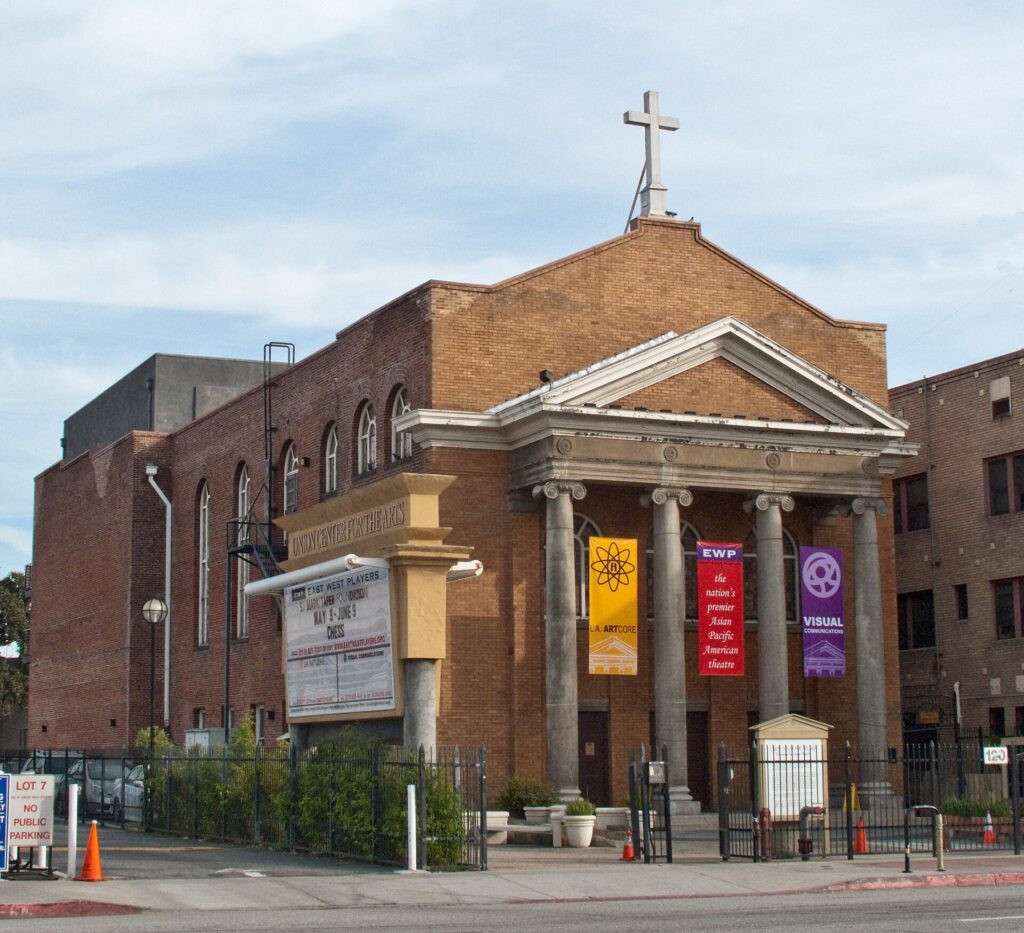
Little Tokyo was listed on the National Register of Historic Places in 1986 and designated a National Historic Landmark District in 1995. The district preserves two blocks of the pre-war commercial heart of the neighborhood, 13 buildings of one to four stories, anchored at one end by the Union Church and at the other by the old Hompa Hongwanji temple. Walking that stretch slowly is the best free history lesson in downtown Los Angeles. Look for:
- Japanese Union Church (1923), a Classical Revival church that now houses the Union Center for the Arts and East West Players’ David Henry Hwang Theater.
- The Art Deco building at 309-313 E. First St. (1933), the only building in the district that stayed Japanese American-owned through the war. It was held by the owner’s American-born daughters because Alien Land Laws barred their father from owning property.
- The Far East Building (remodeled 1935), home of the Far East Cafe, which stayed open during the war because its owners were Chinese American.
- The former Hompa Hongwanji temple (1925) at First and Central, now the Japanese American National Museum’s Historic Building. Its entrance canopy echoes the imperial gateway of the mother temple in Kyoto.
Top Sights in Little Tokyo
Japanese American National Museum (reopens January 23, 2027)
The Japanese American National Museum (JANM) at 100 N. Central Avenue is the anchor of Little Tokyo and the best place to understand the incarceration years. Its campus combines the 1925 former Nishi Hongwanji Buddhist Temple, the first Buddhist temple building in Los Angeles and a city Historic-Cultural Monument, with the modern glass Pavilion designed by architect Gyo Obata.
The JANM Pavilion has been closed for renovation, and the museum announces that it reopens on January 23, 2027. From reopening, the museum lists hours of Tuesday to Sunday, 11 a.m. to 5 p.m., with Fridays open until 8 p.m.; it is closed Mondays. Listed admission is $20 for adults, $15 for seniors 62+, $12 for college students and youth 6-18, and free for children 5 and under. Entry is free on Fridays after 5 p.m. and on the first Friday of each month. If you are planning a museum-heavy trip, our Los Angeles museum guide covers the other big collections in the city.
Go For Broke Monument
A short walk north of the museum on Central Avenue, the Go For Broke Monument honors Japanese American soldiers of World War II, many of whom enlisted while their families were held in camps. Dedicated on June 5, 1999, the curved black granite wall is engraved with the names of more than 16,000 Japanese American men and women who served, including members of the 100th Infantry Battalion, the 442nd Regimental Combat Team and the Military Intelligence Service.
The monument is free, but the Go For Broke National Education Center says it is open only during limited hours because of temporary construction next to the site. The center’s Defining Courage exhibition at 355 E. First Street is open Friday afternoons and Saturday and Sunday (general admission $10). Check goforbroke.org for current access before you plan around it.
Japanese Village Plaza
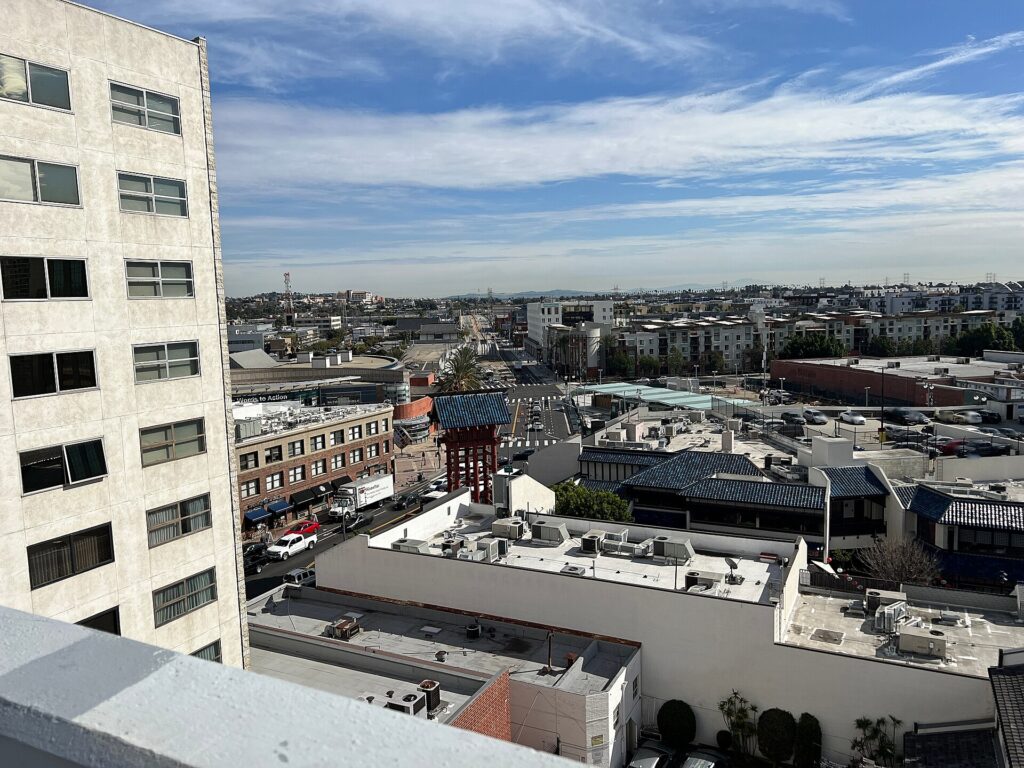
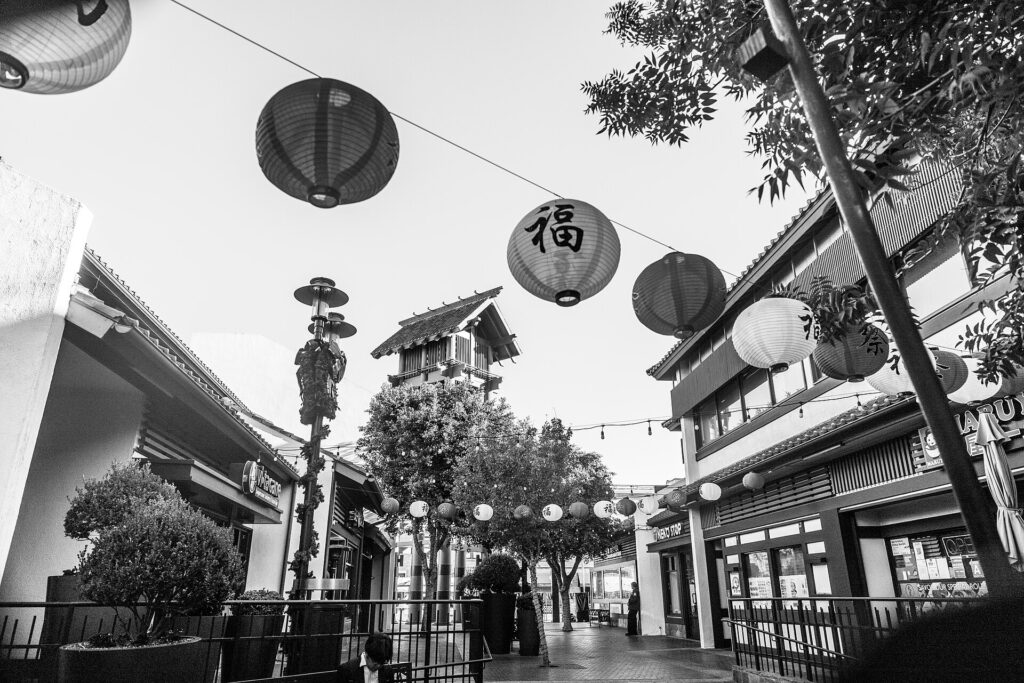
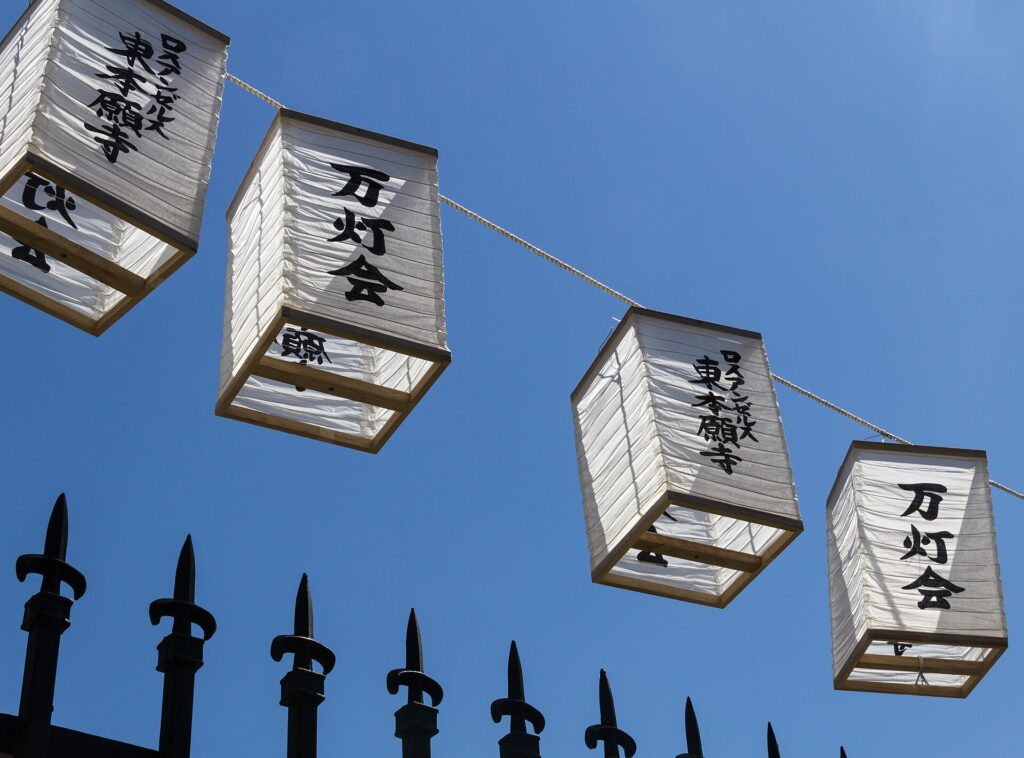
The pedestrian lane of Japanese Village Plaza runs between First and Second Streets and is the part of Little Tokyo most visitors picture: tiled roofs, paper lanterns strung overhead, and small shops selling snacks, character goods and Japanese groceries. The plaza opened in 1978 as part of the effort to revive the area, and its red yagura, a replica of a traditional Japanese fire-lookout tower, stands at the First Street entrance. It is the neighborhood’s best-known landmark and an easy meeting point.
JACCC and the James Irvine Japanese Garden
The Japanese American Cultural & Community Center (JACCC) at 244 S. San Pedro Street is the neighborhood’s cultural hub. Its large brick plaza was designed by sculptor Isamu Noguchi, and the complex includes the Aratani Theatre, which hosts dance, music and theater through the year.
Tucked behind the center building is the James Irvine Japanese Garden, known in Japanese as Seiryu-en, the “Garden of the Clear Stream.” Designed by landscape architect Takeo Uesugi and completed in 1980 to mark the centennial of Japanese in the United States, it follows a 170-foot stream meant to symbolize the journey of Japanese American generations. The garden is often used for events and is open to the public on many festival days; JACCC does not post regular daily hours, so call (213) 628-2725 or check jaccc.org before making a special trip.
Higashi Honganji Buddhist Temple
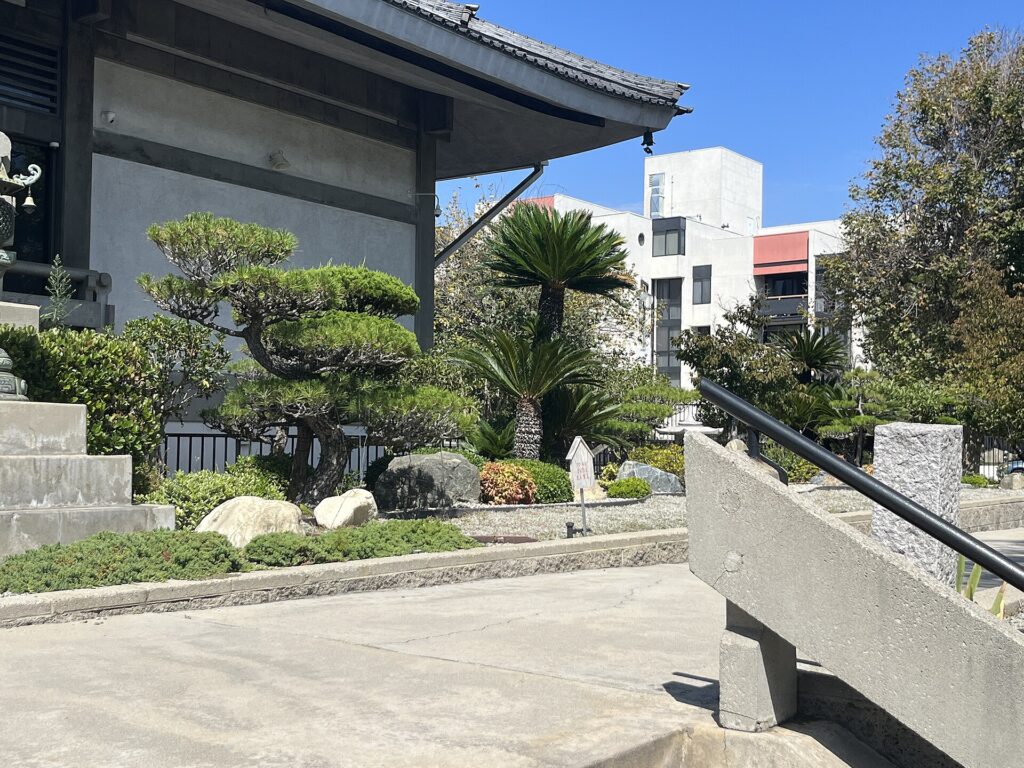
At 505 E. Third Street, Higashi Honganji Buddhist Temple belongs to one of the oldest Buddhist congregations in Los Angeles; the congregation traces its roots to 1904, and the present temple building dates from 1976. The tiled roof and the small pine garden by the steps make it one of the most photogenic corners of the neighborhood. It is an active temple, so visit respectfully, and be aware that interior access depends on services and events.
The Geffen Contemporary at MOCA
On the edge of Little Tokyo, at 152 N. Central Avenue, a former warehouse holds The Geffen Contemporary at MOCA, the Museum of Contemporary Art’s space for large-scale installations. In late 2026 MOCA’s visitor page lists the Geffen as temporarily closed between exhibitions, while MOCA Grand Avenue on Bunker Hill remains the main venue. Check moca.org for what is on before you go.
Shopping: Kinokuniya and More
Book and manga lovers should note a big change: Kinokuniya left its long-time Weller Court store in 2025 and opened a new, much larger Little Tokyo flagship in 2026 on the ground floor of the Kajima Building at 101 S. San Pedro Street, at the corner of First Street. Combined with the shops in Japanese Village Plaza, it makes Little Tokyo the best place in central LA for Japanese books, stationery and gifts.
Where to Eat in Little Tokyo
Little Tokyo is a food neighborhood first. Lines form at lunch and dinner on weekends, so arriving early or mid-afternoon helps. These long-standing places are a good start; for the wider city, see our guide to the best restaurants in Los Angeles.
- Fugetsu-Do (315 E. First St.): a family-run Japanese confectionery making mochi and manju since 1903, and the oldest business in Little Tokyo. Seasonal flavors rotate through the year, and a box of mochi is a classic gift to take home.
- Marugame Monzo (329 E. First St.): udon noodles made by hand in an open kitchen. It is listed in the 2026 MICHELIN Guide, which singles out the miso mushroom udon and the uni and miso “carbonara.” Put your name down early, especially on weekends.
- Daikokuya (327 E. First St.): a small, no-reservations ramen shop that has been one of Little Tokyo’s busiest counters for years; expect a line at peak times. Its Daikokuya Annex a few doors away serves made-to-order onigiri along with ramen.
Marugame Monzo and Daikokuya sit next to each other on the historic First Street block, so you can check both waits and choose the shorter line. Fugetsu-Do is a few steps away for dessert.
Festivals and Events
Nisei Week in August
Nisei Week Japanese Festival has been held in Little Tokyo since 1934, apart from the war years, and is one of the longest-running ethnic festivals in the country. It fills two weekends each August with a Grand Parade, taiko drumming, cultural exhibits, the coronation of the Nisei Week Queen and a closing ondo street dance. The 2026 festival ran August 15-23 with the parade on Sunday, August 16; dates for 2027 had not been announced at the time of writing, so check niseiweek.org.
Oshogatsu: Japanese New Year
Japanese New Year, Oshogatsu, is the other big moment on the Little Tokyo calendar. In 2026 the season opened with a New Year’s Day festival at Weller Court and Japanese Village Plaza, and JANM’s free Oshogatsu Family Festival followed on Sunday, January 11 at the JACCC Plaza, with a mochitsuki (rice-pounding) demonstration by Kodama Taiko, kendo, ukulele performances and crafts. Expect similar events in early January 2027; JANM and JACCC post the schedules on their websites.
Getting to Little Tokyo
By Metro
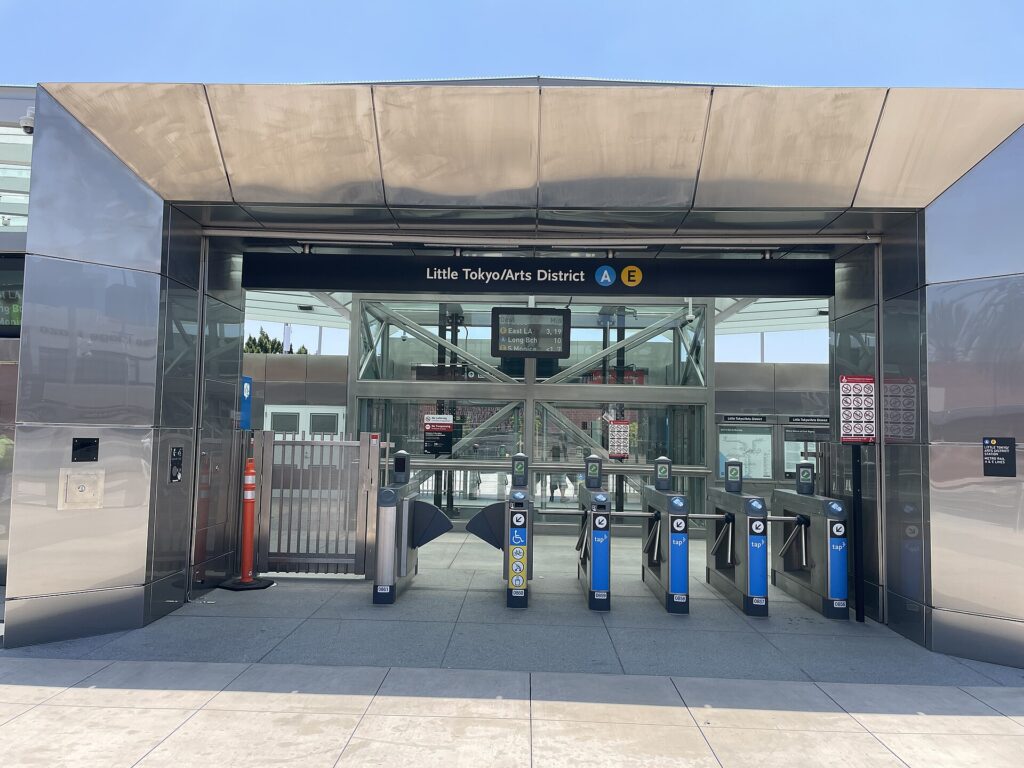
The simplest way in is LA Metro. The underground Little Tokyo/Arts District station at 1st Street and Alameda opened in 2023 as part of the Regional Connector and is served by the A Line (Azusa to Long Beach) and the E Line (East LA to Santa Monica). Because both lines now run straight through downtown, you can ride from Santa Monica or Long Beach to Little Tokyo with no transfer, and connect to the B and D subway lines at 7th Street/Metro Center. JANM sits directly across the street from the station.
Parking in Little Tokyo
Street parking exists but is limited and tightly signed. JANM points visitors to nearby paid options including the Aiso Street Parking Garage, Japanese Village Plaza Parking and Joe’s Auto Parks lots; the museum does not validate. On Nisei Week weekends and New Year’s events, garages fill early, which is a good reason to come by train or be dropped off.
With a Driver
If you would rather skip parking entirely, Little Tokyo works well as a stop on a private SUV tour: you are dropped at First Street for lunch and a walk through the historic blocks, then picked up for the next part of the day.
Pairing Little Tokyo with the Arts District and DTLA
Little Tokyo sits between the Civic Center and the Arts District, so it is easy to string several neighborhoods together on foot:
- East to the Arts District: cross Alameda Street and you are among converted warehouses, galleries, breweries and restaurants. Hauser & Wirth’s downtown gallery at 901 E. Third Street, with free admission, is within walking distance of Japanese Village Plaza.
- West to the Civic Center and Bunker Hill: City Hall is a few blocks west, and two Metro stops take you to Grand Av Arts/Bunker Hill for the museums and concert halls on Grand Avenue.
- South to the Historic Core: Broadway’s restored movie palaces are a short ride or walk away; see our guide to the historic theaters of Los Angeles.
For a fuller plan of the area, our list of things to do in downtown Los Angeles covers the rest of the neighborhood’s highlights. Visitors with only one day in the city often fold Little Tokyo into a wider loop of Hollywood, Beverly Hills and the coast, as on our One Day in LA tour.
A Simple Half-Day Plan
- Late morning: arrive at Little Tokyo/Arts District station and walk the First Street historic blocks, from the Union Church to the former Hompa Hongwanji temple.
- Lunch: ramen at Daikokuya or udon at Marugame Monzo, then mochi from Fugetsu-Do.
- Afternoon: JANM (from January 23, 2027) or the Go For Broke Monument, then Japanese Village Plaza, Kinokuniya and the JACCC plaza.
- Late afternoon: stroll east across Alameda into the Arts District for galleries and an early dinner.
Little Tokyo, Los Angeles: FAQ
Is the Japanese American National Museum open?
The JANM Pavilion has been closed for renovation and the museum has announced that it reopens on January 23, 2027. After reopening, it lists hours of Tuesday to Sunday, 11 a.m. to 5 p.m., with late hours to 8 p.m. on Fridays.
Which Metro line goes to Little Tokyo?
The A Line and the E Line both stop at Little Tokyo/Arts District station at 1st Street and Alameda, across the street from JANM.
When is Nisei Week?
Nisei Week takes place over two weekends in August. In 2026 it ran August 15-23, with the Grand Parade on August 16. Check niseiweek.org for the 2027 dates.
How old is Little Tokyo?
The National Park Service dates the first Japanese settlement on First Street to 1885. The surviving pre-war core was designated a National Historic Landmark District in 1995.