
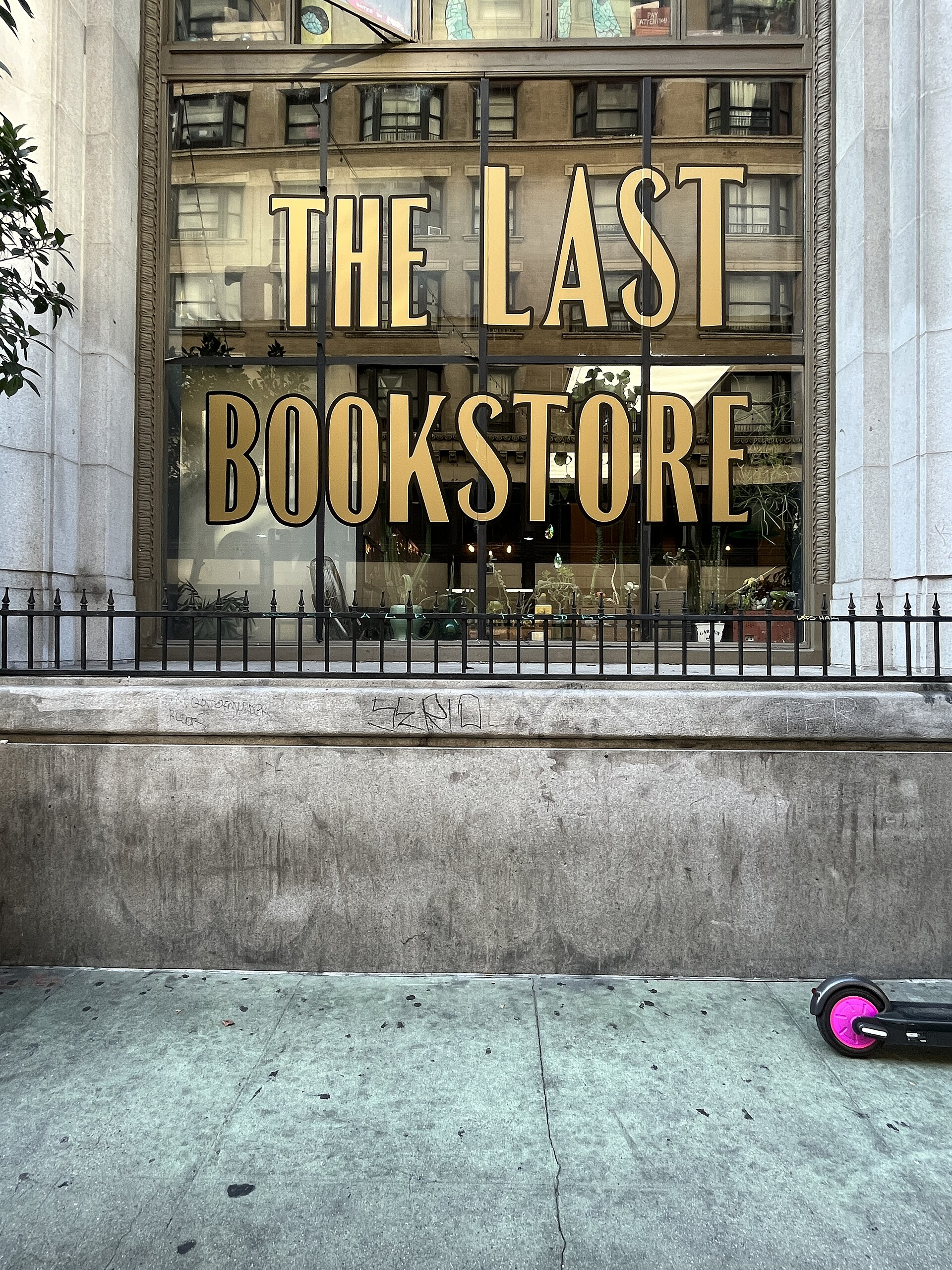
The Last Bookstore fills the ground floor and mezzanine of a 1910s bank building at the corner of 5th and Spring Streets in downtown Los Angeles. It is California’s largest new and used book and record store, by its own description. The shop says it holds more than 500,000 books and records across 22,000 square feet, and its marble columns, old vaults and tunnel of books have made it one of the most photographed rooms in the city. This guide covers how the store came to be, what you will find on each level, how to get there, when to go, and which downtown landmarks are an easy walk away. Hours and transit details change, so check before you go.
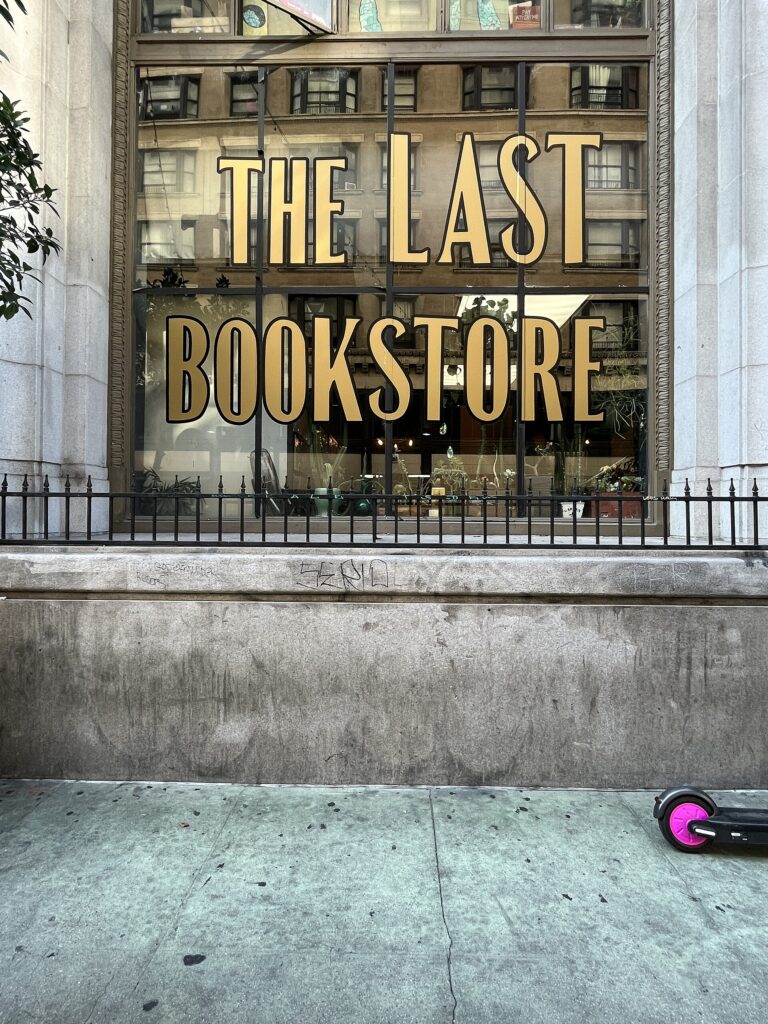
The Last Bookstore at a glance
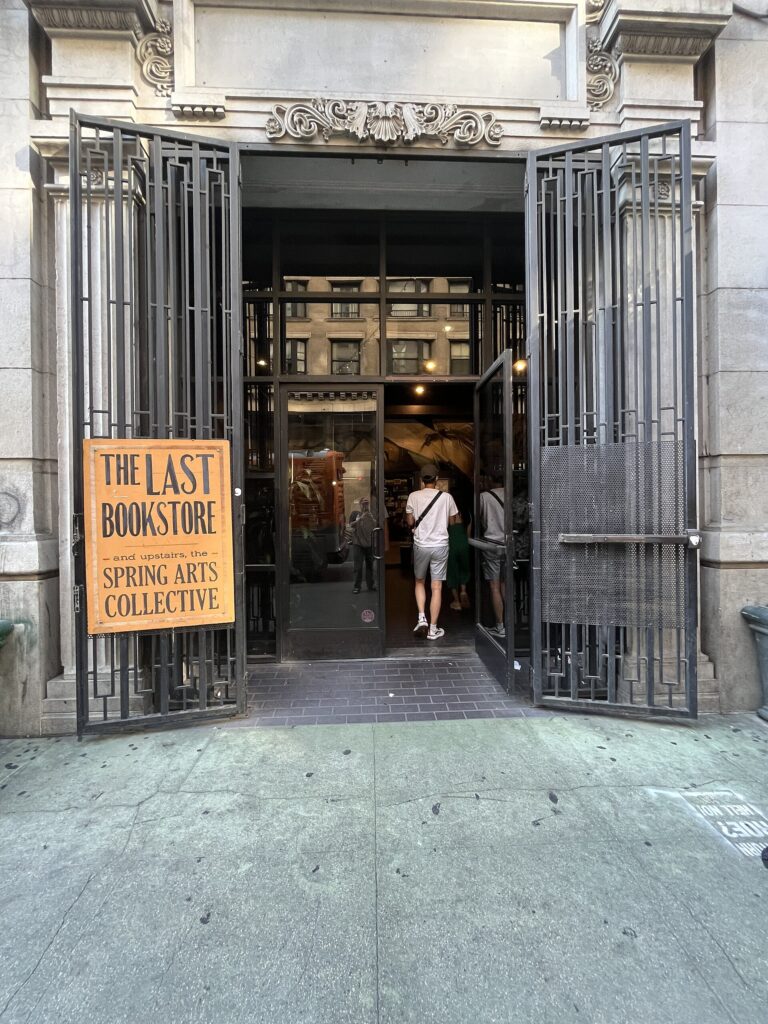
- Address: 453 S. Spring St. (ground floor), Los Angeles, CA 90013, at the corner of 5th and Spring in the Historic Core.
- Admission: Free to walk in and browse; it is a working shop, not a ticketed attraction.
- Phone: 213-488-0599.
- Nearest Metro station: Pershing Square (B and D lines), about a block away.
- What to buy: new, used and rare books, vinyl records, and store merchandise.
- Time to allow: 45 minutes for a look around, longer if you plan to dig through the shelves.
History: from a loft to a bank lobby
The store started small. Founder Josh Spencer, who had spent years selling everything from clothes to cars online, began selling books and records from a downtown loft in 2005. In December 2009 he opened his first storefront, a modest space at 4th and Main Streets, at a time when the Historic Core was only beginning its revival.
In June 2011 the shop moved a couple of blocks to its current home: the former banking hall of the Citizens National Bank building, later known as the Crocker-Citizens National Bank building, at the northwest corner of 5th and Spring. Architects John Parkinson and G. Edwin Bergstrom designed the 12-story building, which went up in 1914 and 1915 when Spring Street was the city’s financial district. The bank occupied the ground floor and part of the basement, which is why the bookstore has soaring columns, an ornate ceiling and actual bank vaults. Today the building goes by the name Spring Arts Tower.
The name was meant to be a little ironic. The store has since outlasted the pandemic and plenty of downtown ups and downs, and it now runs other shops as well: a second Last Bookstore in Studio City (4437 Lankershim Blvd., opened December 2024), Lost Books in Montrose, and Skull-Face Books & Vinyl in Honolulu. Josh and Jenna Spencer are the owners. The downtown store remains the original and the largest.
What is inside
The ground-floor banking hall
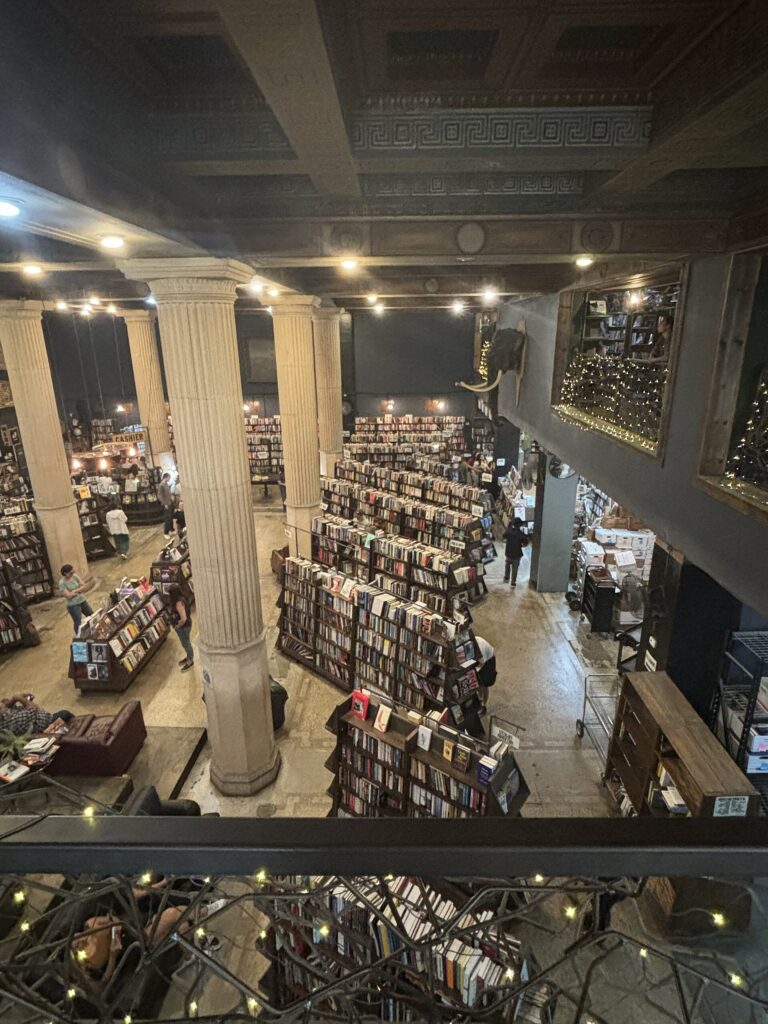
Walk in from Spring Street and you are standing in the old bank lobby. Tall fluted columns hold up a coffered ceiling, and long rows of shelves and rolling book carts run across the floor. New releases, staff picks and the bulk of the general stock are down here, along with the main counter. The store buys, sells and trades books and records every day, so if you live locally you can bring in a bag of your own books to sell. Check with staff about what they are buying.
Vinyl records
Records are a big part of the business, not an afterthought. The store stocks new and used vinyl, and the selection changes constantly because of the daily buying and trading. Collectors can lose a good half hour in the crates alone.
The mezzanine and the tunnel of books
Stairs at the back lead up to the mezzanine, the part of the store most people have seen on social media. The store describes itself as “part landmark, part labyrinth,” and up here you will see why: a maze of small rooms, narrow passages and themed nooks lined with used books, plus art galleries and odd corners. The best-known feature is the tunnel of books, an arch built out of stacked volumes that you can walk through. Expect a short line to photograph it on busy days.
The mezzanine railing also gives you the best view of the old bank lobby below, with its columns and ceiling. If you only take one picture of the building itself, take it from here.
The vaults and rare books
The bank’s old vaults are still here, and the store keeps vintage books in them. Look for the heavy vault door as you explore. Rare and collectible books are a separate category in the store, so if you are hunting for a first edition or a specific out-of-print title, ask at the counter rather than hoping to stumble across it.
Art galleries and the floors above
Local artists show work in gallery spaces within the store, and the displays change over time. The upper floors of the Spring Arts Tower hold creative workspaces. The store’s website has a “Work Above” page with a contact for touring them if you are looking for studio space, but they are not part of a regular bookstore visit.
Events
The store runs a full calendar of author talks, book signings, book clubs and evening events. Some events are ticketed and some are free. If you are planning a trip around a specific date, the events page on the store’s website is worth a look before you book anything else.
Hours, photos and bags
Hours. The shop opens late morning every day and stays open into the evening, later on some nights of the week. The store’s own pages have not always agreed on the exact times, so check its downtown location page or call on the day you plan to visit, especially if you are going early or late.
Photos. The store calls itself the most photographed bookstore in the world, and casual phone photos are part of the experience for most visitors. The official website does not publish a photo policy for walk-in customers, so keep it simple and considerate:
- Do not block narrow aisles, the stairs or the tunnel of books for long; let people browsing get past.
- For tripods, lighting, models or anything that looks like a professional shoot, contact the store first. The website has a “Book The Bookstore” page for private bookings.
- Ask before photographing staff or other customers, and remember that people come here to read.
- Many of the book sculptures and murals are works by local artists. Personal snapshots are one thing; using them commercially is another.
Bags. The website does not post a bag policy. Travel light if you can, and follow any instructions staff give you at the door.
Best times to avoid the crowds
The Last Bookstore is on a lot of first-time visitor lists, so it fills up, and the mezzanine passages feel crowded quickly. A few general patterns help:
- Weekdays beat weekends. Monday to Thursday is usually calmer than Saturday and Sunday afternoons, when visitors and locals both turn up.
- Go at opening. The first hour after the doors open is the easiest time to photograph the tunnel of books without a line.
- Check the events calendar. Evening readings and signings can draw a crowd, which is great if you want to attend and less so if you want quiet browsing.
- Holidays and school breaks are busy. Expect more people over long weekends and in the weeks around Thanksgiving and Christmas.
The store is also a natural stop on a gray or drizzly day, since you can spend an hour or two indoors. Our rainy-day guide to Los Angeles has more ideas for wet weather.
Getting there
By Metro
Pershing Square station on the B and D subway lines is about a block from the store, which makes the Metro the simplest option from Hollywood, Koreatown or Union Station. If you are coming on the A or E light rail lines, change at 7th Street/Metro Center, or get off at Historic Broadway station near 2nd Street and Broadway and walk south through the Historic Core. Check Metro’s trip planner for current schedules.
By car and parking
The store points drivers to the many parking meters on the surrounding streets and to the pay lots along Spring Street, a block or two in either direction. Read the posted signs carefully: downtown meters have time limits, and rush-hour restrictions apply on some streets. If you are combining the bookstore with lunch at Grand Central Market, the market’s own garage is at 308 S. Hill St.
With a driver
Parking is the main hassle of a downtown visit, and the bookstore is easier to enjoy when someone else handles it. A private SUV tour can drop you at the corner of 5th and Spring and collect you when you are done, and our One Day in LA tour pairs downtown with Hollywood, Beverly Hills and the coast in a single day with hotel pickup.
Nearby downtown sights to pair with your visit
The store sits in the middle of the Historic Core, and several of downtown’s best-known landmarks are within a few blocks. All of the places below were open as of November 2026. For a broader list, see our guide to things to do in downtown Los Angeles.
Grand Central Market
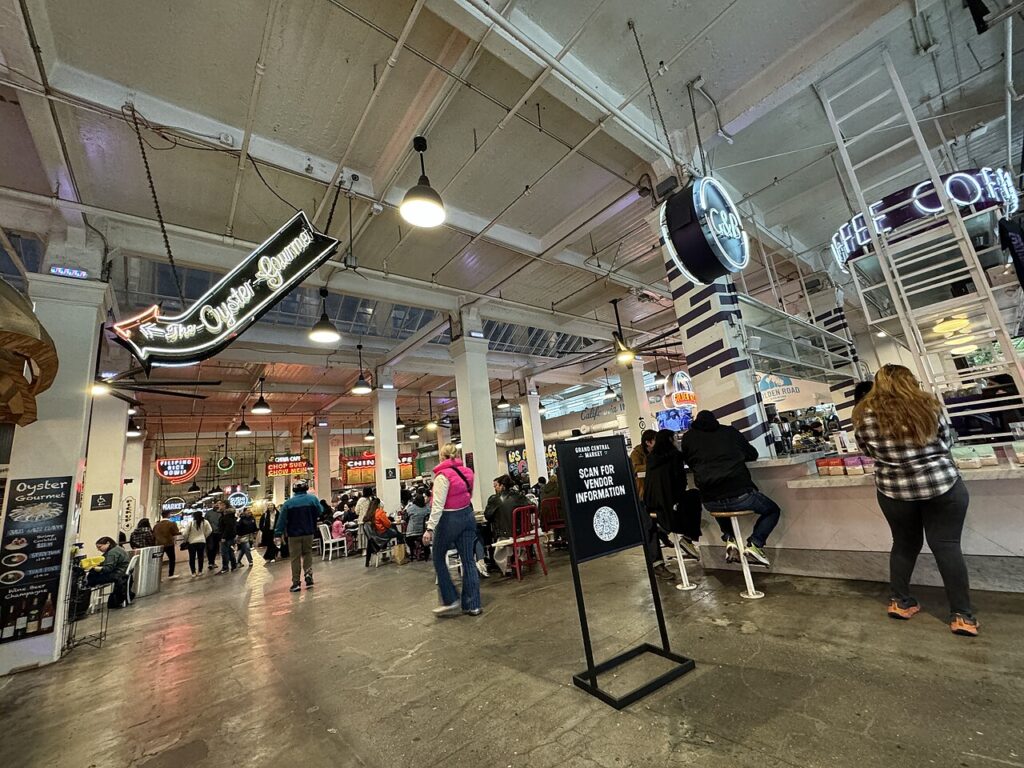
A downtown landmark since 1917, Grand Central Market (317 S. Broadway) is a long food hall running from Broadway through to Hill Street, with dozens of counters serving everything from coffee to oysters and pupusas. The market is open daily from 8 a.m. to 9 p.m., though each vendor keeps its own hours. It is about a 5-minute walk from the bookstore and the obvious place for lunch.
The Bradbury Building
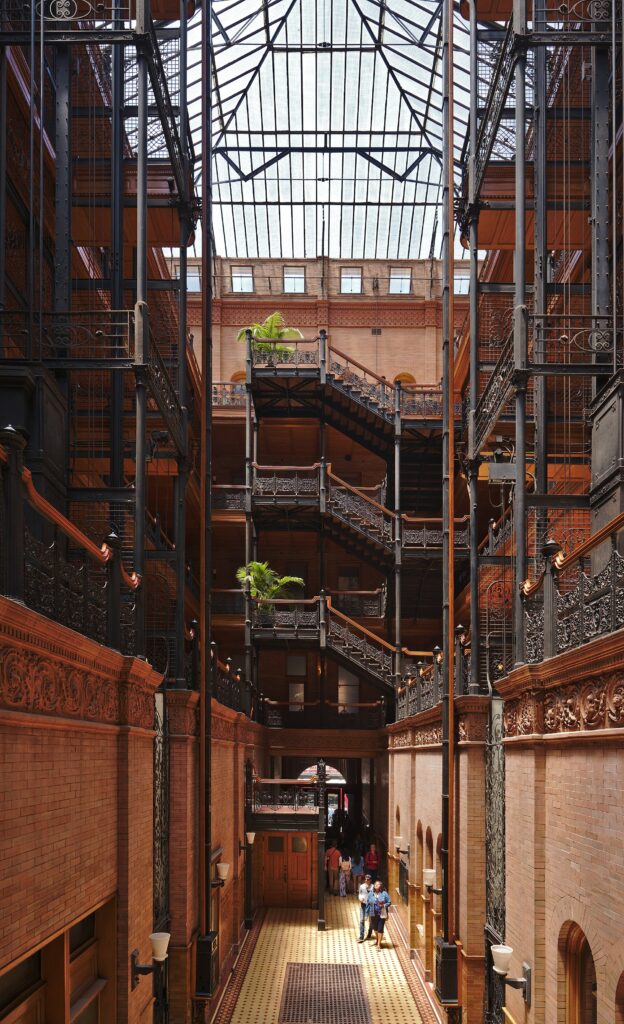
Across Broadway from the market, the Bradbury Building (304 S. Broadway) dates from 1893 and is famous for its skylit atrium, open cage elevators and wrought-iron railings. Sumner P. Hunt drew the first designs and George H. Wyman supervised construction; film fans know the interior from Blade Runner. It is a working office building with private offices upstairs. Visitors have generally been able to look around the ground floor and the first landing during business hours, but access is up to the building, so treat it as a bonus and keep your voice down. The Los Angeles Conservancy’s Historic Downtown walking tour, which runs on Saturday mornings, includes the building.
Angels Flight
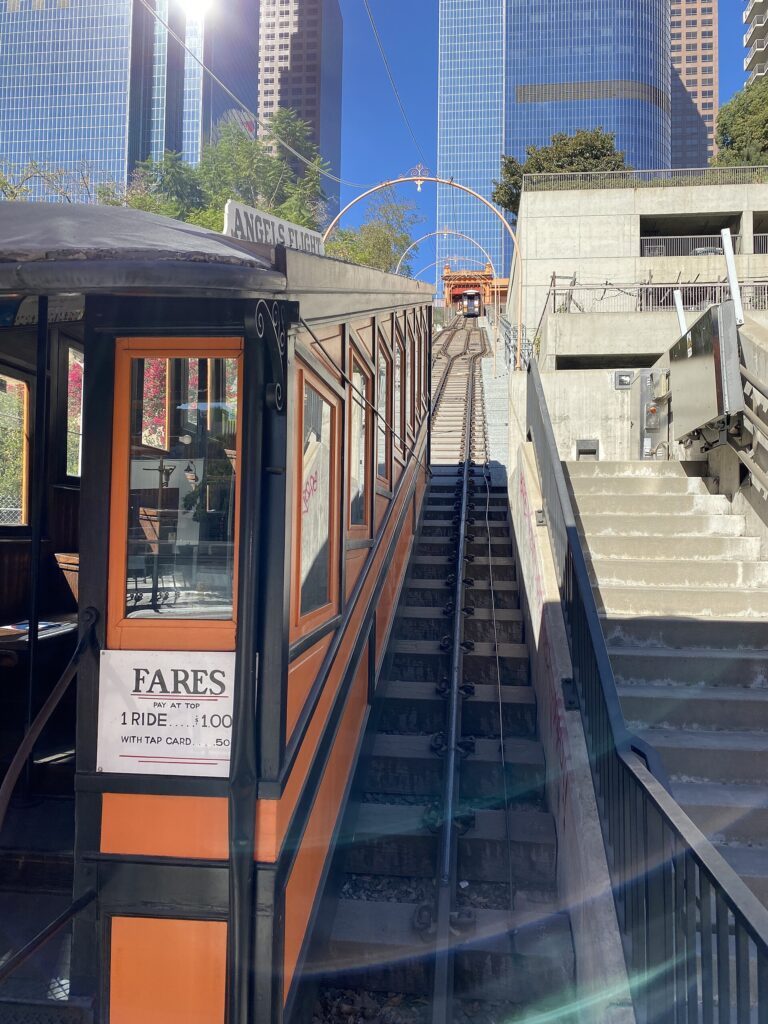
Directly across Hill Street from the back of Grand Central Market, Angels Flight is a short funicular railway that first opened in 1901 and carries riders up the slope to California Plaza on Bunker Hill. After years of closures it returned to passenger service on August 31, 2017, and it runs seven days a week from 6:45 a.m. to 10 p.m. A one-way ride costs $1.50, or $0.75 if you pay with a Metro TAP card. The lower entrance is at 351 S. Hill St.; the top station is at 350 S. Grand Ave., a short walk from the Broad and Walt Disney Concert Hall.
Broadway’s theaters and Little Tokyo
Broadway, one block west of Spring Street, is lined with early movie palaces, including the Million Dollar Theater right next to Grand Central Market. Our guide to historic theaters in Los Angeles covers which ones you can see inside. If you have more time, Little Tokyo is a short ride or a longer walk to the northeast, with Japanese restaurants, shops and the Japanese American National Museum.
A simple half-day plan
- Morning: Arrive at The Last Bookstore when it opens, head straight up to the mezzanine for the tunnel of books, then work your way back down through the banking hall and the records.
- Late morning: Walk north to the Bradbury Building to see the atrium.
- Lunch: Cross Broadway to Grand Central Market and pick a counter.
- Afternoon: Exit on the Hill Street side, ride Angels Flight up to Bunker Hill, and continue to Grand Avenue’s museums and concert hall.
The Last Bookstore: FAQ
Where is The Last Bookstore?
The original store is at 453 S. Spring St. in downtown Los Angeles, at the corner of 5th and Spring, about a block from Pershing Square Metro station. A second Last Bookstore is in Studio City at 4437 Lankershim Blvd.
Is there an entry fee?
No. It is a bookstore, so you can walk in and browse for free. Some special events on the store’s calendar are ticketed.
Why is the bookstore inside a bank?
The store moved in 2011 into the former banking hall of the Citizens National Bank building, completed in 1915 and now called the Spring Arts Tower. The columns, ornate ceiling and vaults are original features of the bank.
How long should I spend there?
Plan on 45 minutes to an hour for a look at both floors and the tunnel of books. Serious browsers and record collectors can easily spend two hours or more.