
Downtown Los Angeles packs a remarkable number of landmarks into a few square miles. The steel curves of Walt Disney Concert Hall, a 1901 funicular, a 1917 food hall, the city’s oldest house, the train station from countless films, and a space shuttle now standing upright in its new home all sit within a short Metro ride of each other. This guide covers the best things to do in downtown LA for 2027, grouped by neighborhood so you can plan a day on foot and by train without zigzagging across the map.
Many of the biggest downtown Los Angeles attractions are free, including The Broad, MOCA Grand Avenue, the California Science Center and the City Hall observation deck. Hours, ticket rules and prices below come from each venue’s own website as of November 2026, but they change, so check before you go.
Bunker Hill & Grand Avenue
Grand Avenue is downtown’s cultural spine. Three museums, a concert hall and a Frank Gehry hotel complex line a few blocks along the top of Bunker Hill, and the Grand Av Arts/Bunker Hill Metro station opens right behind The Broad.
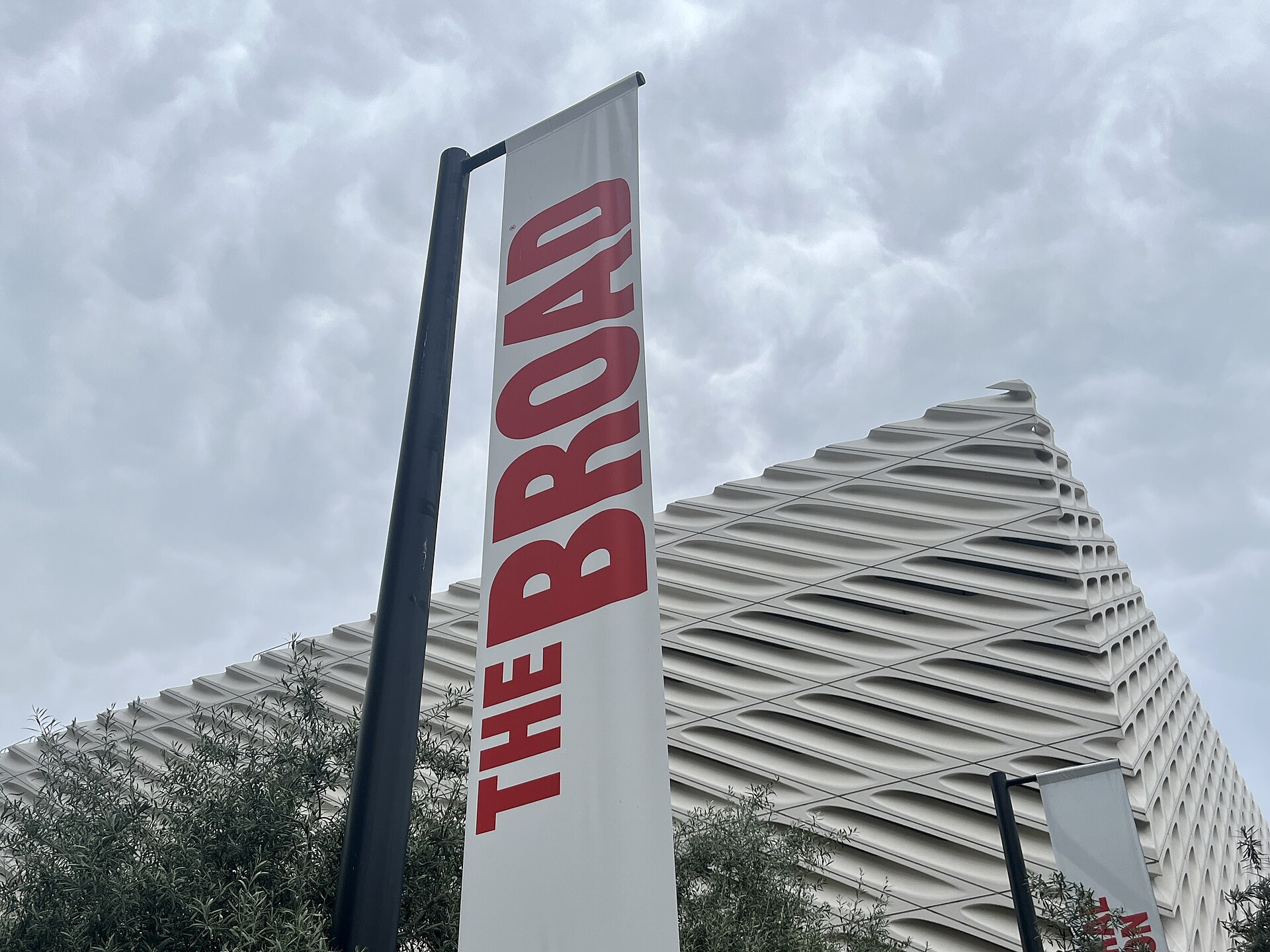
1. The Broad
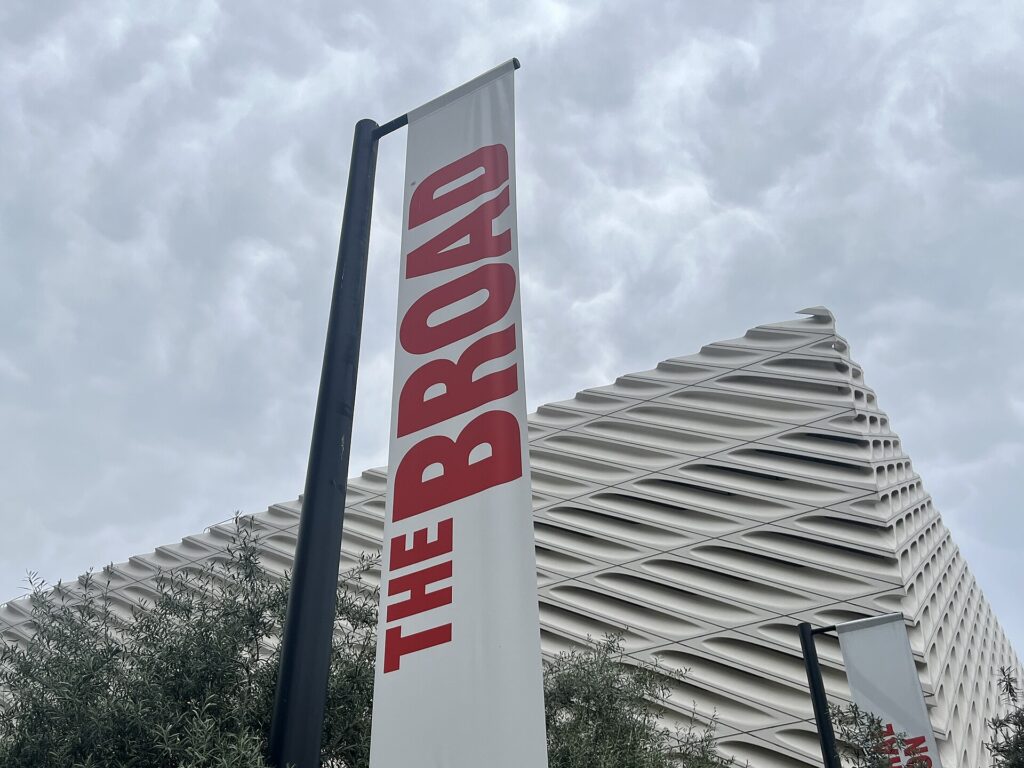
Eli and Edythe Broad’s contemporary art museum opened in 2015 inside a honeycomb-like white shell at 221 S. Grand Avenue. The collection runs from Warhol, Lichtenstein and Basquiat to Jeff Koons and Kara Walker, and general admission is always free. Timed tickets are recommended and walk-ups are available daily; extra same-day tickets are released online. The museum is closed on Mondays and stays open until 8 p.m. on Thursdays.
2. Walt Disney Concert Hall
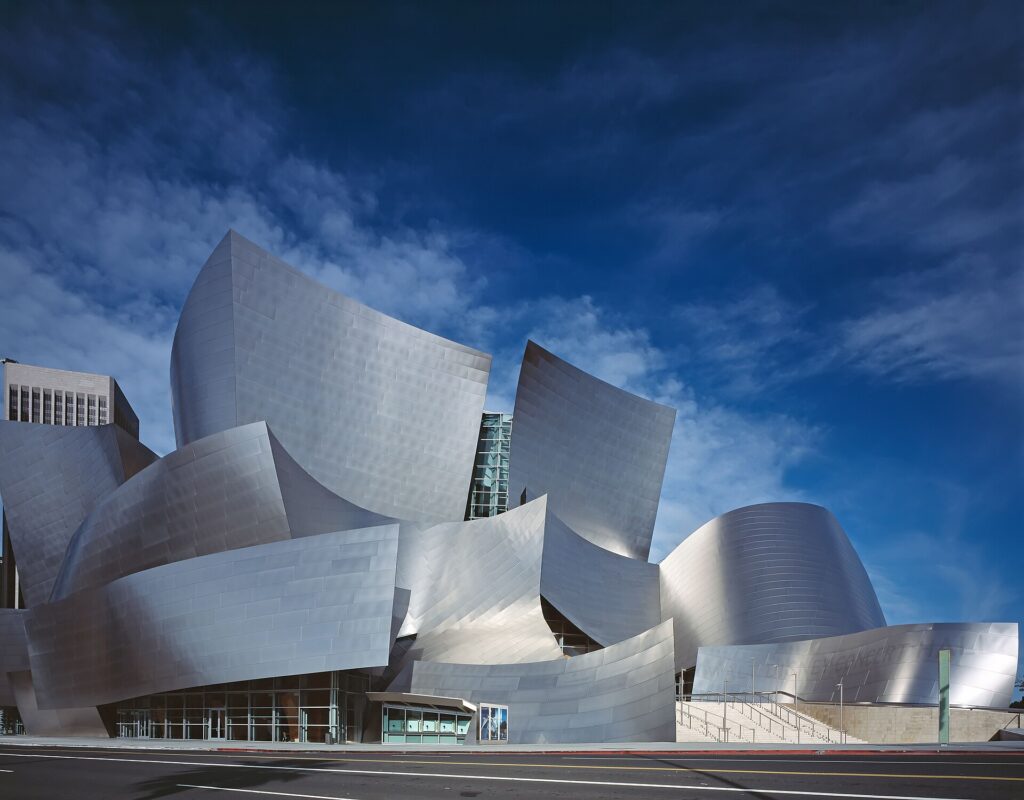
Frank Gehry’s stainless-steel concert hall opened in October 2003 as the home of the Los Angeles Philharmonic. You do not need a concert ticket to see it: the Music Center offers free self-guided audio tours most days, about an hour long, starting in the Grand Avenue lobby. Start times vary with the performance schedule, so check the Music Center’s tour page first.
3. MOCA Grand Avenue
Across the street from The Broad, the Museum of Contemporary Art’s main building at 250 S. Grand Avenue focuses on art made since 1940. General admission is free, and reservations are recommended. MOCA is closed on Mondays and stays open until 8 p.m. on the first Thursday of each month. Its larger warehouse space, The Geffen Contemporary in Little Tokyo, opens and closes between installations, so check what is on before you head there.
4. Angels Flight
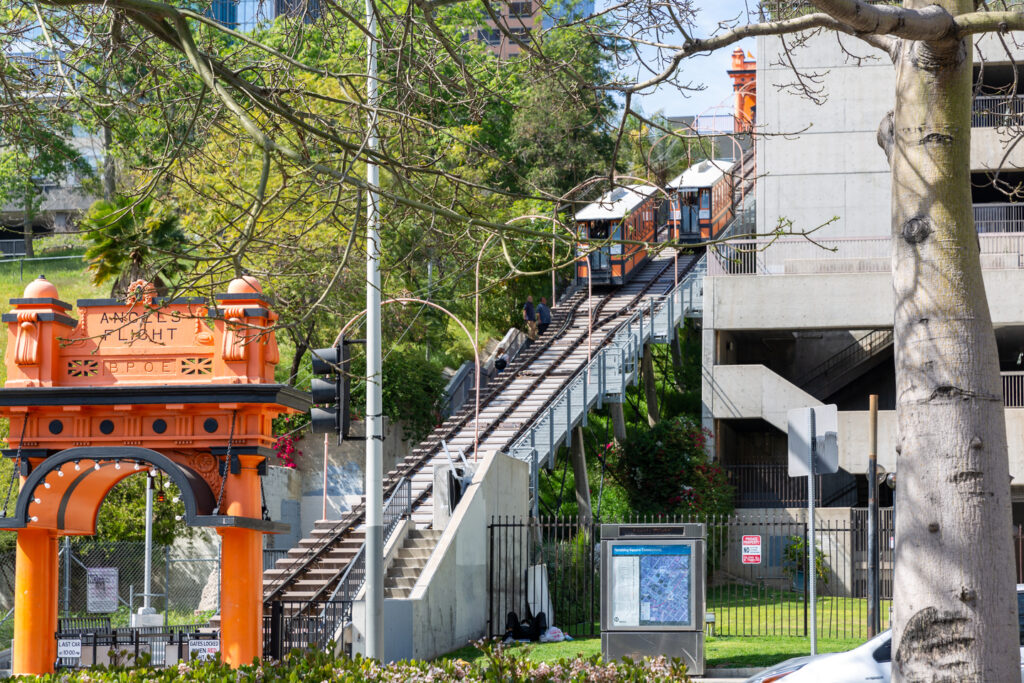
This little funicular first opened in 1901 and still carries riders between Hill Street, across from Grand Central Market, and California Plaza at the top of Bunker Hill. Its two orange-and-black cars, Olivet and Sinai, run daily from 6:45 a.m. to 10 p.m. The fare is $1.50 each way, or $0.75 with a Metro TAP card. It saves you a steep climb between the museums and the Historic Core.
5. The Grand LA
Directly across Grand Avenue from Disney Hall, Frank Gehry’s newest downtown project at 100 S. Grand Avenue pairs the Conrad Los Angeles hotel with shops, restaurants and an open public plaza at its center. It makes an easy coffee or drink stop between museums.
Historic Core & Broadway
Below Bunker Hill, Broadway and Spring Street hold downtown’s early-20th-century commercial district, with ornate office buildings, movie palaces and some of the city’s best-known places to eat.
6. Grand Central Market
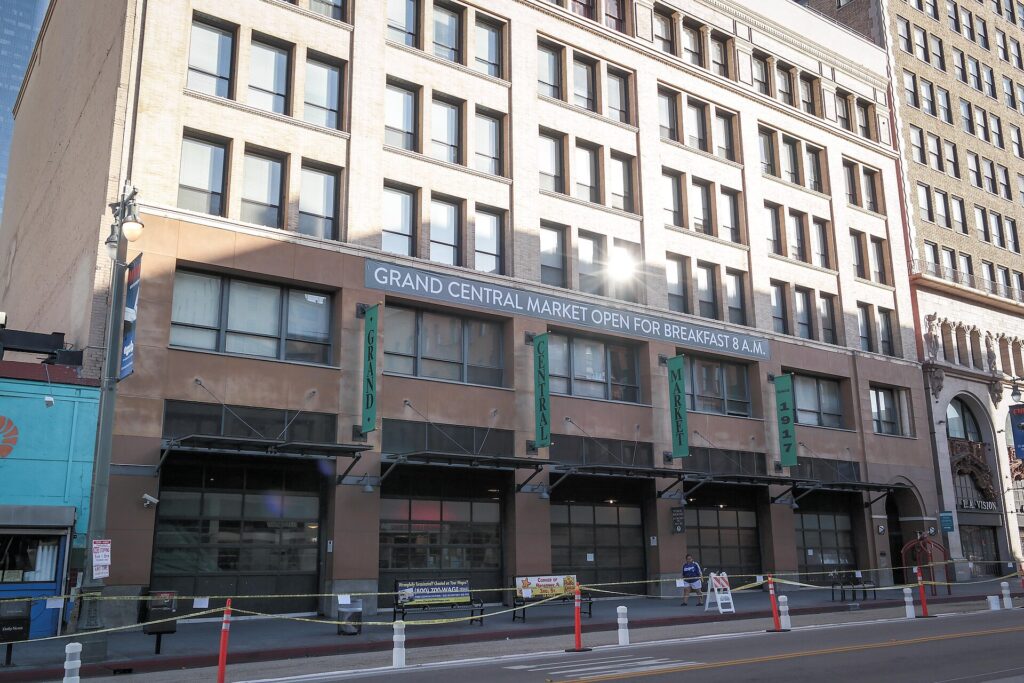
A downtown landmark since 1917, Grand Central Market at 317 S. Broadway runs through the block to Hill Street. Stalls include Michoacan-style carnitas at Tacos Tumbras a Tomas, ramen, Oaxacan food, coffee from Go Get Em Tiger and more. The market is open daily from 8 a.m. to 9 p.m., though each stall keeps its own hours. Walk the full length once before ordering.
7. Bradbury Building
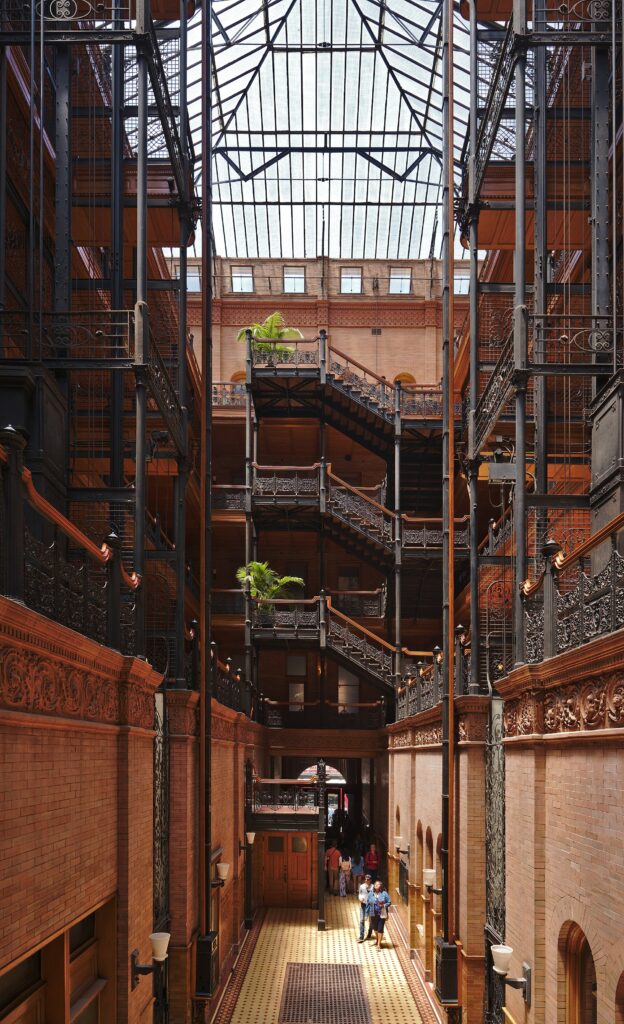
Across Broadway from the market, the 1893 Bradbury Building (304 S. Broadway) has a plain brick front that hides one of the most photographed interiors in Los Angeles: a skylit atrium of wrought-iron railings, open-cage elevators and marble stairs, made famous by Blade Runner and a long run of film noir. It is a working office building, so visitors are limited to the lobby and the first landing of the stairs. Entry is free and photos are fine there.
8. The Last Bookstore
At the corner of 5th and Spring (453 S. Spring Street), The Last Bookstore fills a former bank with new, used and rare books, vinyl records and art. Its tunnel of books and sculptural book installations make it one of the most photographed shops in the city. It is a block from Pershing Square station.
9. The Broadway theaters
Broadway between 3rd Street and Olympic was once Los Angeles’s movie-palace row, and many of the grand theaters still stand, including the Million Dollar, the Los Angeles Theatre and the Orpheum. The easiest way inside is to buy a ticket to a concert or screening. The Los Angeles Conservancy runs walking tours of the Broadway theater and commercial district, and each June its Last Remaining Seats film series pairs classic movies with tours of the Orpheum, Los Angeles Theatre and Million Dollar. Check the Conservancy’s calendar for upcoming dates.
10. City Hall observation deck
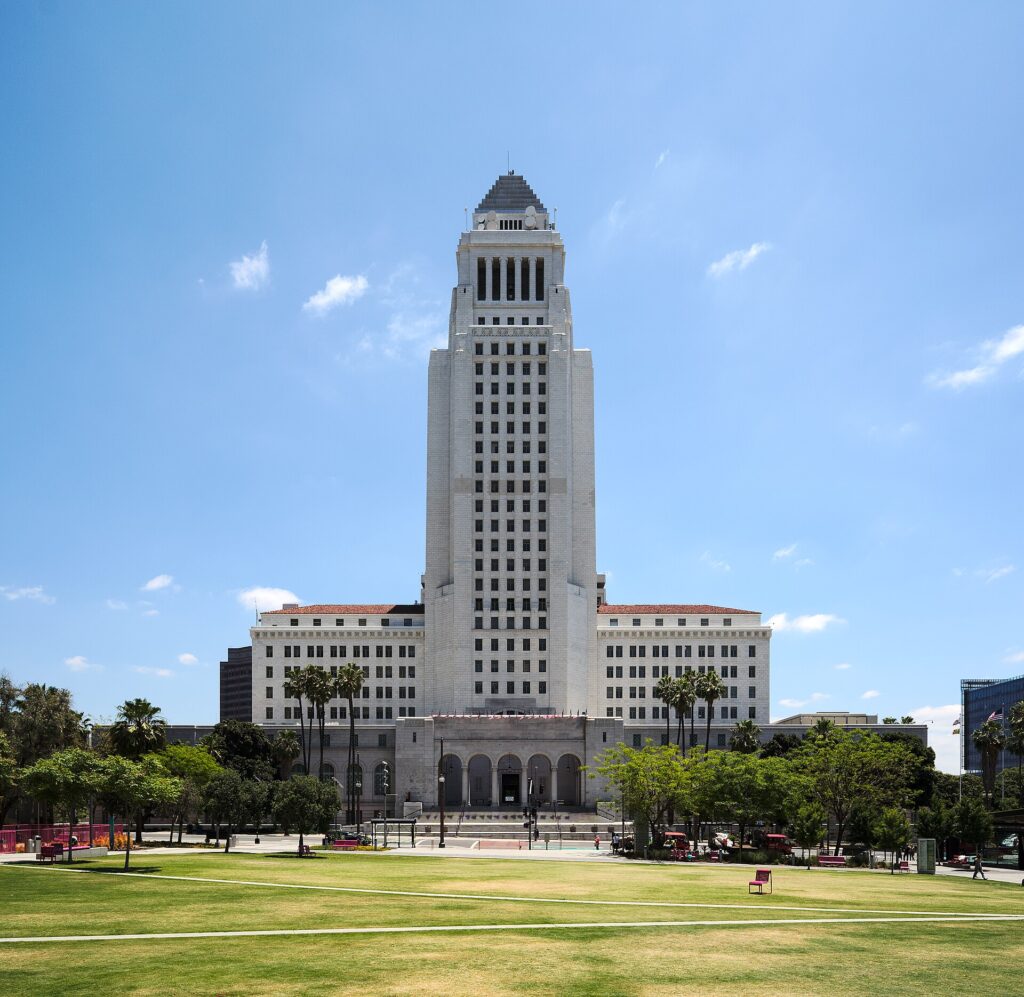
Completed in 1928, Los Angeles City Hall (200 N. Spring Street) was the tallest building in the city for decades, and its 27th-floor observation deck offers free 360-degree views over downtown and, on clear days, out to the mountains. The deck is open on weekdays only. Expect a security check at the entrance, then an elevator ride to the 22nd floor and a short climb the rest of the way. The city does not post fixed hours, so call ahead if you are coming specifically for it. Grand Park, a 12-acre public park that hosts free events, steps down from City Hall toward the Music Center.
Union Station, El Pueblo & Chinatown
The northern edge of downtown is where Los Angeles began. These three stops sit within a 15-minute walk of each other.
11. Union Station
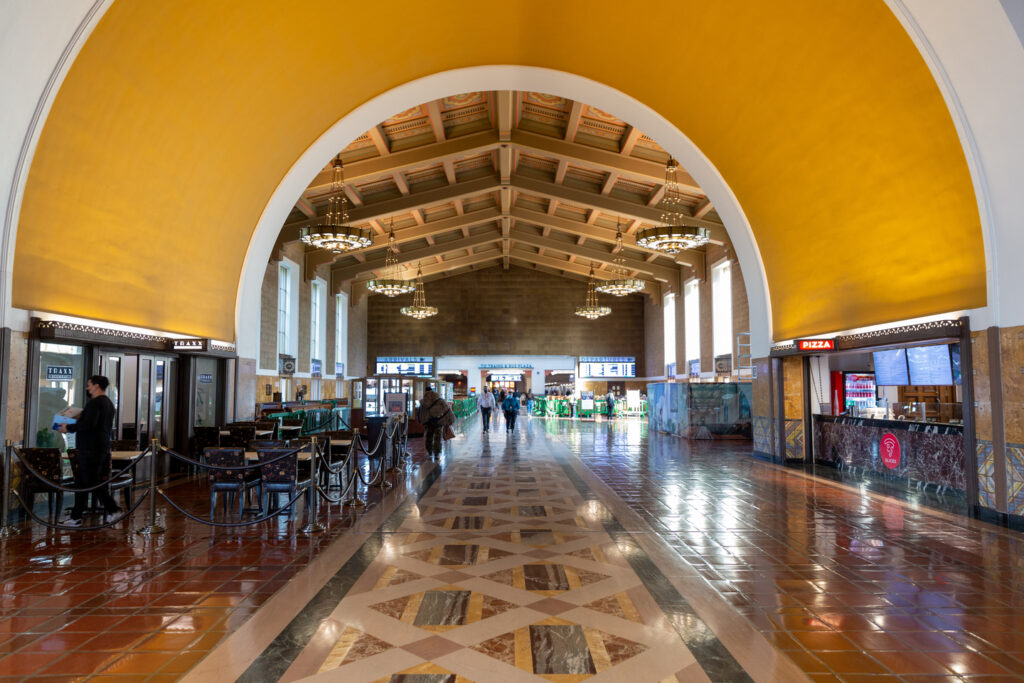
Opened on May 3, 1939, Union Station was designed by the father-and-son architects John and Donald Parkinson in a blend of Spanish Colonial, Mission Revival and Art Deco styles. Walk in even if you are not catching a train to see the tiled floors and wood-beamed ceiling of the old waiting room. Metro offers free art and architecture tours on select dates with reservations, and the Los Angeles Conservancy runs longer walking tours.
12. Olvera Street & El Pueblo
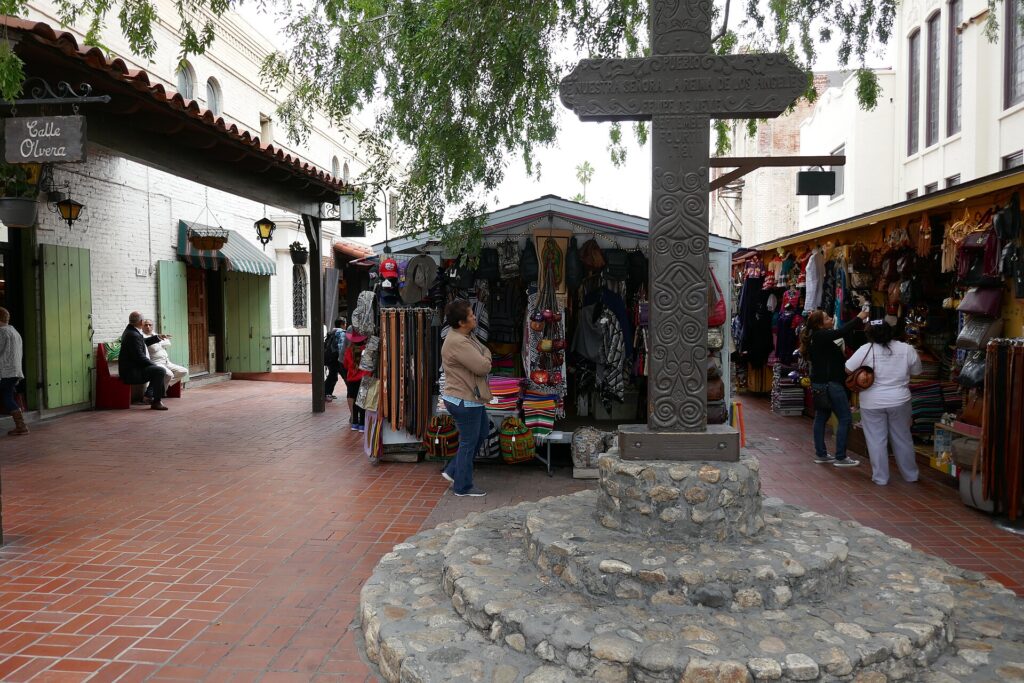
Across Alameda Street from Union Station, El Pueblo de Los Angeles Historical Monument preserves the area near the city’s 1781 founding. Olvera Street, a brick-paved lane of market stalls selling Mexican crafts and food, runs through its center. Step into the Avila Adobe at 10 Olvera Street, built in 1818 and the oldest surviving house in Los Angeles; admission is free.
13. Chinatown
A short walk north along Broadway or one stop on the Metro A Line, Chinatown mixes long-running bakeries and dim sum halls with contemporary galleries along Chung King Road. Central Plaza, with its pagoda-roofed buildings and lanterns, dates to the neighborhood’s 1938 opening. Lunar New Year brings a parade and festival each winter.
Little Tokyo & the Arts District
14. Little Tokyo & the Japanese American National Museum
Little Tokyo is one of the few remaining Japantowns in the United States, full of ramen counters, mochi shops and the Japanese Village Plaza. The Japanese American National Museum (100 N. Central Avenue) tells the story of Japanese Americans, including the World War II incarceration. It is currently closed for renovation and reopens on January 23, 2027, with free admission on Friday evenings after 5 p.m. and on the first Friday of each month. The Little Tokyo/Arts District Metro station is right outside.
15. Arts District galleries and murals
East of Little Tokyo toward the Los Angeles River, former warehouses now hold studios, breweries, restaurants and some of downtown’s best street murals. The anchor is Hauser & Wirth Los Angeles (901 E. 3rd Street), a free gallery complex in a converted flour mill with a courtyard garden; it is open Tuesday through Sunday. Wander the side streets around 3rd and Traction for murals.
16. Smorgasburg LA at ROW DTLA
Every Sunday from 10 a.m. to 4 p.m., the open-air food market Smorgasburg LA takes over ROW DTLA (777 S. Alameda Street), a former produce terminal now filled with shops and restaurants. Entry is free, and you pay per vendor. It is one of the most popular DTLA things to do on a weekend, so arrive early. The market takes a few weeks off each year, so check the calendar first.
South Park, the Fashion District & Exposition Park
17. Crypto.com Arena, L.A. Live & the GRAMMY Museum
At the southwest corner of downtown, Crypto.com Arena is home to the Lakers, the Kings and the Sparks (the Clippers moved to their own arena in Inglewood in 2024). Next door, L.A. Live’s plaza is lined with restaurants, theaters and the GRAMMY Museum (800 W. Olympic Blvd.), with costumes, instruments and interactive exhibits. The museum is closed on Tuesdays and Wednesdays; adult tickets are $22.50, and visitors 17 and under get in free.
18. California Science Center & Space Shuttle Endeavour
Ten minutes south of downtown on the Metro E Line, Exposition Park holds three major sights. The biggest news for 2027: the California Science Center’s new Samuel Oschin Air and Space Center opened on November 13, 2026. The 200,000-square-foot expansion nearly doubles the museum’s exhibit space and shows Space Shuttle Endeavour standing upright in launch position, mounted with its external tank and boosters. General admission to the Science Center is free, but timed reservations for the Air and Space Center are strongly encouraged, and a booking fee applies.
19. Natural History Museum & the Coliseum
Next door, the Natural History Museum of Los Angeles County (900 Exposition Blvd.) is known for its dinosaur hall and gem and mineral collection. It is open daily from 9:30 a.m. to 5 p.m., except the first Tuesday of the month, and L.A. County residents get in free on weekday afternoons from 3 to 5 p.m. Across the park, the Los Angeles Memorial Coliseum hosted the 1932 and 1984 Olympic Games and is set to host again in 2028.
20. The Fashion District & Santee Alley
For bargain hunting, the Fashion District’s Santee Alley runs between Santee Street and Maple Avenue south of Olympic Boulevard, packed with stalls selling clothing, shoes, accessories and street food. It is open every day, with most stores opening around 9:30 a.m. Bring cash and expect weekend crowds.
Rooftops and views after dark
Downtown’s skyline looks best at sunset from above. Our guide to the best rooftop bars in Los Angeles covers the current picks. For free lookouts, start with the free City Hall deck, and see our roundup of the best viewpoints in Los Angeles for spots beyond downtown.
Where to eat in downtown LA
- Grand Central Market (317 S. Broadway): the easiest answer for a group that cannot agree, with dozens of stalls under one roof.
- Philippe the Original (1001 N. Alameda St.): in business since 1908 and its founder claimed to have invented the French dip sandwich. It is a short walk from Union Station and Olvera Street.
- Daikokuya (327 E. 1st St., Little Tokyo): a long-running Little Tokyo ramen shop; expect a wait at peak times.
- Sonoratown (208 E. 8th St.): Sonora-style tacos and burritos on flour tortillas, with grilled meats, in the Fashion District.
- Bestia (2121 E. 7th Pl., Arts District): the rustic Italian restaurant that helped put the Arts District on the dining map; book well ahead.
- Massilia at the Conrad (The Grand LA): a Marseille-inspired brasserie, handy before or after a concert at Disney Hall.
For more ideas across the city, see our picks for the best restaurants in Los Angeles and the best coffee shops in Los Angeles and Beverly Hills.
Getting to and around downtown
Downtown is the hub of the Metro rail system, which makes it the easiest part of Los Angeles to explore without a car.
- Metro B and D Lines (subway) stop at Union Station, Civic Center/Grand Park, Pershing Square, 7th St/Metro Center and Westlake/MacArthur Park.
- The Regional Connector, opened in June 2023, links the A and E Lines straight through downtown with three underground stations: Little Tokyo/Arts District, Historic Broadway, and Grand Av Arts/Bunker Hill, the deepest station in the system. The A Line runs from Long Beach through downtown to Pasadena and the San Gabriel Valley; the E Line connects Santa Monica and Exposition Park with East LA.
- A TAP card works on all Metro trains and buses and also cuts the Angels Flight fare in half.
- Driving: downtown has plenty of paid garages, but rates vary a lot between event and non-event days. On a game or concert night near Crypto.com Arena, take the train.
If you would rather see downtown as part of a wider day out, our One Day LA tour combines downtown landmarks with Hollywood, Beverly Hills and the coast, with hotel pickup. Or roll past Union Station, City Hall and the Broadway theaters with the top down on the classic car tour in a 1970 Cadillac DeVille convertible.
Practical tips for visiting DTLA
- Pick a weekday for City Hall, a weekend for markets. The observation deck is weekday-only, while Smorgasburg runs on Sundays.
- Mind the Monday closures. The Broad and MOCA close on Mondays, and the GRAMMY Museum closes on Tuesdays and Wednesdays.
- Reserve the free things. The Broad, MOCA and the Endeavour exhibit are free or mostly free, but timed reservations save a long wait.
- Use normal big-city sense. Downtown is busy and safe to explore by day in the main visitor areas. Homelessness is visible on some blocks, especially east of Main Street. Stick to well-traveled streets after dark, keep valuables out of sight in parked cars, and use the train or a rideshare between neighborhoods at night.
- Wear good shoes. Bunker Hill is steep; ride Angels Flight up.
Planning the rest of your trip? See our full list of things to do in Los Angeles, our Los Angeles museum guide, and our plan for a weekend in Los Angeles.
Related guides: the Broadway movie palaces are covered in our guide to historic theaters in Los Angeles, and Downtown bars and live music in Los Angeles nightlife.
Things to Do in Downtown LA: FAQ
What are the best free things to do in downtown LA?
The Broad and MOCA Grand Avenue both have free general admission, Walt Disney Concert Hall offers free self-guided audio tours most days, the City Hall observation deck is free on weekdays, and general admission to the California Science Center is free.
How much does Angels Flight cost?
The fare is $1.50 each way, or $0.75 one way with a Metro TAP card. It runs daily from 6:45 a.m. to 10 p.m. between Hill Street and California Plaza.
Where can you see Space Shuttle Endeavour?
Endeavour is at the California Science Center’s Samuel Oschin Air and Space Center in Exposition Park, which opened on November 13, 2026. It is a short ride south of downtown on the Metro E Line. Science Center admission is free, but timed reservations for the shuttle exhibit are strongly encouraged.
Can you visit downtown LA without a car?
Yes. The Metro A, B, D and E Lines all serve downtown, and since the Regional Connector opened in 2023, trains run directly between Little Tokyo, Historic Broadway, Bunker Hill and 7th St/Metro Center. Most sights here are near a station.