
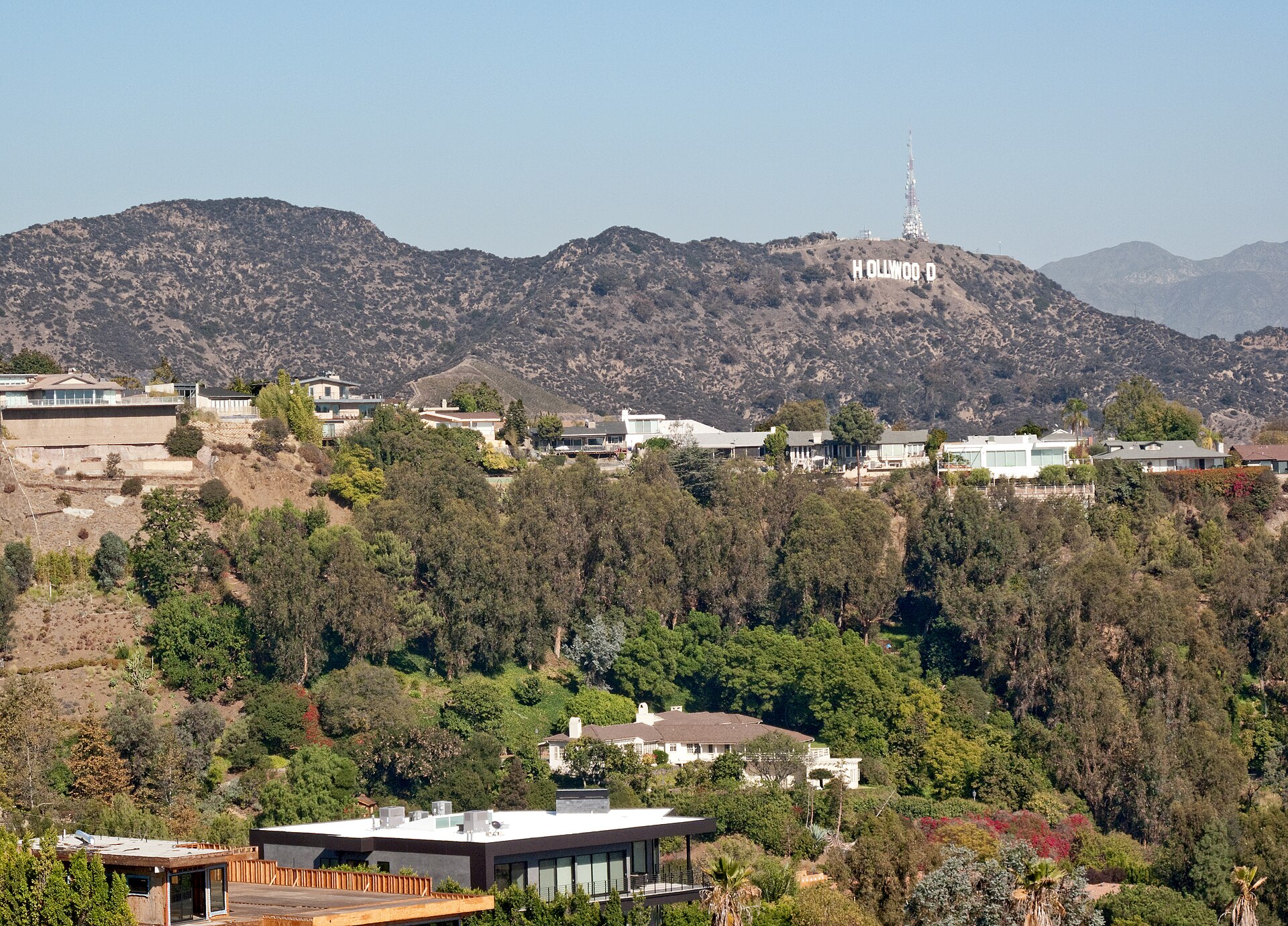
Runyon Canyon is the hike most visitors picture when they think of Hollywood: a short, steep loop that starts a few blocks above Hollywood Boulevard and climbs to ridgelines facing the Hollywood Sign, Griffith Observatory and the downtown skyline. The city-run park covers about 160 acres of chaparral, eucalyptus and old estate ruins, and on a clear morning you can see all the way to the ocean. This guide covers where the park stands after the 2025 Sunset Fire, which loop to pick, how the entrances and parking work, the dog rules and how to time your visit. Park hours, trail closures and parking rules change from time to time, so check the official City of Los Angeles Recreation and Parks page before you go.
Runyon Canyon in 2026: What Is Open
Runyon Canyon is open daily. The more complicated story is what happened over the past two years. On January 8, 2025, the Sunset Fire broke out in the Hollywood Hills just west of the park. Firefighters had it fully contained in about a day, at roughly 50 acres, but the flames reached parts of Runyon Canyon. Recreation and Parks closed the whole park for almost three weeks, then reopened it in stages. The West Trail on the western ridge, the part of the park closest to the fire, stayed fenced off for more than a year while the hillside recovered.
KTLA reported in late February 2026 that the West Ridge Trail had reopened to hikers. As of November 2026, the city’s main park listing still shows an older notice that the West Trail is closed, so if you plan to hike the full loop, look at the signs at the gate and follow any fencing you find. The rest of the park, including the main fire road and the east ridge, has been open since early 2025.
The other big change is a new restroom. For decades the park had none, and the city’s park page still says there are no restroom facilities. In early 2026 a two-stall prefabricated restroom was craned into place near the Fuller Avenue entrance. Its roughly $1 million price tag drew plenty of criticism, and the building sat locked behind a fence for months before FOX 11 reported in late August 2026 that it had opened. Still, use the bathroom before you arrive, just in case.
Hours and Key Park Rules
- Hours: sunrise to sunset, seven days a week. In past years the city has closed the park early (at 5 p.m.) around the Fourth of July for safety.
- Official address: 2000 N. Fuller Ave., Los Angeles, CA 90046 (the main entrance).
- Entry: free. There is no ticket or reservation.
- No smoking anywhere in the park. This is chaparral that burns easily, and the rule is enforced.
- Stay on designated trails. The city calls the park an urban wilderness and asks hikers to keep off the slopes to protect the habitat.
- Park Rangers: (323) 644-6661.
Runyon Canyon Trails and Loops
The trail network is a set of connected loops. From the Fuller Avenue gate, a wide path climbs the canyon to Inspiration Point; from there a steep ridge trail heads up the east side, and the paved Runyon Canyon Fire Road curves along the top of the canyon and back down its west side to the Vista Street gate. The rugged West Ridge runs above that road. Most people start at Fuller and combine these pieces, so you can make the hike as short or as hard as you like. Distances below come from detailed trail guides by HikeSpeak and HikingGuy (both updated in 2026); your watch may read a little differently.
The Fire Road (Runyon Canyon Road)
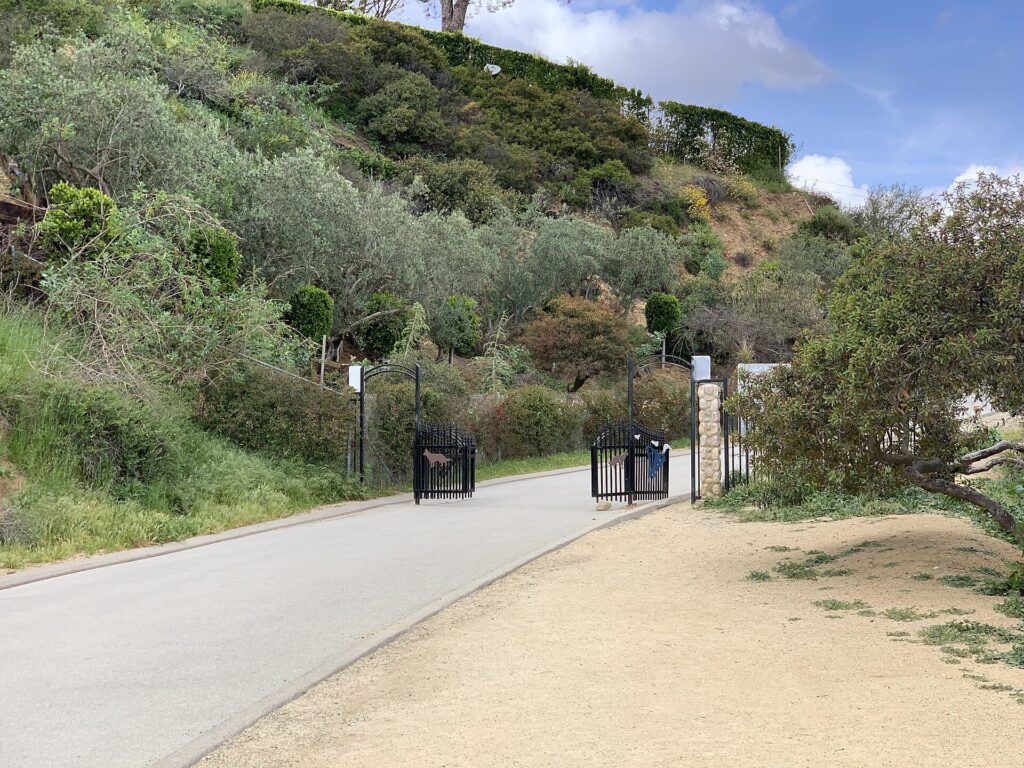
The fire road is the gentlest route in the park. It is paved for much of its length (the city improved it in 2016), climbs at a steady grade with no steps or loose scrambles, and links the top of the east ridge, the Mulholland gate and the Vista Street gate. Hikers who want the views without the steep pitches can walk it up and back from the Vista side. The lower canyon trails pass through the off-leash dog area, so expect plenty of dogs.
The East Ridge: Inspiration Point and Clouds Rest
The east side is where the classic Runyon views are. Inspiration Point, a bench-lined overlook less than half a mile from the Fuller gate, faces straight down onto Hollywood with the downtown towers beyond. Above it, the trail turns into a steep single-track with wooden steps, climbing roughly 340 feet in a third of a mile to Clouds Rest, a viewpoint at about 1,040 feet, before meeting the fire road near the top. It is short but steep, and this is the section where most people stop to catch their breath.
The West Ridge Trail
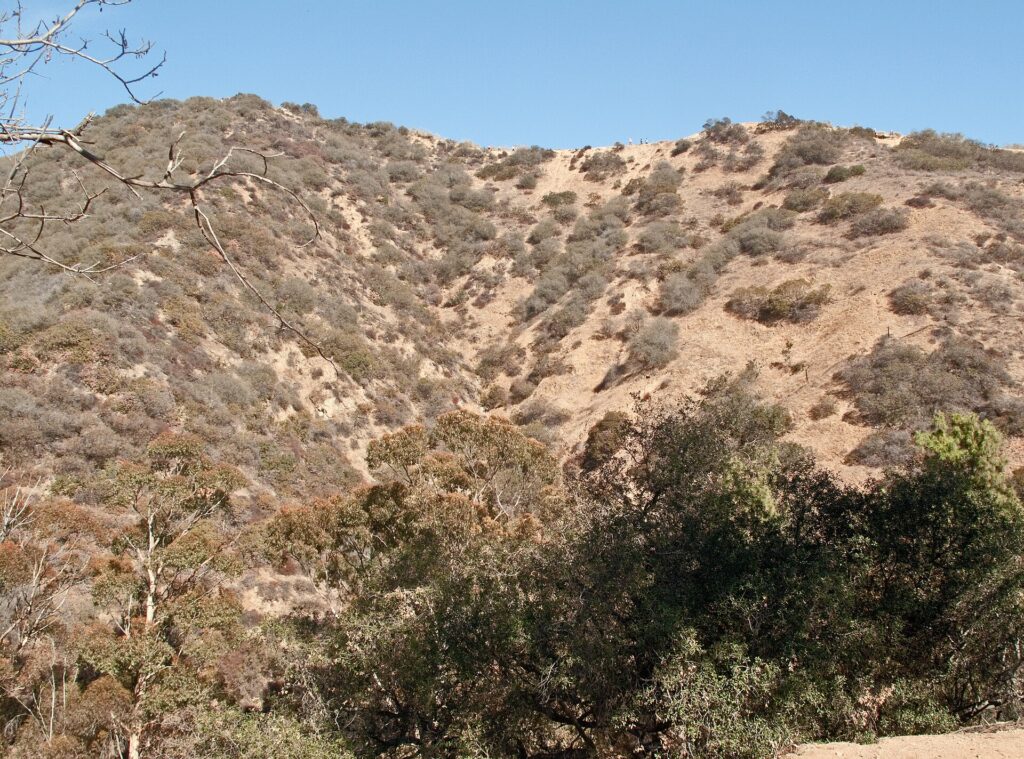
The western ridge (called the Western High Way on some maps) is rougher and less groomed. It leaves the fire road near the top, runs out to a rock outcrop near its 1,200-foot high point with views over Nichols Canyon, then drops about 600 feet in half a mile on loose dirt toward the Vista Street gate. It is the side nearest the Sunset Fire and the last part of the park to reopen. In exchange for the effort you get one of the quieter stretches of the park and wide views across the hills toward the Hollywood Sign. Good shoes with grip help a lot on the way down.
Which Loop to Choose
- Short loop, about 1.9 miles and 500 feet of gain: up the east ridge past Inspiration Point and Clouds Rest, then down the paved fire road toward the Vista Street gate and back to Fuller. Good for a first visit.
- Middle loop, about 2.65 miles and 700 feet: the same climb, then out along the West Ridge to the rock outcrop and down its steep descent.
- Full loop, about 3.3 to 3.5 miles and 800 to 900 feet: the same route with a side trip to the park’s high point, about 1,325 feet, near the Mulholland gate, before descending the West Ridge. Plan on about 90 minutes at a steady pace.
- From Mulholland, about 0.85 miles and 200 feet: a short loop from the upper entrance to the park’s high point. It is the gentlest way to get a big view.
None of these is long, but the full loop is a real workout because nearly all the climbing comes in short, steep bursts with little shade. If you want a longer day in the hills, our guide to the best hikes in Los Angeles covers trails with more distance and fewer crowds.
Entrances: Fuller Avenue, Vista Street and Mulholland
Runyon Canyon has three gates, and the city publishes a separate trail map for each.
- Fuller Avenue Gate (main, south end): at the top of North Fuller Avenue, just north of Franklin Avenue. This is where most loops start and end, and where the new restroom stands. From the 101 freeway, the National Park Service directions are to exit at Highland, go south to Franklin, west to Fuller, then north to the dead end.
- Vista Street Gate (south end): a second lower entrance at the top of North Vista Street, west of Fuller. The paved fire road ends here, and a short connector links it to the Fuller side, so you can start here and join any of the loops.
- Mulholland Gate (north end): on Mulholland Drive, about 2.6 miles east of Laurel Canyon Boulevard. You start near the top here, so the short walk to the high point is easy and the big climb comes on the way back up if you descend into the canyon.
Parking at Runyon Canyon
Parking is the hardest part of the hike. There is no public parking lot at the Fuller or Vista gates; you park on residential streets, and those streets are tightly regulated. In February 2024 the Los Angeles City Council voted 14-0 to create a preferential (permit) parking district around the park after years of neighbor complaints. The district covers 21 street segments around Fareholm, Nichols Canyon, Wattles, Hillside, Curson, Stanley, Laurel Canyon and parts of Hollywood Boulevard, with a mix of two-hour limits, four-hour limits and no-parking hours for anyone without a resident permit.
- Read every sign on the block. Permit hours, time limits and weekly street-cleaning rules differ from one block to the next.
- Look south of Franklin Avenue first. Trail guides suggest starting your search below Franklin and walking up; spots close to the gate go early.
- Arrive early. One trail guide found about a dozen open spots within five minutes of the gate at 7 a.m. on a weekday. Later in the morning, and on weekends, expect a long search.
- Skip the car if you are staying in Hollywood. The Fuller gate is a short walk up from Hollywood Boulevard, and a rideshare drop-off at Franklin and Fuller avoids the hunt entirely.
- Mulholland has a small parking area at the upper gate. It fills up, but it can be easier than the streets below.
Dogs at Runyon Canyon
Runyon is one of the few places in Los Angeles where dogs can run off leash on a hiking trail, which is a big part of why locals love it. The city’s rule is simple: dogs may be off leash in designated areas only. Roughly 90 of the park’s 160 acres are marked for off-leash use, starting at a large gate a few minutes up from the Fuller entrance. Outside the marked zone, including the entrance areas, dogs must be leashed.
- Bring bags and pick up after your dog.
- Carry water and a bowl for your dog. The trails are exposed and the dirt gets hot in summer.
- Off leash still means under voice control. The fire road is shared with runners, families and other dogs.
The Views: Hollywood Sign, Downtown and the Ocean
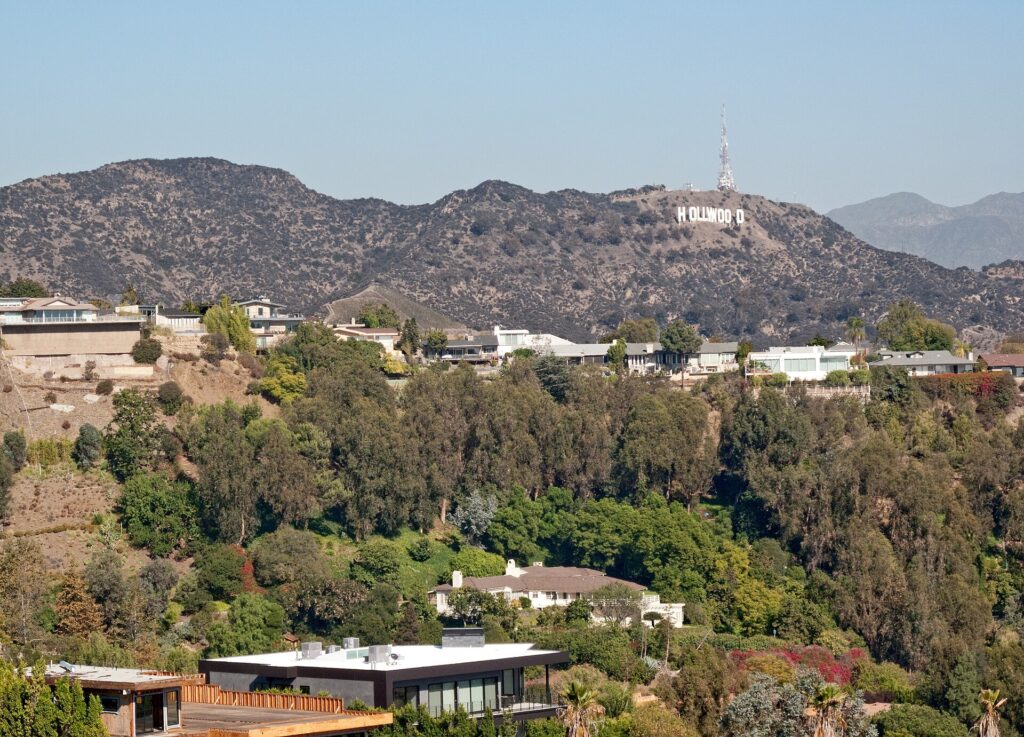
The views are why Runyon is busy. From Inspiration Point you look south over Hollywood toward the downtown skyline. On the climb toward Clouds Rest, the Hollywood Sign and Griffith Observatory come into view to the east, and from the upper ridges you can see Nichols Canyon, Griffith Park and, on the clearest days, the Pacific beyond Santa Monica and even Catalina Island.
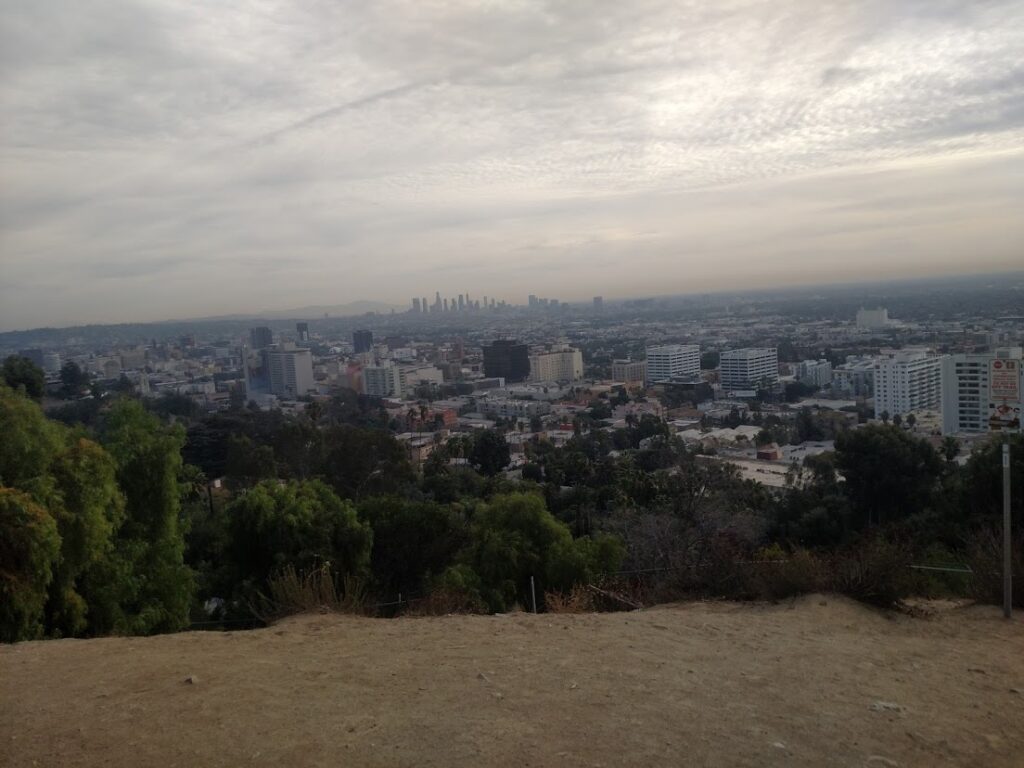
For photos, the morning light is softer and the air tends to be clearer after rain or a windy day. Late-afternoon hikes give you the city lighting up at dusk, but remember that the park officially closes at sunset, so start down while it is still light. If the Hollywood Sign is your main goal, our guide to Griffith Observatory covers another of the best places to see it.
Best Times to Hike
- Season: late fall through spring is the most comfortable. Winter rain turns the hills green and clears the air. Summer and early fall are hot, and much of the trail has no shade.
- Time of day: start as early as you can. Early mornings are the coolest and least crowded; weekend mornings are the busiest time of the week.
- Weekdays: quieter, and parking is easier.
- Holidays: watch for early closures, such as the ones around the Fourth of July in past years.
Safety: Heat, Water and Wildlife
Runyon is in the middle of the city, but it is still a dry, steep hillside with little shade. The city’s park page carries a standing heat advisory: carry water and stay hydrated.
- Carry water, at least a liter per person and more in summer, even for the short loop. Don’t count on water fountains along the trail.
- Wear shoes with grip. The ridges have loose, sandy dirt and steep descents, especially on the West Ridge.
- Sun protection matters. There is very little shade above the canyon floor. Bring a hat and sunscreen.
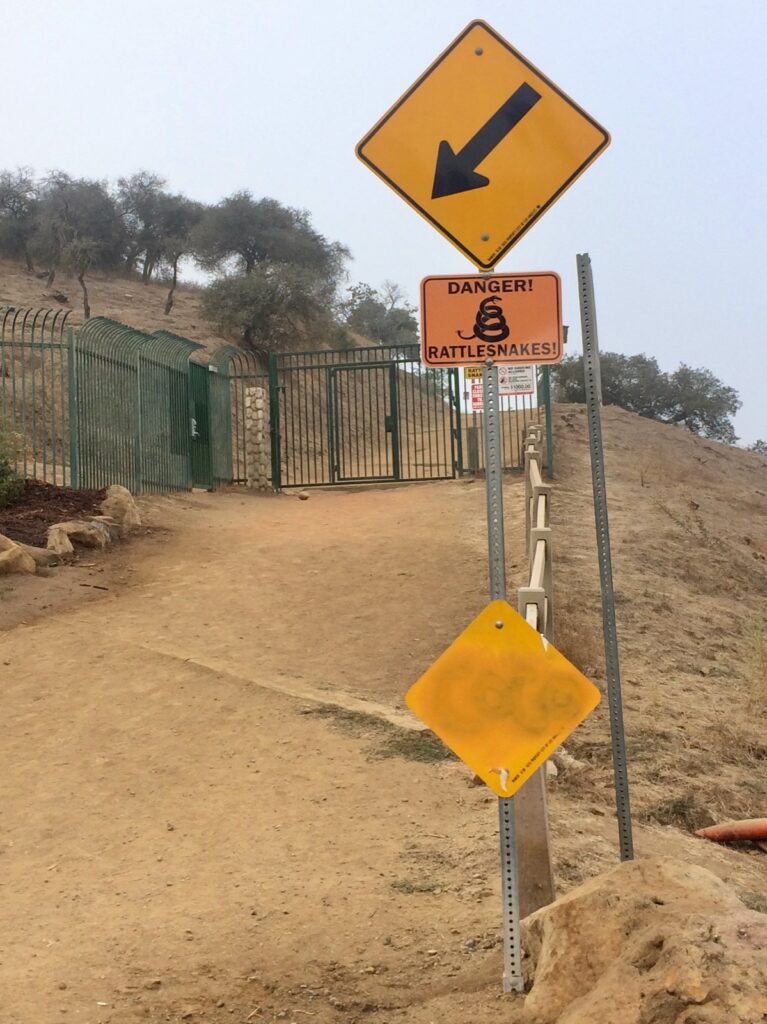
- Watch for rattlesnakes, particularly on warm days. Warning signs are posted at the gates; stay on the trail and give any snake plenty of room.
- Fire risk is real. The Sunset Fire showed how quickly these hills burn. No smoking, no open flames, and leave if you see smoke.
Trail Etiquette
Runyon is shared by visitors, dog walkers and runners doing hill repeats, often all at once. A few habits keep it pleasant: keep to one side on the narrow ridge trails and let faster hikers pass, step aside to take photos rather than stopping in the middle of the steps, keep music on headphones, and pick up after your dog. The streets around the gates are residential, so keep your voice down early in the morning and don’t block driveways. Cutting switchbacks or scrambling off-trail is not allowed and damages slopes that are still recovering from the fire.
A Short History of Runyon Canyon
The canyon takes its name from Carman Runyon, who used it as a retreat for riding and hunting. It later passed to the Irish tenor John McCormack, who built an estate he called San Patrizio, with a mansion, tennis courts and a pool. In 1942 the A&P grocery heir Huntington Hartford bought the land and renamed it The Pines. He planned a country club designed by Frank Lloyd Wright, but neighbors blocked it. In the late 1950s Errol Flynn lived in the estate’s pool house. The City of Los Angeles acquired the canyon as a park in 1984.
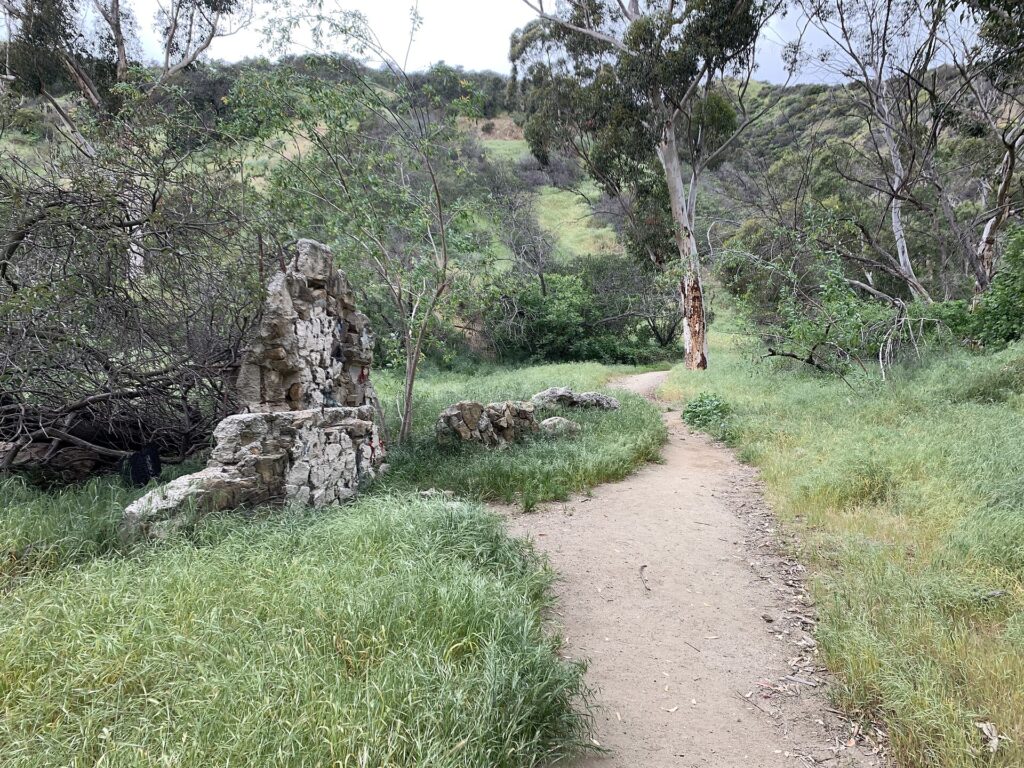
Pieces of that past are still on the trail. Along the trail up from the Fuller gate, an old fireplace, stone walls and the slab of a former tennis court sit beside the path, remains of the estate that stood here before the park.
What’s Nearby
The Fuller gate is only a few blocks from Hollywood Boulevard, so a Runyon hike pairs easily with the rest of the neighborhood. Walk down to the Hollywood Walk of Fame and the TCL Chinese Theatre for the classic sights, or have breakfast on Franklin or Hollywood Boulevard afterward. Our list of things to do in Hollywood has more ideas for the rest of the day.
If you’d rather see the Hollywood Hills without the climb, a private Hollywood tour lets you take in the hills and the Hollywood Sign from the comfort of a car. You can also make a morning hike the first stop of a day and spend the afternoon on our classic car tour in a 1970 Cadillac DeVille convertible, with pickup from your hotel.
Runyon Canyon: FAQ
Is Runyon Canyon open after the Sunset Fire?
Yes. The park reopened in stages after the January 2025 fire, and the West Ridge Trail, the last closed section, reopened in February 2026, according to KTLA. Check the city’s park page and the signs at the gate for any temporary closures.
How long does the Runyon Canyon hike take?
The short loop of about 1.9 miles takes most people under an hour. The full loop of about 3.3 to 3.5 miles, with 800 to 900 feet of climbing, takes around an hour and a half at a steady pace, plus stops for photos.
What are Runyon Canyon hours?
The park is open from sunrise to sunset every day, and entry is free. The city sometimes closes it early around holidays, such as the Fourth of July.
Can dogs be off leash at Runyon Canyon?
Only in the designated off-leash areas, which make up roughly 90 of the park’s 160 acres and begin at a marked gate a few minutes up from the Fuller Avenue entrance. Everywhere else, dogs must be on a leash.