
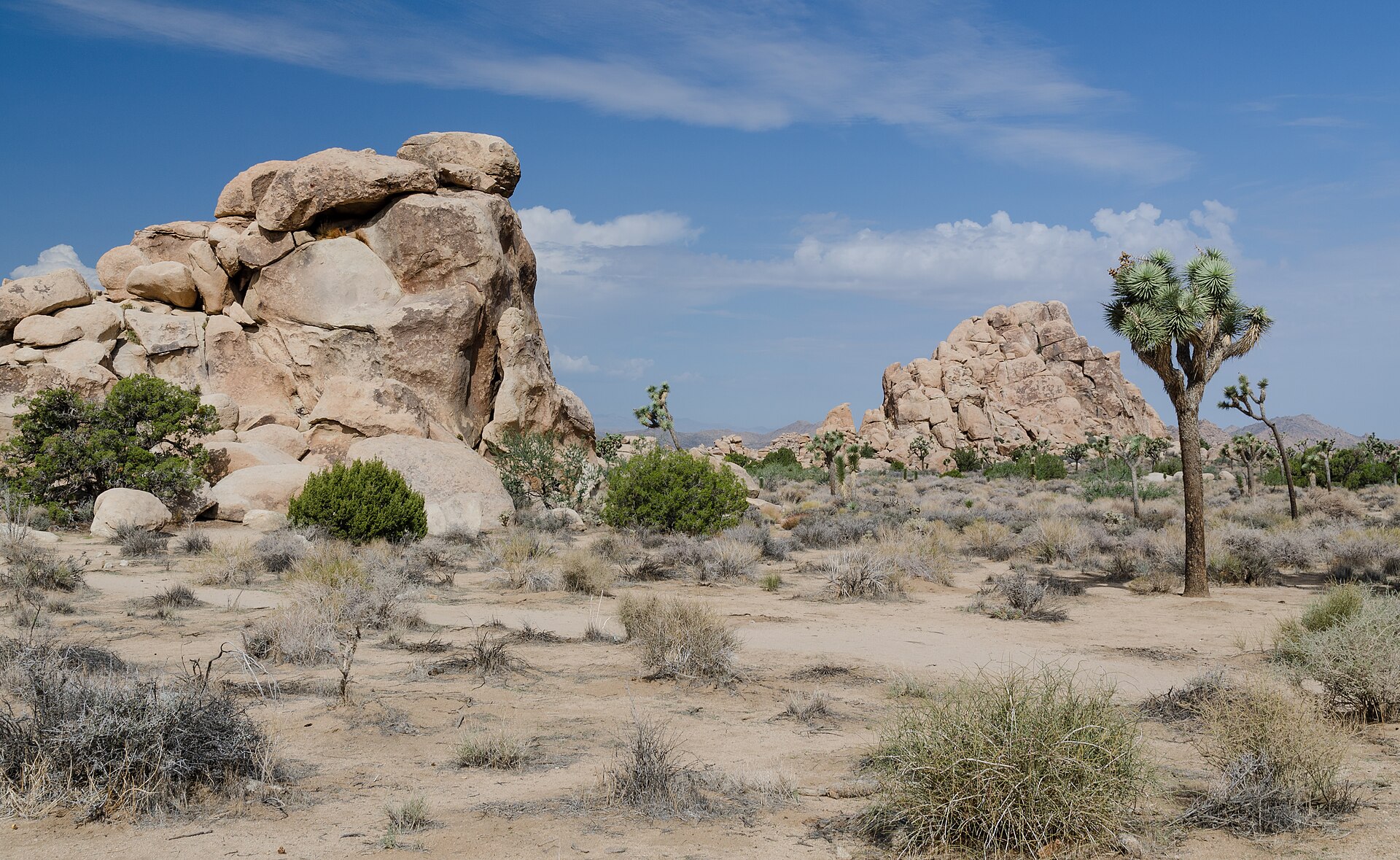
Joshua Tree National Park is the easiest big desert park to reach from Los Angeles: about 140 miles east of the city, where the Mojave and Colorado Deserts meet. In one long day you can walk among granite boulder piles, see thousands of the park’s namesake Joshua trees, look down on the San Andreas Fault from Keys View and, if you stay late, watch the stars come out over an International Dark Sky Park. This guide covers the best things to do in Joshua Tree, how to get there from LA, what the park costs to enter, when to go, and a realistic one-day plan. Park fees, tour schedules and trail conditions change, so check the National Park Service site before you go.
Joshua Tree at a Glance
Joshua Tree became a national monument in 1936 and a national park in 1994. It covers roughly 800,000 acres, most of it managed as wilderness, and draws about 3 million visitors a year. The higher western half is Mojave Desert, home of the Joshua trees. The lower south and east belong to the hotter Colorado Desert.
The Joshua tree itself (Yucca brevifolia) is not a true tree but a flowering plant in the agave family. The park estimates it has about 870,000 of them. Mature plants usually reach around 39 feet, and the average lifespan is about 150 years, with some living to 300. The park sits at the southern edge of the species’ range, so stay on trails and leave the plants alone.
There are no hotels, restaurants, gas stations or drinking water inside the park, so bring fuel, food and water with you.
Day Trip to Joshua Tree from Los Angeles
From central Los Angeles, the drive is usually about two and a half hours in light traffic, and closer to three on Friday afternoons, weekends and holidays. The standard route is Interstate 10 east toward Palm Springs, then California Highway 62 (the Twentynine Palms Highway) north through Yucca Valley to the town of Joshua Tree and the West Entrance. Count on five to six hours of round-trip driving.
The park service advises not to rely on GPS alone, because some navigation apps route drivers onto unsuitable backcountry roads. Download the official NPS app and its offline maps before you leave LA, since cell service inside the park is extremely limited and in many areas nonexistent.
Park Entrances
- West Entrance: five miles south of Highway 62 on Park Boulevard, at the town of Joshua Tree. It is the closest entrance to LA and the busiest.
- North Entrance: in Twentynine Palms, three miles south of Highway 62 on Utah Trail. Often quicker on busy mornings.
- South (Cottonwood) Entrance: near Cottonwood Spring, right off Interstate 10, 25 miles east of Indio. Handy if you are coming from or returning toward Palm Springs.
Inside the park, the NPS estimates about 45 minutes of driving from the West Entrance to the North Entrance, an hour from the North Entrance to Cottonwood, and an hour and a half from the West Entrance to Cottonwood.
Entrance Fees and Passes
According to the park’s official fee page, entry costs $30 per private vehicle (valid for seven days, covering everyone in the car), $25 per motorcycle, and $15 per person arriving on foot or by bike (age 16 and up). A Joshua Tree annual pass costs $55. The America the Beautiful pass covers this and other federal sites: $80 a year for US residents and $250 a year for non-residents.
Two 2026 changes are worth knowing. First, the extra $100 non-resident fee introduced in 2026 applies at 11 high-demand parks such as Yosemite and the Grand Canyon; Joshua Tree is not on that list. Second, fee-free days now apply only to US citizens and residents, so international visitors pay the regular entrance fee on those dates. Buying a digital pass on Recreation.gov in advance shortens the entrance line.
Reservations and Timed Entry
Joshua Tree has no timed-entry or entrance reservation system; you can arrive and leave at any time with a valid pass. Reservations are needed only for most campsites and for the ranger-led Keys Ranch tour. On busy days, popular parking lots fill early and the park can become drive-through only at some stops, so aim to reach your first priority before 9 a.m.
Best Time to Visit Joshua Tree
Fall and spring are the most comfortable seasons, with daytime highs of about 70 to 85°F. Winters are cool, with highs around 60°F and nights at or below freezing, which makes December through April the classic window for a day trip from LA. Spring, holidays and weekends from October to May are also the busiest times, so a weekday visit is noticeably calmer.
Summer is a different story. Highs are typically over 100°F, the hottest months are July and August, and the park warns that hiking in extreme heat can lead to heat stroke and worse. In summer, be active only before 10 a.m. or after 4 p.m. and stick to short walks. Some trails and campgrounds, including the Fortynine Palms Oasis trail, have seasonal summer closures.
Top Things to Do in Joshua Tree
Most of the park’s best-known sights sit along Park Boulevard between the West and North Entrances, with a second cluster along Pinto Basin Road heading south.
Hidden Valley
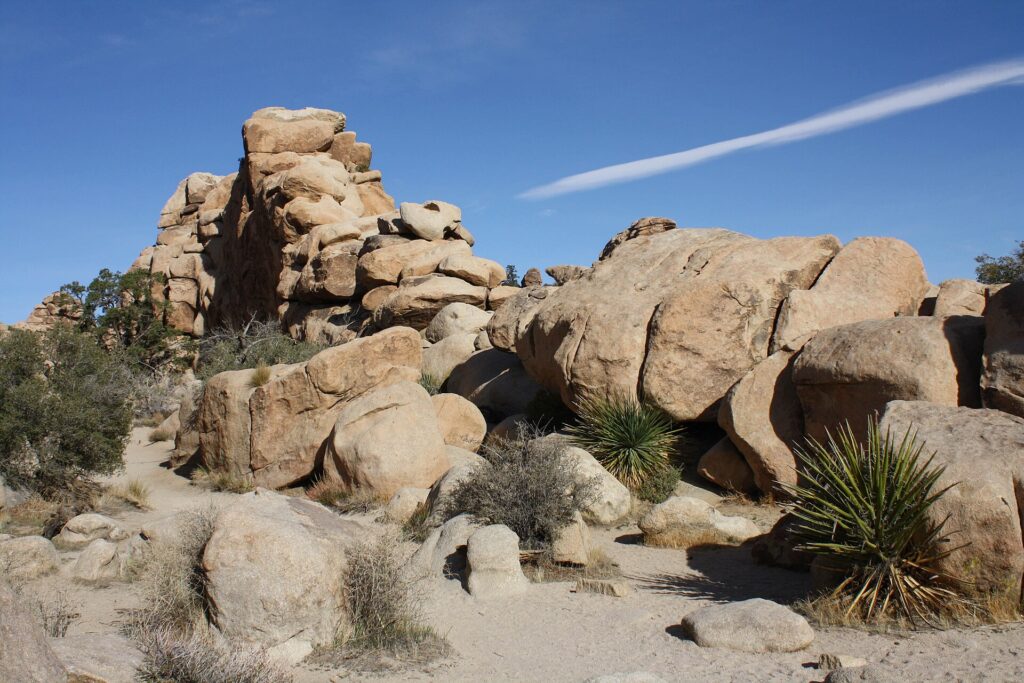
The Hidden Valley Nature Trail is a 1-mile loop with about 100 feet of elevation gain, winding through a valley almost completely enclosed by boulder piles. Local lore says cattle rustlers once used it to hide stolen herds. The surrounding rocks help explain why Joshua Tree is a famous climbing area, with about 8,000 routes across the park. The Hidden Valley parking lot is also one of the park’s four designated stargazing areas.
Barker Dam
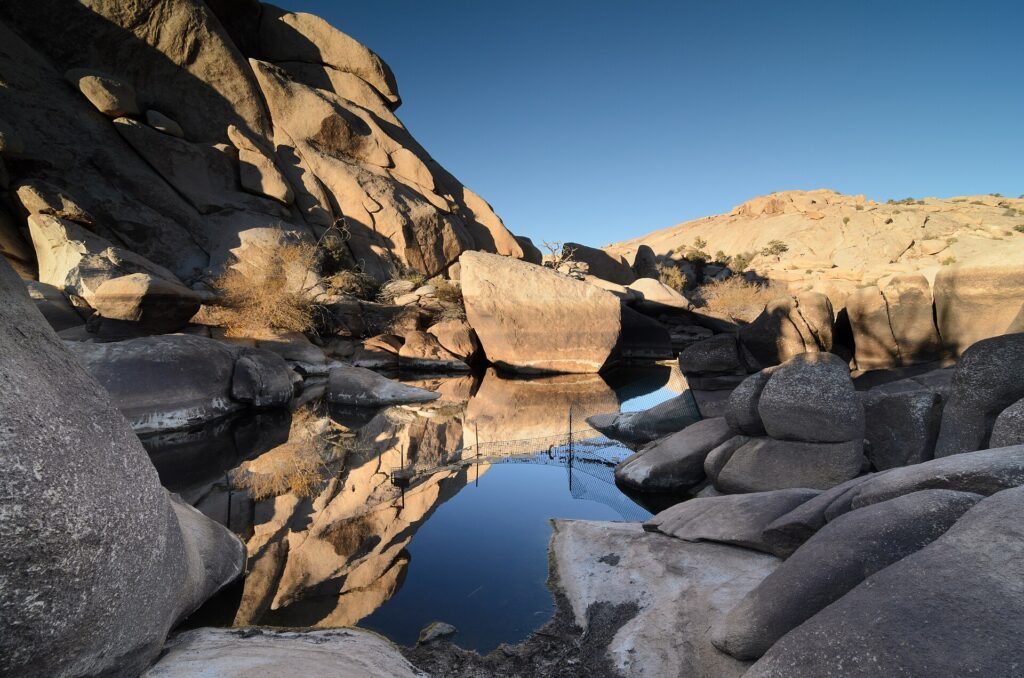
A short drive from Hidden Valley, the Barker Dam loop is 1.1 miles with only about 50 feet of gain. It passes a water tank built by early cattle ranchers, and after a wet winter the reservoir can hold water that reflects the surrounding rocks. Desert bighorn sheep are sometimes spotted here.
Keys View
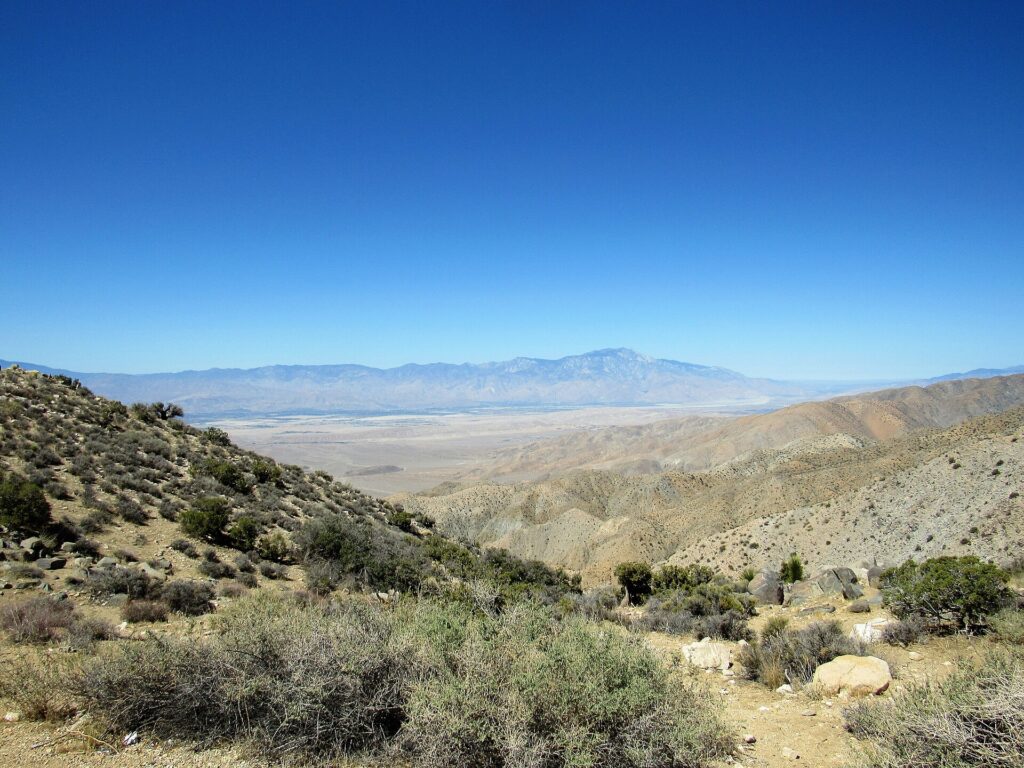
About 20 minutes from Park Boulevard via Keys View Road, Keys View sits on the crest of the Little San Bernardino Mountains and looks across the Coachella Valley. On a clear day you can see the Salton Sea, the Santa Rosa Mountains, San Jacinto Peak (10,800 feet) and San Gorgonio Mountain (11,500 feet), with the San Andreas Fault running through the valley below. The view starts beside the parking lot, and a short, steep paved loop climbs the ridge for a wider panorama. Haze often softens the far views.
Skull Rock
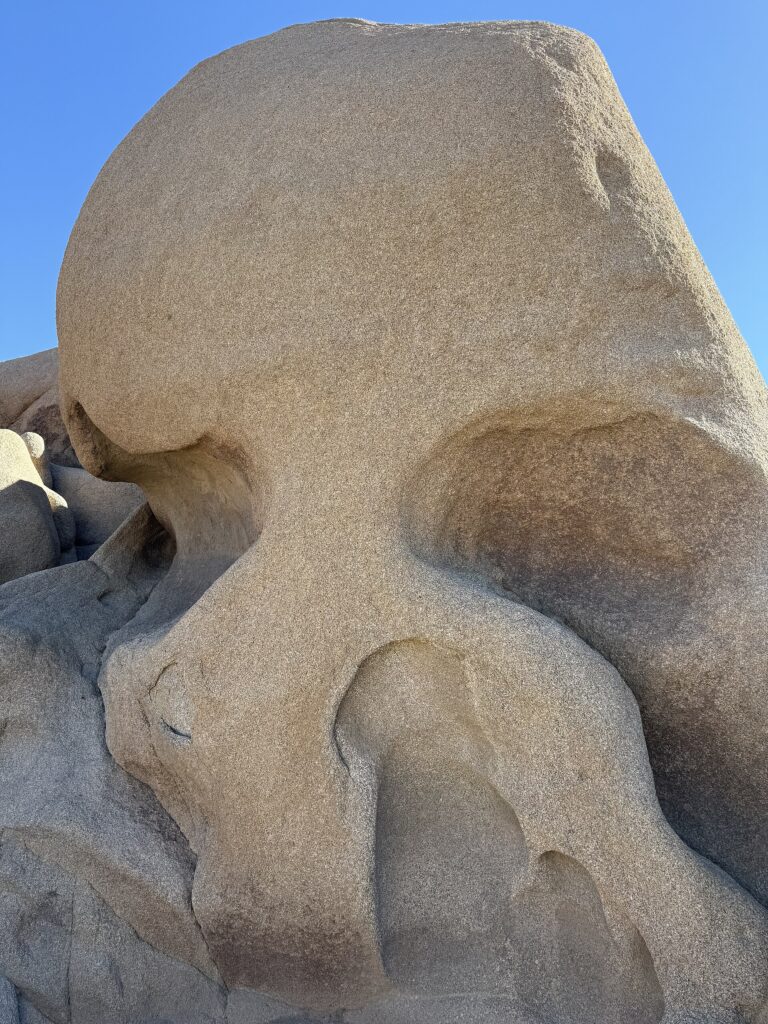
Skull Rock sits along Park Boulevard just east of Jumbo Rocks Campground, a short walk from its parking area. Its weathered hollows look remarkably like eye sockets, and from the right angle the granite boulder really does resemble a skull. For more than a photo stop, the Skull Rock loop is 1.7 miles with about 160 feet of gain, passing boulder piles and desert washes.
Arch Rock
Arch Rock is one of the park’s most photographed formations. The trail starts at the Arch Rock and Twin Tanks trailhead on Pinto Basin Road and passes White Tank Campground; it is a 1.4-mile lollipop loop through sandy and rocky ground with about 100 feet of gain. The NPS suggests walking the loop counterclockwise, which makes the arch easier to spot. Parking is limited, so arrive early on busy days.

Cholla Cactus Garden
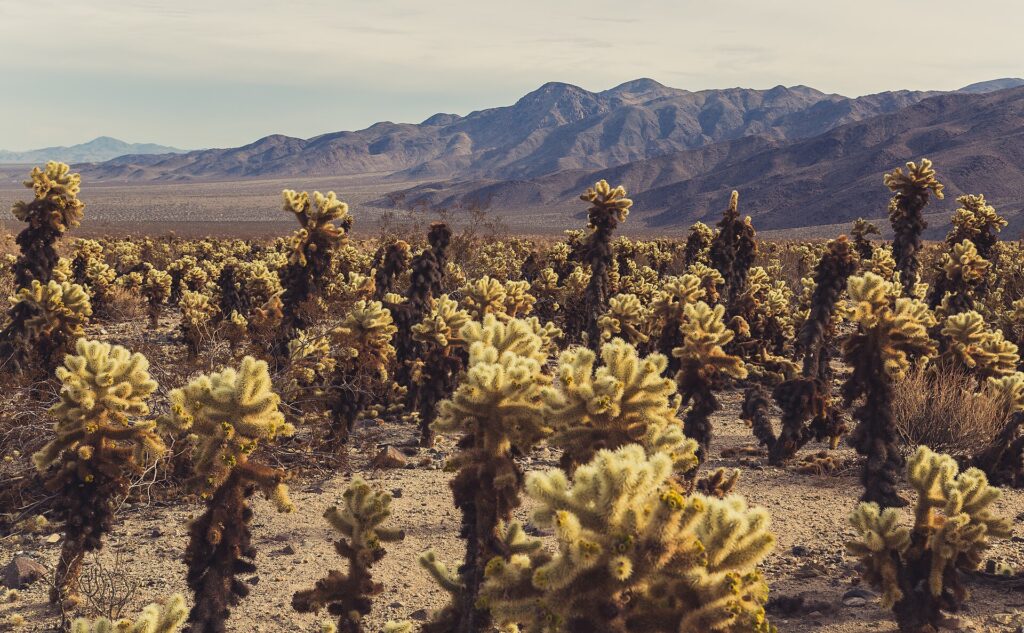
Farther south on Pinto Basin Road, in the transition zone between the Mojave and Colorado Deserts, the Cholla Cactus Garden is a flat quarter-mile loop through a dense stand of teddy bear cholla. The spines detach at the lightest touch, so wear closed-toe shoes, stay on the trail and keep children close. The garden reopened in 2025 after trail improvements. It has no shade, and it is one of the park’s suggested sunset spots, when the cactus glows in low light.
Ryan Mountain
For a real workout, Ryan Mountain is a 3-mile out-and-back hike that climbs 1,050 feet to a summit with 360-degree views over the park’s valleys. The NPS lists 1.5 to 2.5 hours and strongly advises against it in hot weather. Start early, carry plenty of water, and leave enough daylight to come down safely.
Keys Ranch
Keys Ranch, built in 1910 and home to William (Bill) and Frances Keys and their family for more than 60 years, can only be visited on a ranger-led walking tour. The half-mile walk takes 90 minutes to two hours and covers ranching, mining and homesteading. Tours typically run in the cooler months (roughly October through May) and not in summer. Tickets are sold only on Recreation.gov, up to 60 days ahead, with no walk-ups; the most recent listings charged $20 for ages 12 and up and $10 for children 6 to 11, on top of park entry. Tours often sell out.
Short Stops Near Highway 62
Just passing through? The Joshua Tree National Park Visitor Center in Twentynine Palms sits beside the Oasis of Mara, a short, easy loop through a desert fan palm oasis. Check the park’s alerts first, because part of the trail has been closed after flooding. Nearby, the 3-mile Fortynine Palms Oasis trail crosses a ridge to a palm oasis in a rocky canyon; it closes in summer.
Geology Tour Road
Geology Tour Road is an 18-mile round-trip dirt road off Park Boulevard that leads into some of the park’s most striking rock scenery. Expect soft sand and steep grades: the NPS recommends four-wheel drive, with high clearance needed beyond about the 5-mile point, and the road closes temporarily after heavy rain (it was closed in October 2026 after flooding), so check conditions on the day.
Stargazing in Joshua Tree
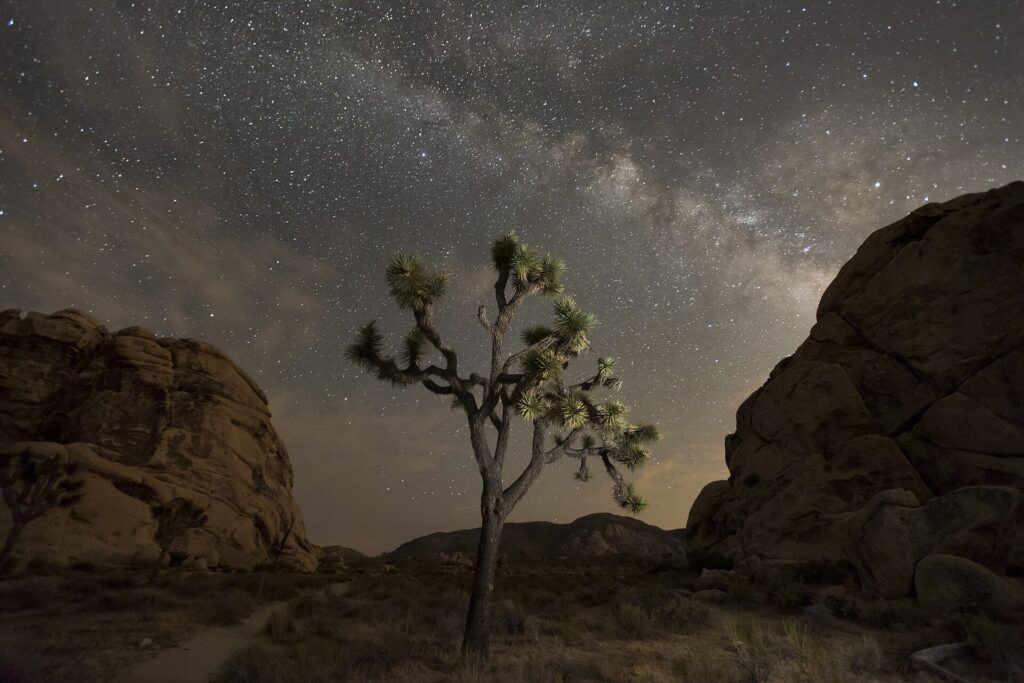
Joshua Tree was designated an International Dark Sky Park in 2017, and its skies are among the darkest within easy reach of Los Angeles. The park has four designated stargazing areas, all in parking lots: Quail Springs, Hidden Valley, Cap Rock and Ryan Mountain. Pinto Basin has the darkest skies.
- Go near a new moon; bright moonlight washes out fainter stars.
- Use a red light instead of a white flashlight. Your eyes need 20 to 30 minutes to adjust fully to the dark.
- Bring warm layers; desert temperatures drop fast after sunset, even in spring and fall.
- Summer is the best season for the Milky Way’s bright core, and the park notes May and June as a peak time.
The park also hosts an annual Night Sky Festival, a ticketed event usually held in the fall at the Sky’s the Limit Observatory and Nature Center just outside the North Entrance. Watch the NPS site for dates.
Sample One-Day Joshua Tree Itinerary from LA
This plan suits a cool-season weekday and keeps hiking short.
- Early morning: Leave Los Angeles around 6 a.m. and take I-10 east and Highway 62 to Joshua Tree. Fill the tank and pick up lunch and extra water in town.
- Around 9 a.m.: Enter at the West Entrance and drive Park Boulevard through the thickest Joshua tree forests. Walk the Hidden Valley loop before its parking lot fills.
- Late morning: Walk the Barker Dam loop, then drive about 20 minutes to Keys View for the Coachella Valley panorama.
- Midday: Picnic at the Hidden Valley picnic area, which has tables and grills among the boulders, then either climb Ryan Mountain if it is cool or stop at Skull Rock for a shorter walk.
- Afternoon: Head south on Pinto Basin Road to the Arch Rock loop, then on to the Cholla Cactus Garden in late-afternoon light.
- Sunset and after: Watch sunset from the cholla or Cap Rock, stay for the first stars, then exit through the North Entrance and Highway 62 or continue south to I-10 via Cottonwood for the drive back to LA.
If you would rather not drive yourself, a private day trip beyond LA can be arranged on request through our contact page, and closer to home our private SUV tour covers the city’s highlights with hotel pickup.
Joshua Tree Town, Pioneertown and Noah Purifoy
The communities along Highway 62 are worth part of your day. The town of Joshua Tree, just north of the West Entrance, is home to the Joshua Tree Visitor Center, which has exhibits, a bookstore, a cafe and restrooms, and makes a good last stop for maps and advice before entering the park.
Noah Purifoy Outdoor Museum (63030 Blair Lane, Joshua Tree) is an open-air collection of large assemblage sculptures by artist Noah Purifoy, spread across the desert floor. It is open every day from dawn to dusk, admission is free, and visitors sign in at a small kiosk. Groups of more than 10 should arrange visits with the foundation in advance.
Pioneertown, in the hills near Yucca Valley, was founded in 1946 as a “living, breathing movie set” by a group of investors that included Roy Rogers and Dale Evans. Its Mane Street still keeps its Old West false fronts and is open only to foot and horse traffic. In town, Pappy & Harriet’s (53688 Pioneertown Road) serves barbecue and is known for live music; check its website for the current show calendar.
The “Transmission” sculpture by Daniel Popper that circulates on social media stands on private land outside the park without clear public access, so it is not included here.
Safety Tips for Visiting Joshua Tree
- Water: There is no water in the park’s interior. In warm weather the NPS recommends carrying about four liters per person per day, and more if you hike.
- Heat: Avoid midday hikes from late spring to early fall, rest in shade, and turn back early if anyone feels unwell.
- No cell service: Download offline maps in the NPS app and tell someone your plan and return time. Free Wi-Fi is available at the Joshua Tree Visitor Center and Black Rock.
- Storms: Summer thunderstorms can cause flash flooding and close unpaved roads. Never drive into flooded washes.
- Pets: Dogs are not allowed on trails (except the Oasis of Mara trail) and must stay within 100 feet of roads, leashed. Never leave a pet in a vehicle.
- Leave no trace: Pack out all trash and never park on vegetation.
- Check alerts: The park posts road, trail and entrance closures on its Alerts & Conditions page. As of mid-November 2026 no major road closures were listed, but entrances have closed for construction several times in the past year.
Things to Do in Joshua Tree: FAQ
How far is Joshua Tree from Los Angeles?
The park is about 140 miles east of Los Angeles. Driving via I-10 and Highway 62 to the West Entrance usually takes around two and a half hours in light traffic and up to three hours or more at busy times.
Do you need a reservation to visit Joshua Tree?
No. There is no timed-entry or entrance reservation system. You only need a valid entrance pass ($30 per private vehicle for seven days). Reservations are required for most campsites and for the Keys Ranch tour.
Can you see Joshua Tree in one day?
Yes, if you focus on Park Boulevard and Pinto Basin Road. A full day covers Hidden Valley, Barker Dam, Keys View, Skull Rock, Arch Rock and the Cholla Cactus Garden if you start early.
When is the best time to visit Joshua Tree?
Fall and spring are the most comfortable, with highs of about 70 to 85°F. Summer highs typically pass 100°F, so summer visits work best early in the morning and after dark.