
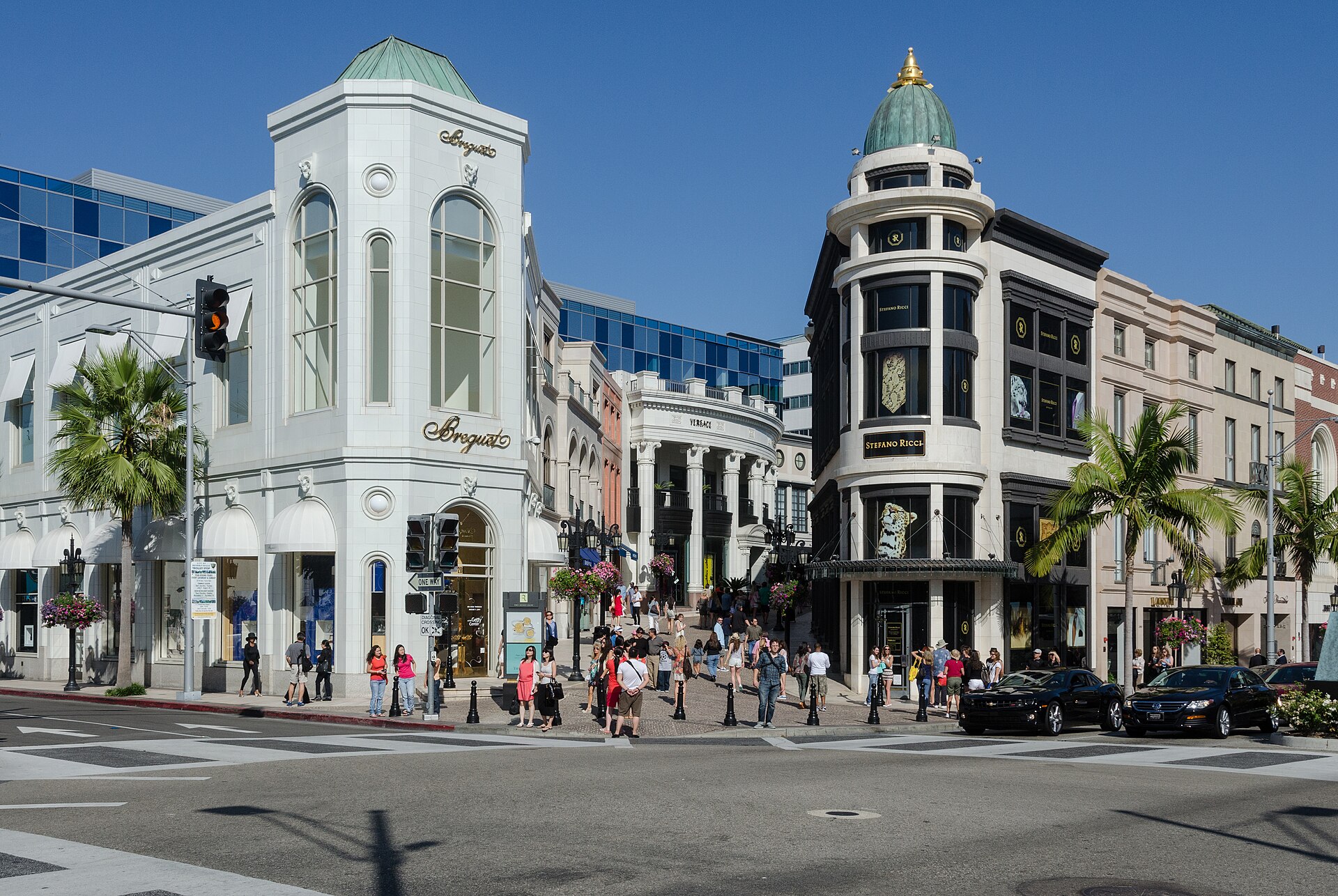
Deciding where to stay in Los Angeles matters more here than in most cities. The City of Los Angeles alone covers about 470 square miles of land, several favorite visitor areas (Beverly Hills, West Hollywood, Santa Monica, Pasadena) are separate cities, and the drive between them can take anywhere from 15 minutes to well over an hour. The area you sleep in decides how much of your trip is spent in traffic and how much is spent at the beach, on Rodeo Drive or at a theme park.
This guide is organized by area. For each one you get the feel of the place, who it suits, pros and cons, how the Metro serves it as of late 2026, and a few well-known hotels that are open now. If you want a hotel-by-hotel shortlist instead, see our guide to the best hotels in Los Angeles. Hotel amenities and policies change, so check the details with the hotel before you book.
The Short Answer: the Best Area to Stay in Los Angeles
- First trip, want to see the classics: Beverly Hills or West Hollywood. Both sit between Hollywood and the beach.
- Beach holiday: Santa Monica, with Venice as the more offbeat alternative.
- Families: Santa Monica, Universal City, or Anaheim (Orange County) for Disneyland.
- No car: Downtown LA, Hollywood, Santa Monica or Culver City.
- Early flight or short layover: Marina del Rey or the hotels near LAX.
Los Angeles Areas Compared
Drive times below are rough guides for a car or rideshare to central Hollywood. The lower number is a quiet midday or weekend run, the higher one is weekday rush hour, and accidents or events can push them higher.
| Area | Best for | Beach? | Metro rail access | Driving to Hollywood (approx.) |
|---|---|---|---|---|
| Beverly Hills | First-timers, shopping, luxury | No | D Line at Wilshire/La Cienega (east edge) | 15–35 min |
| West Hollywood | Nightlife, restaurants, LGBTQ+ travelers | No | No rail; buses (D Line a short ride south) | 10–25 min |
| Hollywood | Sightseeing, budget, transit users | No | B Line | You are there |
| Santa Monica | Beach, families, walking | Yes | E Line | 30–60 min |
| Venice | Beach, creative scene, couples | Yes | No rail; buses (E Line in Santa Monica) | 35–65 min |
| Downtown LA | Transit, culture, events, business | No | A, B, D and E Lines | 15–40 min |
| Pasadena | Families, quiet, history | No | A Line | 20–45 min |
| Anaheim (Orange County) | Disneyland | No | No Metro; Metrolink and Amtrak | 45–90 min |
| Culver City | Value, food, central west side | No | E Line | 25–50 min |
| Marina del Rey / near LAX | Airport access, waterfront | Nearby | C and K Lines at LAX/Metro Transit Center | 35–70 min |
| Universal City / Burbank | Universal Studios, families | No | B Line | 10–25 min |
Traffic and the Metro: What to Expect
LA traffic is as real as its reputation. Weekday mornings and late afternoons are the slowest times on the freeways and on big east-west roads like Sunset, Santa Monica and Wilshire Boulevards. Stay close to what you most want to see and group your days by area.
The Metro rail lines most useful to visitors:
- B Line (subway): downtown to Hollywood, Universal City and North Hollywood.
- D Line (subway): downtown along Wilshire Boulevard through Koreatown. Its extension opened on May 8, 2026 with stations at Wilshire/La Brea, Wilshire/Fairfax and Wilshire/La Cienega, at the eastern edge of Beverly Hills, about 20 minutes from Union Station. Stations in Beverly Hills, Century City and Westwood are planned for 2027.
- E Line (light rail): Downtown LA to Culver City and Downtown Santa Monica, a few blocks from the pier.
- A Line (light rail): Long Beach through downtown to Pasadena, and since September 2025 on to Pomona.
- To and from LAX: the LAX/Metro Transit Center station (C and K Lines) opened in June 2025. Until the airport’s people mover opens (not yet as of November 2026), a free shuttle bus links it with the terminals.
Beverly Hills: Central, Polished and Easy
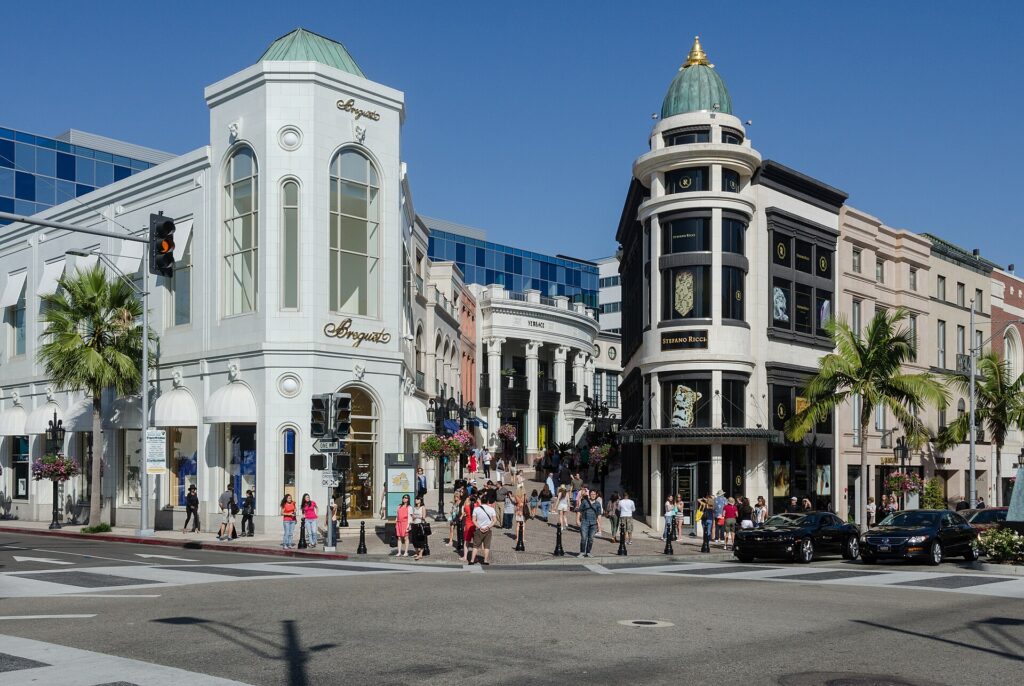
Beverly Hills is its own city, with clean, tree-lined streets, Rodeo Drive and the Golden Triangle shopping district, and some of the best-known hotels in the country. It sits roughly halfway between Hollywood and Santa Monica, which makes it an easy first-time base.
Best for: first-timers, couples, shoppers, travelers who want a calm and central base.
- Pros: central location; the Golden Triangle is pleasant to walk; quiet at night.
- Cons: among the most expensive places to stay in LA; little nightlife; hotel parking is usually valet and costly.
- Getting around: the D Line’s Wilshire/La Cienega station is at the city’s eastern edge and reaches downtown in about 20 minutes. A station at Wilshire and Rodeo is part of the next section, planned for 2027.
Where to stay: the Beverly Wilshire, A Four Seasons Hotel, at the foot of Rodeo Drive and famous from Pretty Woman; The Beverly Hills Hotel on Sunset Boulevard, open since 1912 and known for its pink-and-green exterior and bungalows; and The Beverly Hilton, long-time home of the Golden Globe Awards, with a big pool that suits families.
West Hollywood: Restaurants, Rooftops and the Sunset Strip
West Hollywood, or WeHo, is a small, separate city between Beverly Hills and Hollywood. The Sunset Strip runs along its northern edge with music clubs, billboards and hotel rooftop bars, and Santa Monica Boulevard is the heart of one of the best-known LGBTQ+ neighborhoods in the country.
Best for: nightlife, food lovers, LGBTQ+ travelers, first-timers who want energy in the evening.
- Pros: one of the most walkable parts of LA; a deep bench of restaurants and bars; central between Hollywood and Beverly Hills.
- Cons: hotel prices run high; weekend nights on the Strip are loud; street parking is tightly restricted.
- Getting around: no rail station. Buses run along Santa Monica Boulevard and Sunset, and the D Line’s Wilshire/La Cienega and Wilshire/Fairfax stations are a short ride south.
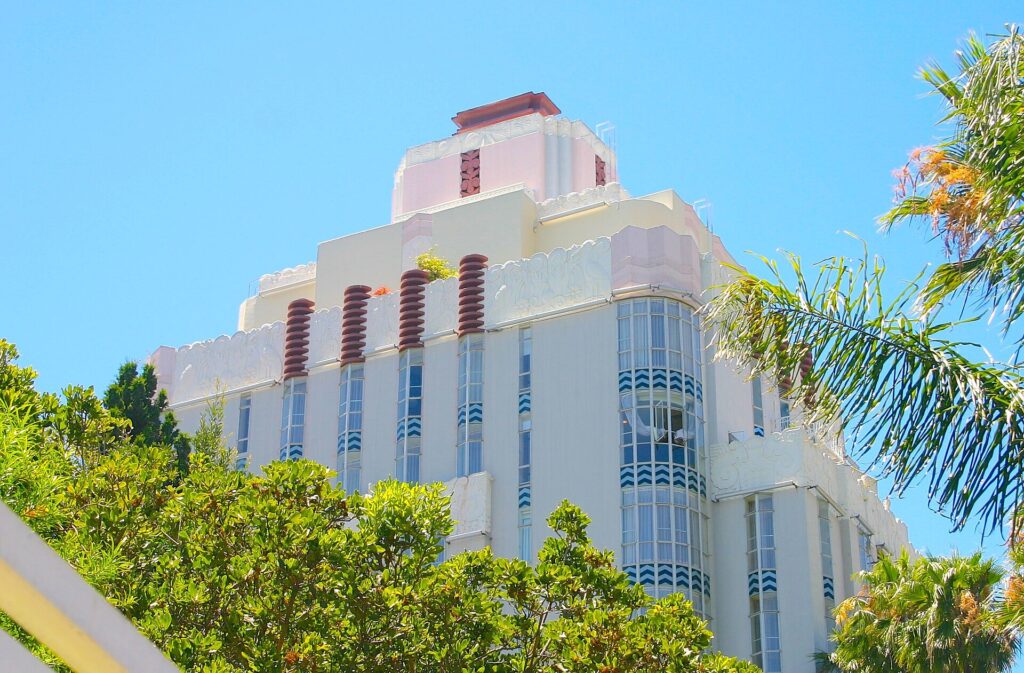
Where to stay: Sunset Tower Hotel, an Art Deco landmark on the Strip with the Tower Bar and a pool terrace; and The London West Hollywood, an all-suite hotel with a rooftop pool that works well for families who want extra space.
Hollywood: The Landmarks on Your Doorstep
Hollywood is where most first-time visitors expect LA to be: the Walk of Fame, the TCL Chinese Theatre, the Dolby Theatre and views of the Hollywood Sign. Staying here puts all of that within walking distance.
Best for: sightseeing on foot, travelers without a car, a wide range of budgets.
- Pros: landmarks, theaters and bars close together; the B Line reaches downtown and Universal City in minutes; more mid-range options than Beverly Hills or Santa Monica.
- Cons: Hollywood Boulevard is crowded and noisy day and night, with street vendors and costumed characters, and homelessness is visible; side streets a few blocks away are calmer.
- Getting around: B Line stations at Hollywood/Highland, Hollywood/Vine and Hollywood/Western.
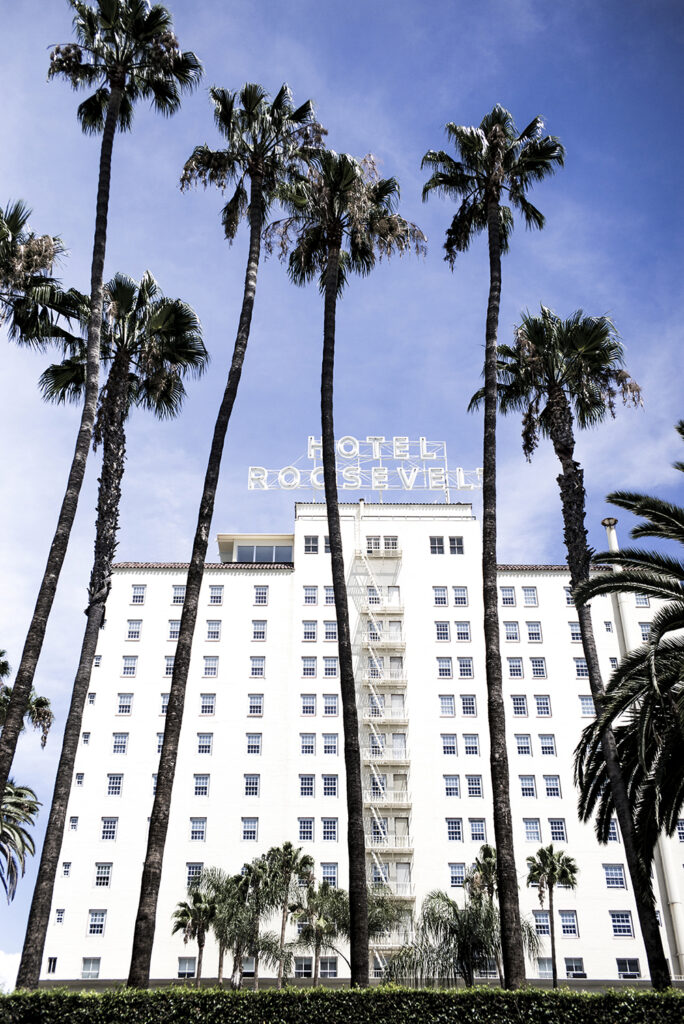
Where to stay: The Hollywood Roosevelt, opened in 1927 and host of the first Academy Awards, with its Tropicana Pool; and Loews Hollywood Hotel at Hollywood and Highland, a large, modern hotel with a rooftop pool and connecting rooms that make it a practical family choice.
Santa Monica: The Classic Beach Base
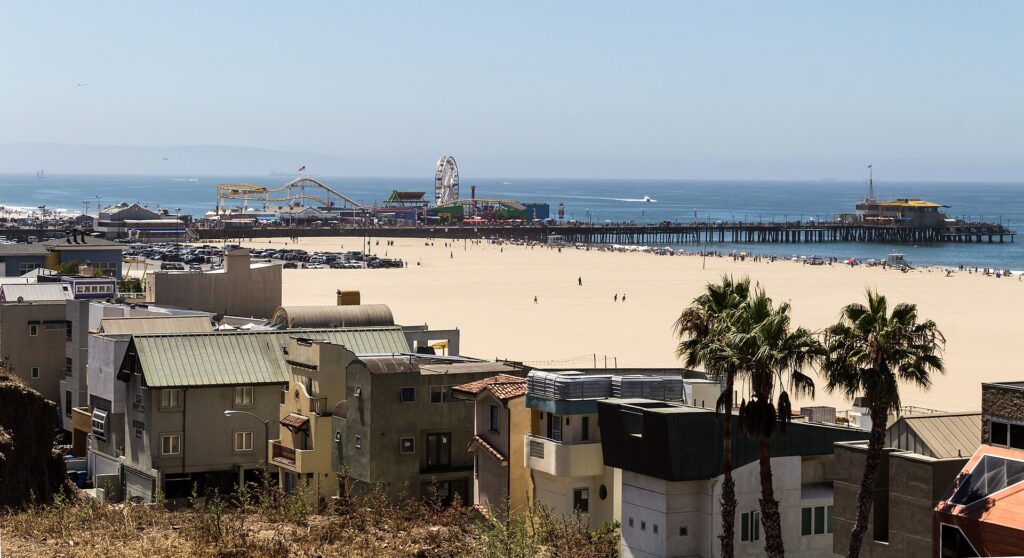
Santa Monica is a beach city with a real downtown. You get the pier with its Ferris wheel, a wide sandy beach, the Third Street Promenade for shopping and the bike path along the sand.
Best for: beach lovers, families, walkers and cyclists.
- Pros: walk to the beach, pier and restaurants; family-friendly; the E Line runs to downtown LA.
- Cons: far from Hollywood and the east side by car; mornings are often cool and gray in late spring and early summer; oceanfront hotels are expensive; quieter nightlife.
- Getting around: E Line stations at Downtown Santa Monica, 17th St/SMC and 26th St/Bergamot.
Where to stay: Shutters on the Beach, a Cape Cod-style hotel directly on the sand; and Fairmont Miramar Hotel & Bungalows on Ocean Avenue, with a pool and bungalows a short walk from the pier. For a rundown of the coast, see our guide to Los Angeles beaches.
Venice: Boardwalk, Canals and Abbot Kinney
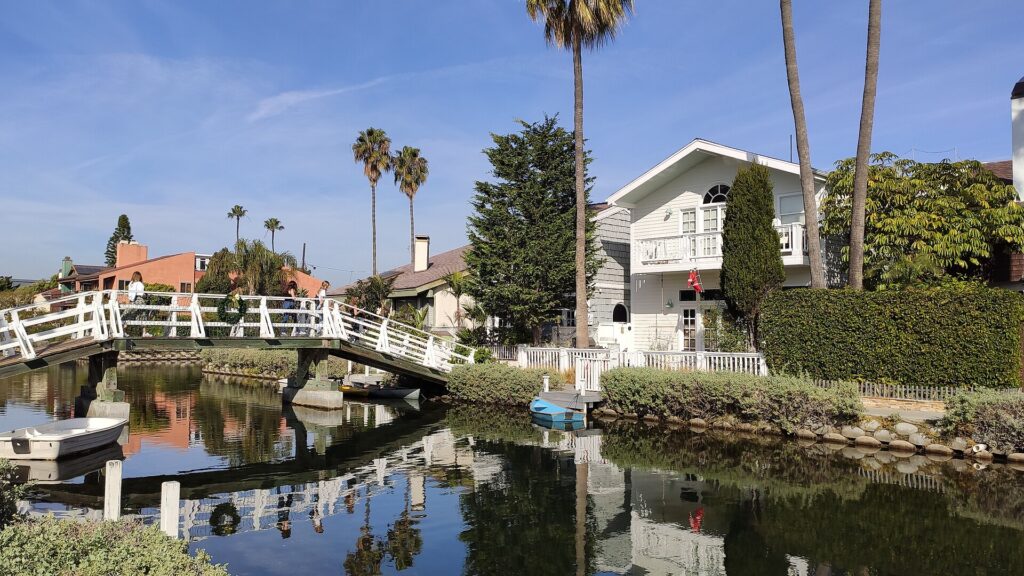
Venice, just south of Santa Monica, is the more relaxed and creative side of the coast. The Ocean Front Walk boardwalk, Muscle Beach and the skatepark are a short walk from the quiet residential Venice Canals, and Abbot Kinney Boulevard is lined with independent shops and restaurants.
Best for: beach lovers, couples, repeat visitors who want character over polish.
- Pros: beach and bike path at the door; walkable streets; a strong food and coffee scene.
- Cons: fewer hotels than Santa Monica; the boardwalk is busy and can feel rough after dark; homelessness is visible near the beach; a long drive to Hollywood and downtown.
- Getting around: no rail station. Buses and bikes connect to the E Line in Santa Monica.
Where to stay: Hotel Erwin, steps from the boardwalk with ocean-view rooms and a rooftop bar; and The Venice Beach House, a 1911 home on the National Register of Historic Places with individually decorated suites and gardens.
Downtown LA: The Transit Hub
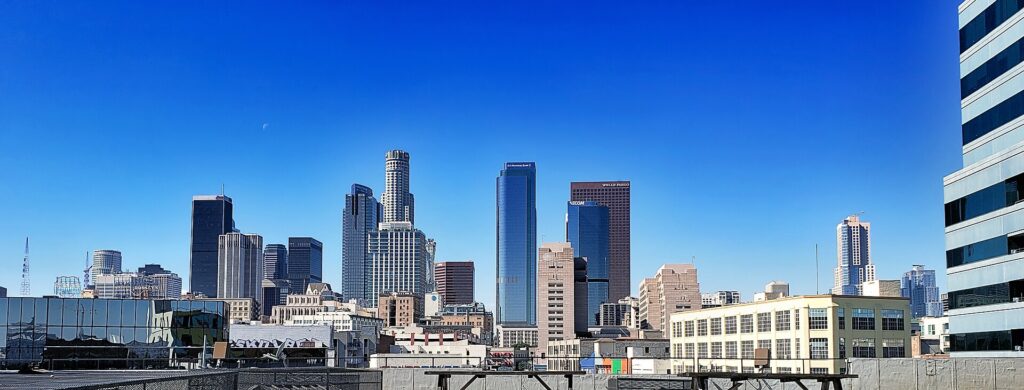
Downtown LA has the skyline, the historic theaters on Broadway, Grand Central Market, Walt Disney Concert Hall and The Broad. It is the one place where all the main rail lines meet, and Union Station connects to Amtrak and Metrolink.
Best for: travelers without a car, concert and game nights, architecture and museums, business trips.
- Pros: best Metro access in the city; strong food and bar scene; often better hotel value than the west side.
- Cons: far from the beach; some blocks are empty at night and homelessness is visible in parts of downtown; the feel changes block by block, so check the exact location of your hotel.
- Getting around: A, B, D and E Lines, with 7th St/Metro Center and Union Station as the main transfer points.
Where to stay: InterContinental Los Angeles Downtown in the Wilshire Grand Center, with a 70th-floor sky lobby; and Hotel Figueroa, a restored 1926 Spanish Colonial hotel with a pool. The former Ace Hotel on Broadway now operates as STILE Downtown Los Angeles.
Pasadena: Calm, Historic and Family-Friendly
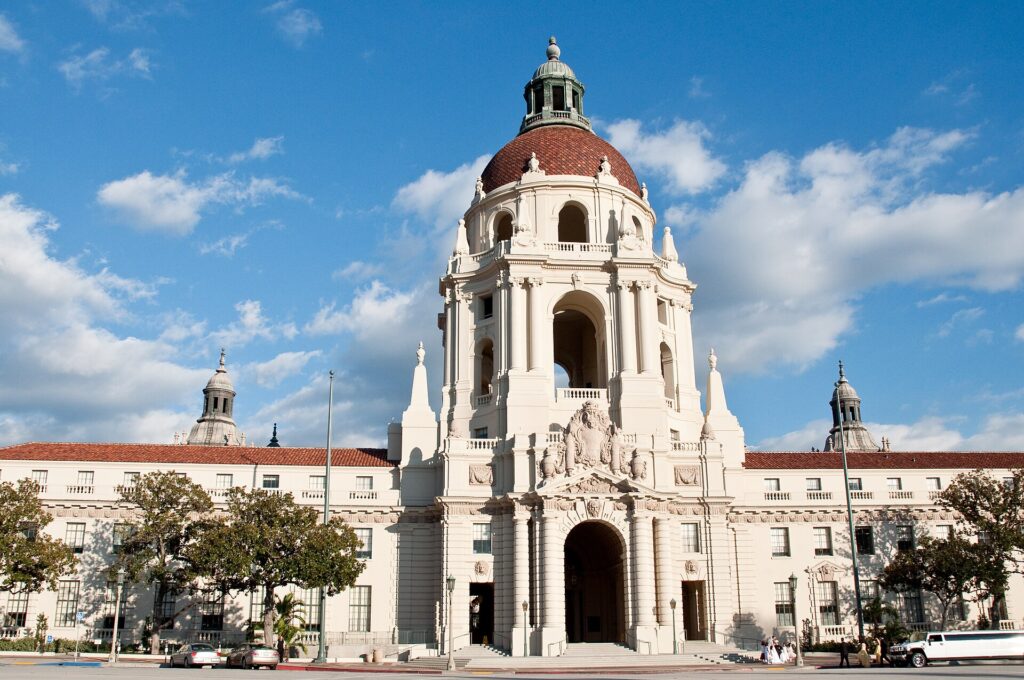
Pasadena, about 10 miles northeast of downtown, feels like a different town: Old Pasadena’s walkable streets, the domed City Hall, the Rose Bowl, the Norton Simon Museum, and The Huntington in neighboring San Marino. Kidspace Children’s Museum makes it an easy pick for families with young children.
Best for: families, return visitors, garden and museum lovers, Rose Bowl events.
- Pros: quieter streets; walkable Old Pasadena; the A Line runs to downtown.
- Cons: a long trip to Santa Monica and the beaches; less of the “postcard LA” first-timers often want.
- Getting around: A Line stations including Memorial Park (Old Pasadena), Del Mar and Lake.
Where to stay: The Langham Huntington, Pasadena, a historic resort with gardens, a spa and swimming pools.
Anaheim (Orange County): For Disneyland
Anaheim is not in Los Angeles. It is in Orange County, roughly 25 miles southeast of downtown LA. If Disneyland is the main reason for your trip, sleeping near the parks saves you a long drive each way, and you can split the stay: a few nights in Anaheim, then move to Santa Monica or Beverly Hills for the rest of LA.
Best for: Disneyland and Disney California Adventure days.
- Pros: walk to the parks; many family hotels with pools.
- Cons: far from Hollywood, Beverly Hills and the LA beaches; the I-5 between LA and Anaheim is often slow.
- Getting around: no LA Metro rail. Metrolink and Amtrak trains run from Union Station to Anaheim’s ARTIC station, a short ride from the resort.
Where to stay: Disney’s three resort hotels: the Disneyland Hotel, Disney’s Grand Californian Hotel & Spa (with its own entrance into Disney California Adventure) and the Pixar Place Hotel, re-themed in 2024. Our guide to amusement parks in Los Angeles compares the parks.
Culver City: Central West Side Value
Culver City sits between Beverly Hills and the coast. Its compact downtown has restaurants, the Kirk Douglas Theatre and the Sony Pictures studio lot.
Best for: value, food, travelers who want both beach and city within reach, transit users.
- Pros: central on the west side; walkable downtown; E Line to Santa Monica and downtown LA.
- Cons: fewer big sights of its own; the I-10 and I-405 nearby are often congested.
- Getting around: E Line at Culver City station.
Where to stay: The Culver Hotel, a 1924 landmark in the middle of downtown Culver City; and The Shay, a Hyatt hotel with a rooftop pool beside the Culver City E Line station.
Marina del Rey and Near LAX
Marina del Rey is a waterfront community built around a large man-made small-boat harbor, just south of Venice and a short drive from LAX. It is handy for the first or last night of a trip.
Best for: early flights, short stays, a quiet waterfront base.
- Pros: close to the airport and to Venice Beach; harbor views; bike path along the coast.
- Cons: far from Hollywood and downtown; few attractions of its own; the hotel strip right by LAX is noisy and commercial.
- Getting around: no rail in the marina itself; the C and K Lines stop at LAX/Metro Transit Center.
Where to stay: The Ritz-Carlton, Marina del Rey, on the water with a heated pool; and the Marina del Rey Hotel, a harbor-front hotel with a pool, minutes from Venice Beach.
Universal City and Burbank
Universal City sits just over the hills from Hollywood in the San Fernando Valley, with Universal Studios Hollywood and CityWalk. Next door, Burbank has the Warner Bros. Studio Tour and Hollywood Burbank Airport, a handy alternative to LAX.
Best for: Universal Studios, families, studio tours, travelers flying into Burbank.
- Pros: closest base to Universal; one B Line stop from Hollywood; often better value than the west side.
- Cons: hotter in summer than the coast; far from the beaches; little to walk to outside CityWalk.
- Getting around: B Line at Universal City/Studio City and North Hollywood.
Where to stay: Hilton Los Angeles/Universal City, a short walk or shuttle ride from the park entrance area; and The Garland in North Hollywood, a retro-style hotel on seven acres with a pool and its own trolley to Universal Studios.
Other Areas Worth a Look
Koreatown is dense, lively and central, with Korean barbecue, karaoke and late-night food, plus D Line stations at Wilshire/Vermont, Wilshire/Normandie and Wilshire/Western. It suits food-focused travelers on a budget.
Where to Stay in Los Angeles With Family
In short: Santa Monica for beach days, Universal City for Universal Studios, Anaheim for Disneyland, Beverly Hills or West Hollywood for a bit of everything, and Pasadena for a calmer pace with Kidspace Children’s Museum nearby. If you plan two or more Disney days, sleep near the parks for those nights and move to an LA base afterwards; two bases cut more driving than one “central” hotel.
Family tips for choosing a hotel
- Prioritize a pool. The Beverly Hilton, Fairmont Miramar, Loews Hollywood, The London West Hollywood, The Langham Huntington and The Garland all have one.
- Look for suites or connecting rooms. An all-suite hotel like The London West Hollywood, or connecting rooms at Loews Hollywood, makes bedtime easier.
- Stay close to the theme park you care about most. Universal is 10–25 minutes from Hollywood; Disneyland is often 45–90 minutes from the west side.
- Ask about parking and car seats. Hotel parking in LA is usually a nightly fee, and rideshares rarely carry child seats, so plan ahead if you will not rent a car.
- Split the trip. Two bases, for example Anaheim and then Santa Monica, cut more driving than one “central” hotel.
The First-Time Visitor’s Pick
For a first trip of four to five nights, our pick is Beverly Hills or West Hollywood. You are about 20 minutes from Hollywood, 30 to 45 minutes from Santa Monica in normal traffic,. If the beach matters most, choose Santa Monica and plan one or two longer days inland. If you will not drive at all, Hollywood or Downtown LA gives you the best rail connections. For a ready-made plan, see our one day in Los Angeles itinerary.
If you would rather not drive at all, our tours pick you up at your hotel in any of these areas. Our classic car tour runs in a 1970 Cadillac DeVille convertible, and our private SUV tour in a Cadillac Escalade is a comfortable option for families and groups.
Where to Stay in Los Angeles: FAQ
What is the best area to stay in Los Angeles for first-timers?
Beverly Hills and West Hollywood are the most central choices, between Hollywood and the beach. Santa Monica is best if the beach is the priority, and Hollywood or Downtown LA if you plan to use the Metro.
Can you stay in Los Angeles without a car?
Yes, if you choose your area well. Downtown LA, Hollywood, Santa Monica, Culver City and Pasadena all have Metro rail stations, and since May 2026 the D Line reaches the edge of Beverly Hills. Expect to use rideshare for some trips.
Where should families stay in Los Angeles?
Santa Monica for the beach, Universal City for Universal Studios, Anaheim in Orange County for Disneyland, and Pasadena for a quieter base. Look for a hotel with a pool and suites or connecting rooms.
Is Disneyland in Los Angeles?
No. Disneyland Resort is in Anaheim, in Orange County, about 25 miles southeast of downtown LA. The drive often takes 45 to 90 minutes, so stay in Anaheim for multi-day Disney visits.