
Los Angeles has a reputation for freeways and traffic, yet it also holds one of the largest city parks in the United States, a lake covered in lotus leaves a mile from downtown, a cherry blossom walk in the San Fernando Valley and a bluff-top park above the Pacific. This guide covers the best parks in Los Angeles for visitors: the famous parks everyone has heard of, a few formal gardens, and the parks of Beverly Hills and Santa Monica. Several of them were affected by the January 2025 wildfires or have construction under way, and hours, fees and trail closures change often, so check each official site before you go.
The Best Parks in Los Angeles at a Glance
- The famous one: Griffith Park, home of Griffith Observatory, the LA Zoo, the Greek Theatre and the trails toward the Hollywood Sign.
- Near downtown: Elysian Park, Echo Park Lake, MacArthur Park and Gloria Molina Grand Park.
- For flowers: the Exposition Park Rose Garden, the cherry trees at Lake Balboa, and Descanso Gardens (ticketed).
- For a hike with a view: Runyon Canyon above Hollywood, or Kenneth Hahn State Recreation Area in the Baldwin Hills.
- On the Westside: Will Rogers State Historic Park, Palisades Park in Santa Monica, Beverly Gardens Park and Greystone Mansion & Gardens in Beverly Hills.
1. Griffith Park: The Most Famous Park in Los Angeles
If you ask for the most famous park in Los Angeles, the answer is almost always Griffith Park. It sits at the eastern end of the Santa Monica Mountains, between Los Feliz Boulevard and the 134 Freeway, just west of the 5. Inside its boundaries are Griffith Observatory, the Los Angeles Zoo, the Greek Theatre, the Autry Museum of the American West, Travel Town (a railroad museum), golf courses, the L.A. Equestrian Center, and miles of hiking and horseback riding trails, including the routes toward the Hollywood Sign.
How Big Is Griffith Park?
According to the City of Los Angeles Department of Recreation and Parks, Griffith Park covers more than 4,210 acres of chaparral-covered hills, landscaped parkland and picnic areas, which makes it one of the largest municipal parks with urban wilderness in the United States. Elevations inside the park range from 384 to 1,625 feet. The core of the park was a gift: on December 16, 1896, Colonel Griffith J. Griffith gave 3,015 acres of his Rancho Los Feliz land to the city as a Christmas present, to be used as a public park. Later additions brought it to its current size. You will see older figures such as “4,300 acres” online; the city’s own park page gives the 4,210-acre figure.

Visiting Griffith Park and the Observatory
Entry to the park is free, and so is Griffith Observatory, which is open from noon to 10 p.m. Tuesday through Friday, from 10 a.m. to 10 p.m. on weekends, and closed on Mondays. The grounds and roads generally follow park hours, 5 a.m. to 10:30 p.m. Parking near the Observatory is paid and fills up on weekends, holidays and at sunset. The city recommends the LADOT DASH Observatory/Los Feliz shuttle, which runs every day from 10 a.m. to 10 p.m., every 15 to 20 minutes, even on days the Observatory building is closed. At the time of writing, the city listed Bronson Caves and the merry-go-round as closed. For the best lookouts in and around the park, see our guide to the best views in Los Angeles.
Parks Near Downtown Los Angeles
2. Elysian Park
Elysian Park is the city’s oldest park. The city council set the land aside on April 5, 1886, and today it covers roughly 600 acres of hills wrapped around Dodger Stadium, just north of downtown. It is open from sunrise to sunset and has hiking and jogging paths, a bike path, picnic areas and restrooms. Locals come for the trails and the views of the downtown skyline, especially from Angels Point, which you can drive up to. It is a good stop before a Dodgers game.
3. Echo Park Lake
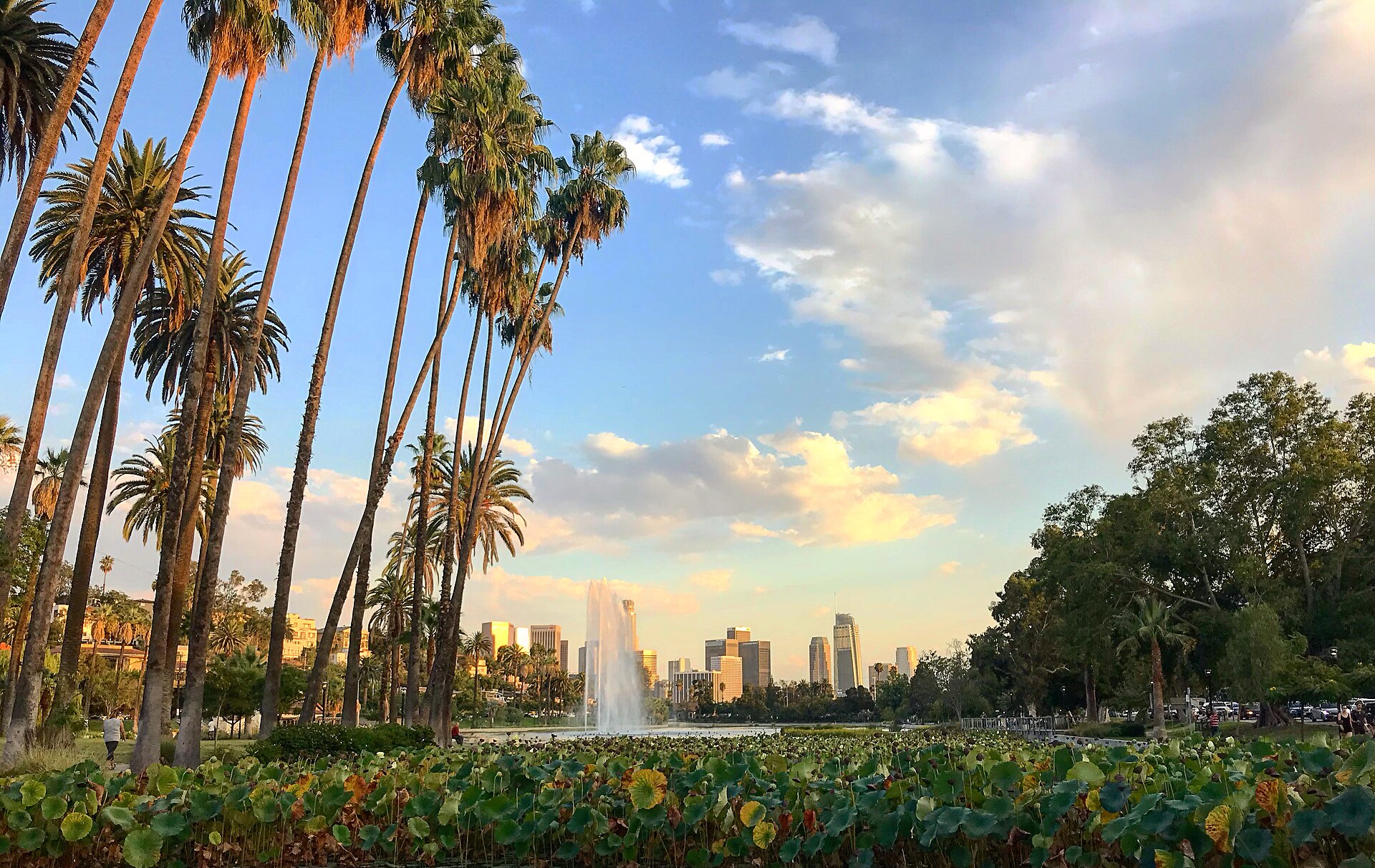
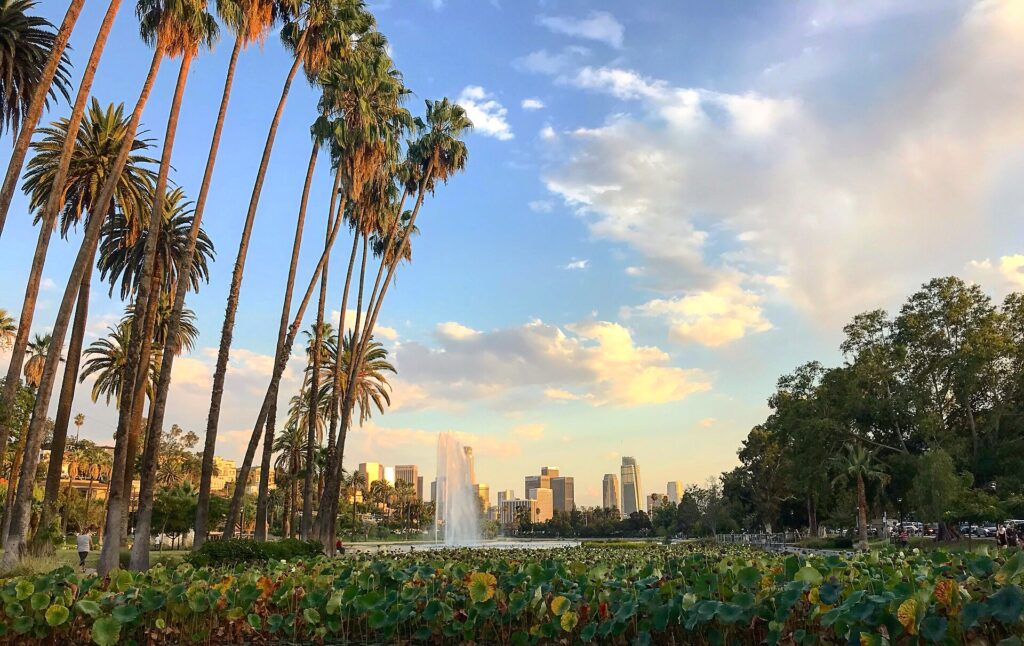
Echo Park Lake began in 1868 as a reservoir. The land was donated to the city in 1891 and opened as a park with a boathouse by 1895. The lake is known for two things: its lotus bed, which the city replanted during a major renovation completed in 2013, and its swan-shaped pedal boats, which Wheel Fun Rentals has operated since 2018, including evening rides with LED lights. In summer, the free Lotus Festival fills the park; the 2026 festival ran on July 11 and 12 with dragon boat races. A walk around the lake with the fountain and the downtown towers in the background is one of the easiest pleasant hours you can spend in central LA, and the Echo Park neighborhood around it has plenty of cafes and restaurants.
4. MacArthur Park
MacArthur Park in Westlake opened in the 1880s as Westlake Park and was renamed for General Douglas MacArthur in 1942. Wilshire Boulevard was extended across the lake in 1934, splitting the park in two, and the park gave its name to Jimmy Webb’s 1968 song “MacArthur Park,” first recorded by Richard Harris. Today it is a busy neighborhood park rather than a polished attraction, and it is changing: in October 2026 LAist reported that the city would begin building a perimeter fence in November 2026, with work expected to run into spring 2027. The park stays open during construction, and once the fence is finished the gates are expected to close nightly from 10 p.m. to 6 a.m. The city has also said it plans to bring pedal boats back to the lake. The park’s posted hours are 8:30 a.m. to 6 p.m. daily.
5. Gloria Molina Grand Park
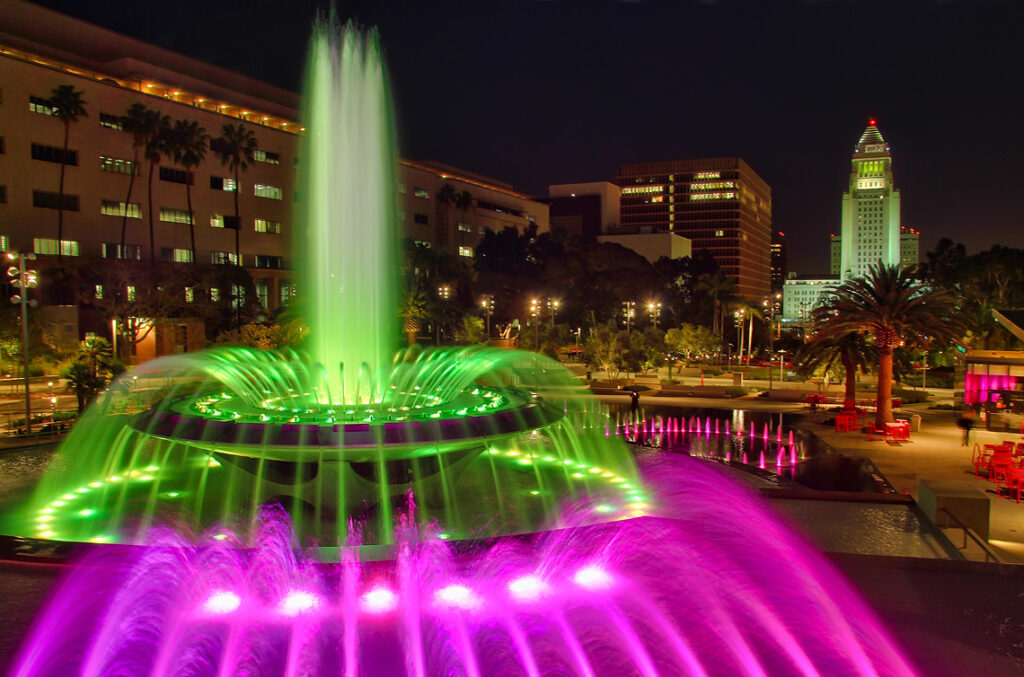
Grand Park, renamed Gloria Molina Grand Park in 2023, runs for 12 acres from the Music Center down to Los Angeles City Hall. It is open daily from 5:30 a.m. to 10 p.m., and its free programs include the Downtown Día de los Muertos celebration, summer dance nights and the city’s New Year’s Eve event, NYELA. The park has the Arthur J. Will Memorial Fountain and a splash pad for hot days, and the lawns are a good place to sit with a coffee between visits to the Broad, Walt Disney Concert Hall and City Hall.
Gardens and Green Space South of Downtown
6. Exposition Park Rose Garden
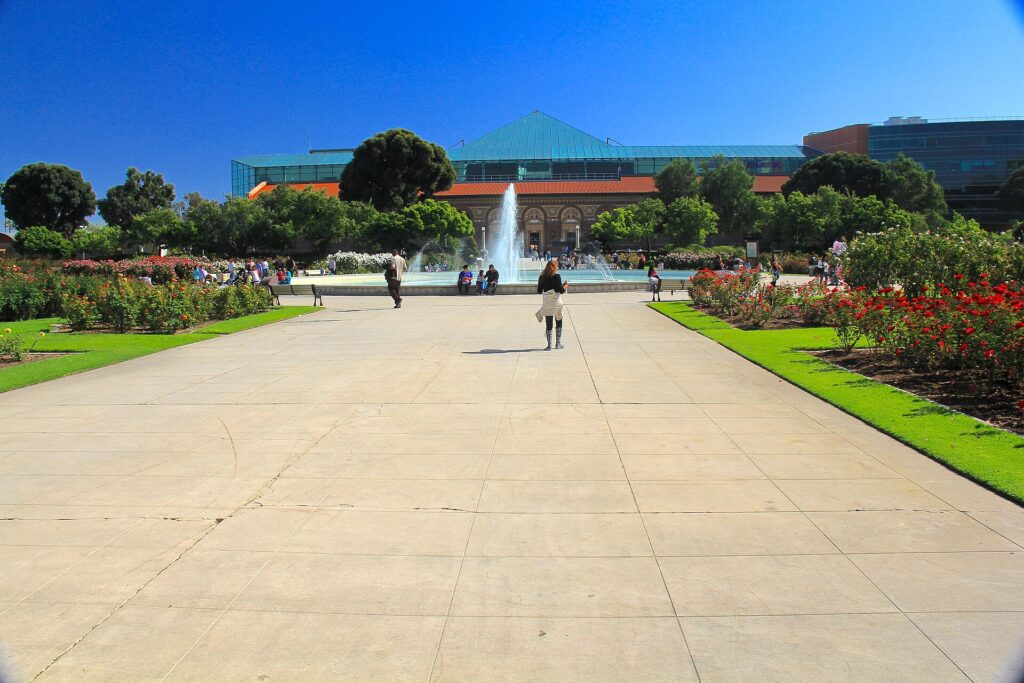
The sunken Rose Garden in Exposition Park was planted in 1928 and is one of the most photographed gardens in the city. It is free to enter and, according to the city’s brochure, open daily from 8:30 a.m. to sunset (another city page says 9 a.m.). The important detail for planning: the garden closes every year from January 1 to March 15 for pruning, so a winter visit will be a walk around the fence. Spring is when the roses come back. The garden sits among the Natural History Museum, the California Science Center and the Los Angeles Memorial Coliseum, and since September 22, 2026, the new Lucas Museum of Narrative Art has been open in the same park, so it is easy to combine flowers with a museum.
7. Kenneth Hahn State Recreation Area
In the Baldwin Hills at 4100 South La Cienega Boulevard, Kenneth Hahn State Recreation Area is a state park run by Los Angeles County. It has a fishing lake, a lotus pond, lawns and picnic sites, native coastal sage scrub, and about 5 miles of trails; from the ridges you look out over the basin toward downtown, Century City and the mountains. The state lists it as open daily from 8 a.m. to sunset, with a vehicle day-use fee (posted at $6, subject to change). Dogs are allowed on the paved road only. Next door, the Baldwin Hills Scenic Overlook offers a steep stair climb to another wide view.
8. Runyon Canyon Park in the Hollywood Hills
Runyon Canyon Park, at the top of Fuller Avenue in Hollywood, is the city’s best-known quick hike: short, steep and busy, with views across Hollywood to downtown and, from some points, the Hollywood Sign. It is open from sunrise to sunset, and dogs may go off leash in designated areas. Two things to know for 2026: the city lists the West Trail as closed since the January 2025 Sunset Fire, while the rest of the park is open; and there are no restrooms in the park. Bring water, since the trails have little shade.
9. Lake Balboa and the Cherry Blossoms of the Valley
In the San Fernando Valley, Lake Balboa at Anthony C. Beilenson Park (6300 Balboa Boulevard) is part of the Sepulveda Basin Recreation Area. The park covers about 80 acres around a lake of roughly 27 acres, with a 1.3-mile footpath around the water, picnic areas, playgrounds, bike rentals and pedal boats. It is open from sunrise to sunset and can close in rainy weather. Paddle boards are not allowed because of water conditions, and the city posts water-quality results online.
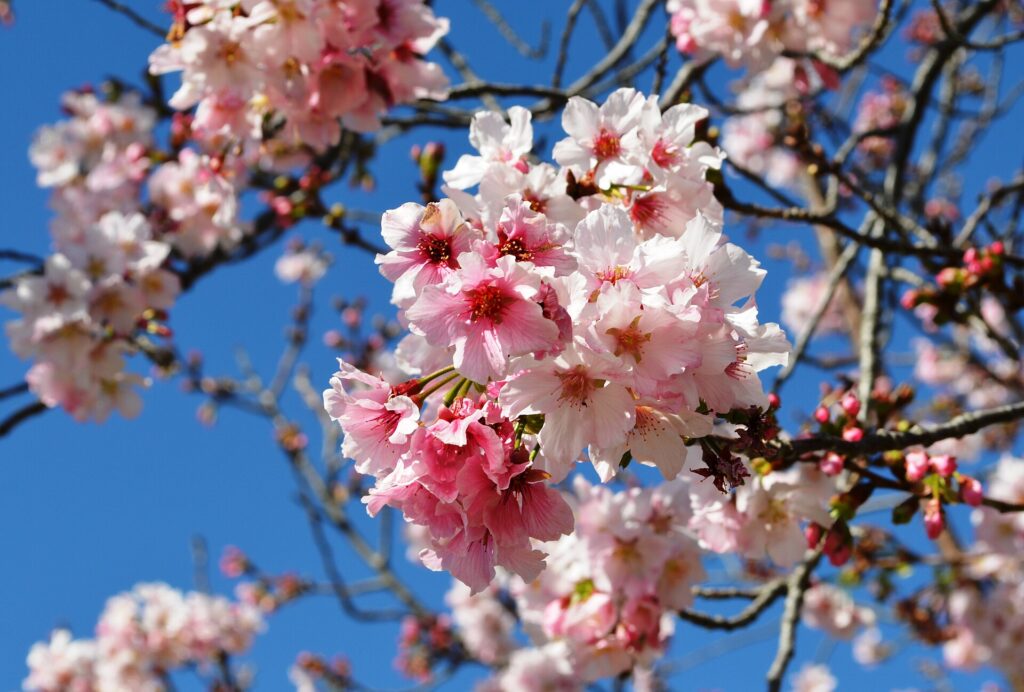
The park is best known for its cherry trees, which the Department of Recreation and Parks began planting in 1992. Most line the path around the lake. The bloom usually comes in late winter or early spring, often around March, but the timing changes with the weather each year, so check recent local reports before driving out. Weekend afternoons in peak bloom are crowded; a weekday morning is calmer.
Westside and Coastal Parks
10. Will Rogers State Historic Park
The Pacific Palisades ranch of entertainer Will Rogers became one of the most loved parks on the Westside, with a polo field, a large lawn and trails into the Santa Monica Mountains. The January 2025 Palisades Fire destroyed the historic ranch house and other buildings and damaged the visitor center. After 10 months of closure, the park reopened on November 8, 2025. Day-use parking is open from 8 a.m. to sunset, the polo field and main lawn are back in use, and the Will Rogers Polo Club posts its match schedule. The ranch house is gone, its future is still being decided, and California State Parks is running a public planning process for the park’s recovery. Check which trails are open before you hike.
Next door, Topanga State Park, described by State Parks as one of the world’s largest wildlands inside a major city, with 36 miles of trails, was also burned. A State Parks order effective March 18, 2026, reopened its day-use areas, fire roads and backcountry trails, except the Rogers Road and Bent Arrow trails. Both parks close their trails during Red Flag Warnings, as they did on November 7, 2026.
11. Palisades Park, Santa Monica
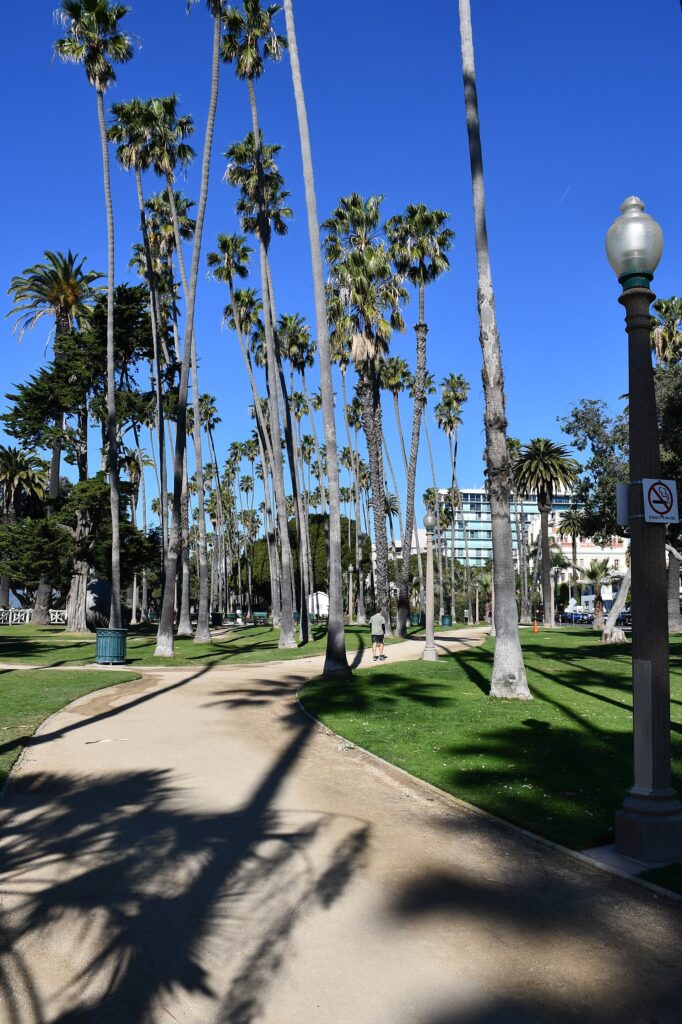
Not to be confused with the Pacific Palisades neighborhood, Palisades Park is the City of Santa Monica’s 26-acre strip of lawn, palms and paths along Ocean Avenue, on the bluff above the beach and north of Santa Monica Pier. It has benches and picnic tables facing Santa Monica Bay, public art and monuments, a rose garden and the Camera Obscura Art Lab. The city lists it as open from 5 a.m. to midnight. It is best at sunset, and it is an easy walk from the pier and Third Street Promenade.
Parks in Beverly Hills
12. Beverly Gardens Park
Beverly Gardens Park is a narrow park that runs about 1.9 miles along Santa Monica Boulevard, from Wilshire Boulevard to Doheny Drive. It is where most visitors take their photo with the Beverly Hills sign, and it also has the Electric Fountain at the Wilshire end, a lily pond, a rose garden and a cactus garden. It is free and makes a good walk between Rodeo Drive and the residential streets to the north. To see the neighborhood with someone who knows its history, take a look at our Beverly Hills tour.
13. Greystone Mansion & Gardens
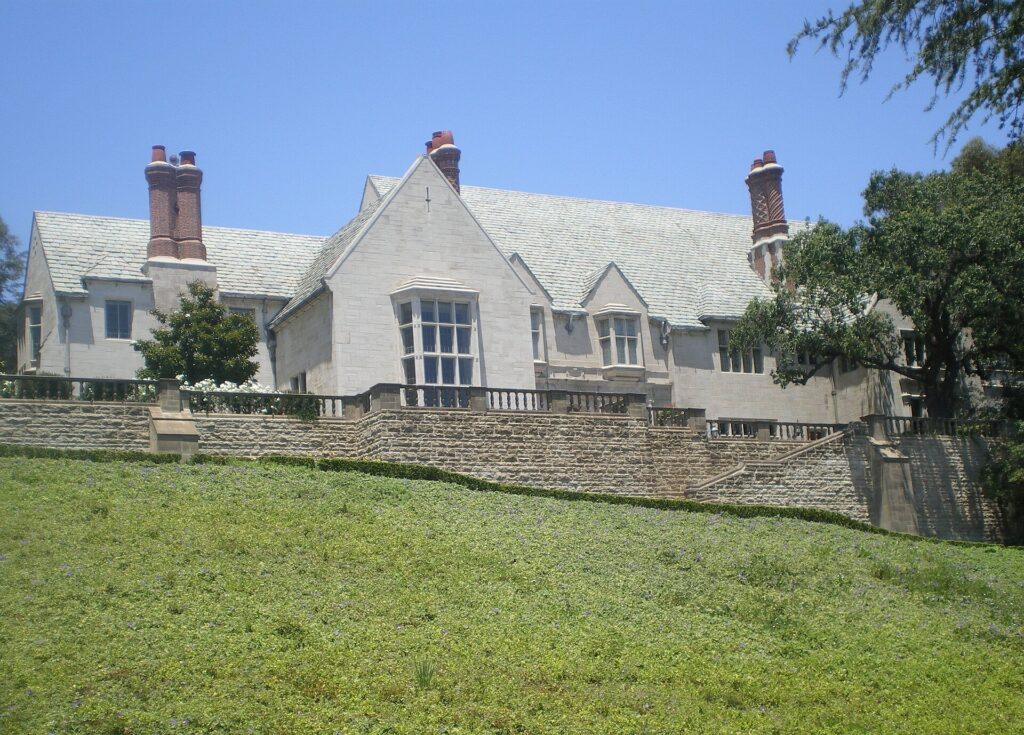
Up the hill from Sunset Boulevard, Greystone Mansion & Gardens is the 1928 Tudor Revival estate built for the son of oilman Edward L. Doheny. The City of Beverly Hills bought it in 1965, and today the terraced gardens, courtyards and lawns are a public park. The grounds are free to visit and, according to the city, are open from 10 a.m. to 5 p.m. daily, though they can close for filming and special events. The house itself opens only on set dates for tours and events, and advance reservations are recommended. Read more in our story of Greystone Mansion and the Doheny family.
14. Worth the Drive: Descanso Gardens
Descanso Gardens is not a city park. It is a ticketed botanical garden in La Cañada Flintridge (1418 Descanso Drive), in the foothills north of Glendale, and every visitor who is not a member needs a general admission ticket. It covers about 150 acres of cultivated gardens and wilder woodland. The estate belonged to newspaper publisher E. Manchester Boddy, whose camellia collection was built in large part from plants he bought from Japanese American nurseries during World War II; it is still the garden’s signature collection and blooms in winter. There are also a rose garden, a Japanese garden and an oak woodland. Descanso is open daily from 9 a.m. to 5 p.m., and it runs seasonal ticketed events such as its winter light walk, Enchanted.
Tips for Visiting Parks in Los Angeles
- Watch for Red Flag Warnings. On high fire-danger days, trails and fire roads in the Santa Monica Mountains state parks close, even if the rest of the park is open.
- Go early. Most hillside parks open at sunrise. Mornings are cooler, and parking is easier at Griffith Park, Runyon Canyon and Lake Balboa.
- Carry water. Runyon Canyon has no restrooms or drinking water, and most canyon trails have little shade.
- Know the seasons. Camellias at Descanso bloom in winter, cherry blossoms at Lake Balboa usually in late winter or early spring, and the Exposition Park roses after the garden reopens in mid-March. Echo Park’s lotus is at its best in summer.
- Let someone else drive. The parks in this guide are spread from the Valley to the ocean, and parking near the famous ones is limited. Our classic car tour in a 1970 Cadillac DeVille convertible, with hotel pickup, is one way to see several parts of the city in a day without looking for parking.
Best Parks in Los Angeles: FAQ
What is the most famous park in Los Angeles?
Griffith Park. It is home to Griffith Observatory, the Los Angeles Zoo and the Greek Theatre, and its trails lead toward the Hollywood Sign. Entry to the park and to the Observatory is free.
How big is Griffith Park?
The City of Los Angeles Department of Recreation and Parks gives its size as more than 4,210 acres. The original gift from Griffith J. Griffith in 1896 was 3,015 acres.
When do the cherry blossoms bloom at Lake Balboa?
Usually in late winter or early spring, often around March, but the timing changes with the weather each year. The trees line the 1.3-mile path around the lake.
Is Will Rogers State Historic Park open after the Palisades Fire?
Yes. It reopened on November 8, 2025, with day-use parking from 8 a.m. to sunset. The historic ranch house was destroyed in the fire and has not been rebuilt, and trails close during Red Flag Warnings.