
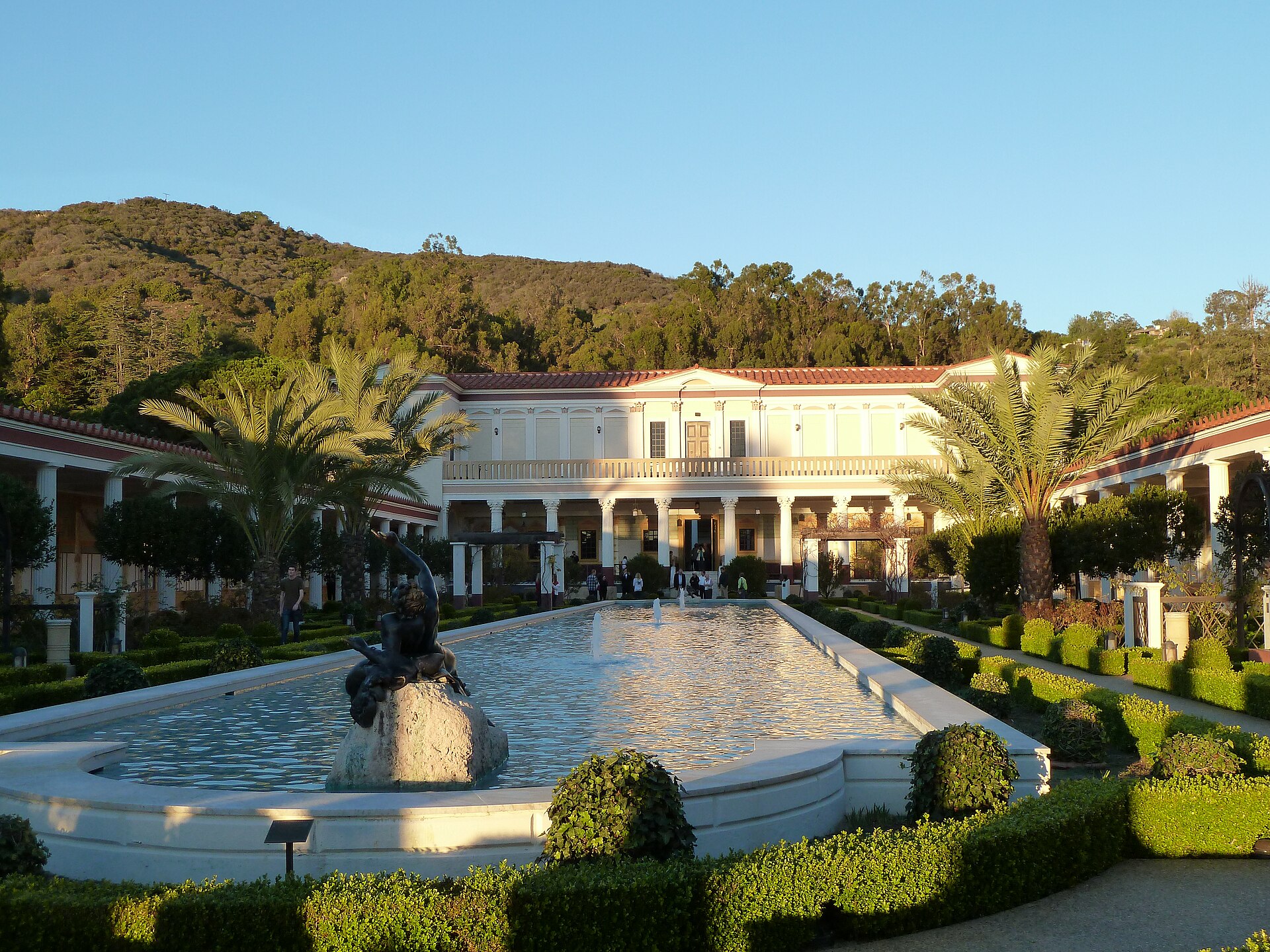
The Getty Villa is the smaller and older of Getty’s two museums in Los Angeles: a re-created Roman country house on a hillside above Pacific Coast Highway in Pacific Palisades, filled with Greek, Roman and Etruscan antiquities and surrounded by formal gardens with ocean views. It came through the January 2025 Palisades Fire, reopened in June 2025, and in 2027 it becomes Getty’s only open museum for about a year, because the Getty Center closes for renovation on March 15, 2027. This guide covers reservations, parking, hours, what to see and how to get there. Hours, fees and exhibition dates below come from getty.edu as of November 2026, so check before you go.
Getty Villa at a Glance
- Address: 17985 Pacific Coast Highway, Pacific Palisades, CA 90272
- Admission: free, but every visitor needs a timed-entry reservation
- Hours: 10am–5pm, closed Tuesdays, plus New Year’s Day, Independence Day, Thanksgiving and Christmas Day; early closing on Christmas Eve and New Year’s Eve
- Parking: $25 per car, $15 after 3pm; cashless; no street parking
- Access: from the northbound, right-hand lane of PCH only
- 2027 note: the Getty Center is closed from March 15, 2027 until a planned spring 2028 reopening; the Villa stays open
What the Getty Villa Is
Businessman and collector J. Paul Getty bought a 64-acre ranch in the Santa Monica Mountains above the coast after World War II. In 1954 he opened part of his ranch house there as the J. Paul Getty Museum. By the late 1960s the collection had outgrown it, and after rejecting proposals in Spanish, European and modern styles he decided to build a replica of an ancient Roman villa. Construction began in 1968, and the new museum opened to the public in January 1974.
The model was the Villa dei Papiri at Herculaneum, a luxurious seaside house buried by the eruption of Mount Vesuvius in AD 79 and named for the more than one thousand carbonized papyrus scrolls found in its library. Much of that villa is still unexcavated, so the architects borrowed many details from other Roman houses in Pompeii, Herculaneum and Stabiae. The Getty Villa follows the scale and floor plan of the original, but as a mirror image.
Getty himself never saw it. He had left the United States in 1951, ran the project from his estate in England, and died in 1976, two years after the museum opened. He is buried on a private plot at the edge of the property.
When the much larger Getty Center opened in Brentwood in 1997, the Villa closed for a long renovation. Architects Machado and Silvetti moved the main entrance, added skylights to the upper galleries, and built a new entry pavilion, parking structure and outdoor classical theater. The Villa reopened in 2006 as Getty’s center for the arts and cultures of the ancient world, focused on Greek, Roman and Etruscan antiquities.
The Palisades Fire and the Villa Today
The Villa closed on the morning of January 7, 2025, when the Palisades Fire reached the hills around it. Seventeen Getty facilities, grounds and security staff volunteered to stay on site. They sealed the galleries and put out small fires on the grounds in the following days, while LAFD crews and targeted water drops held the fire back. The museum building and the collection came through without major damage, and the formal gardens were spared.
The wider property was hit hard. Getty reported sitewide burn damage to vegetation and removed more than 1,300 fire-damaged trees. Crews washed ash off roofs, courtyards and fountains, replaced air and water filters, and conservators repaired the painted outer walls. The Villa reopened on June 27, 2025, at first only Friday through Monday to limit traffic on PCH. It is now back to its regular schedule of every day except Tuesday.
Expect the outer grounds to look different from older photos. The hillsides have less vegetation, a few charred stumps remain, and some slopes have been reseeded with native grasses and wildflowers to prevent erosion. Getty’s gardeners have also spotted “fire follower” plants, such as giant phacelia, that thrive in ash. Getty is drawing up a new landscape plan for the site that stays close to Roman models but is better suited to a hotter, drier and more fire-prone climate.
2027: The Getty Center Closes, the Villa Stays Open
This is the biggest change for anyone planning a 2027 trip. In April 2026 Getty announced the largest modernization of the Getty Center since it opened. The Center will close to the public from March 15, 2027, with reopening planned for spring 2028. The work covers the tram, the arrival area, the Welcome Hall, the galleries and campus systems.
The Getty Villa stays open throughout the closure with its usual exhibitions, talks and events. Getty has also announced that during this period the Villa will open a gallery showing a selection of paintings from the museum’s collection at the Center. No opening date had been published as of November 2026, so check getty.edu before you go if a particular painting matters to you. Getty also plans a new program space on Sepulveda Boulevard, across from the Center, for special events during the closure.
If you are visiting before March 15, 2027, you can still see both museums on the same day. Getty says the drive between them usually takes 20 to 45 minutes. With reservations at both sites on the same date, you can ask at the first museum’s information desk for a coupon covering same-day parking at the second. That offer is not valid on Mondays or Tuesdays.
Getty Villa Reservations, Hours and Parking
Reservations
Admission is free, and the reservation includes all exhibitions, but you need a timed-entry reservation. Book online at getty.edu or call (310) 440-7300. Getty releases reservations six weeks in advance. Same-day entry is sometimes possible; check the online calendar or call. Confirmation emails come from “Getty Tickets”, so check your spam folder if one does not arrive.
Hours and closed days
The Villa is open 10am to 5pm every day except Tuesday. It is also closed on New Year’s Day, Independence Day, Thanksgiving Day and Christmas Day, and it closes early on Christmas Eve and New Year’s Eve. Evening theater performances and events have their own times and tickets.
Parking and drop-off
Parking costs $25 per car or motorcycle, or $15 after 3pm. For evening events it is $10 after 6pm. Payment is cashless: scan the QR code on your ticket or use the pay machines in the main structure. Every reservation holder gets an on-site space. There is no street parking, and under the Villa’s city permit you cannot walk in from outside unless you arrive by public bus. Taxis, Uber and Lyft can drop you off inside the entrance gate after staff check your reservation. The garage only takes vehicles up to 6’10” tall and of standard car size, so RVs and limousines cannot park there. There is no cell reception in the parking structure, so screenshot your reservation before you arrive.
What to See at the Getty Villa
A visit starts at the open-air Entry Pavilion and continues along a path that climbs past the café to the museum. Each building sits at a slightly different height, so the views change as you walk. There are four gardens, two floors of galleries and an outdoor theater.
The Outer Peristyle
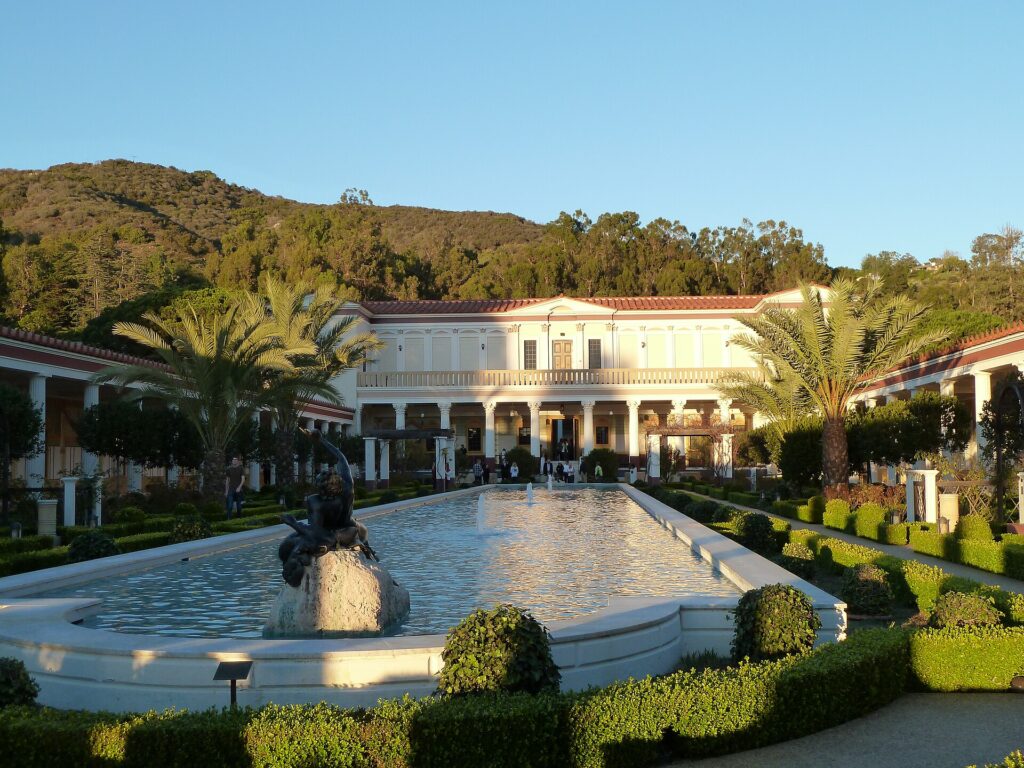
Reached through Gallery 112, this is the Villa’s largest garden and the classic Getty Villa view. A long reflecting pool, about three feet deep, runs between colonnaded walkways toward the Pacific. Bay laurel, boxwood, myrtle, ivy and oleander line the pool, and there are pomegranate trees in the corners. The bronze statues are replicas of ones excavated at the Villa dei Papiri, placed roughly where the originals stood. The painted north wall copies landscapes and architecture from the Villa dei Papiri and a villa at Oplontis. Allow 20 to 30 minutes, more in late afternoon when the light is warm.
The Herb Garden
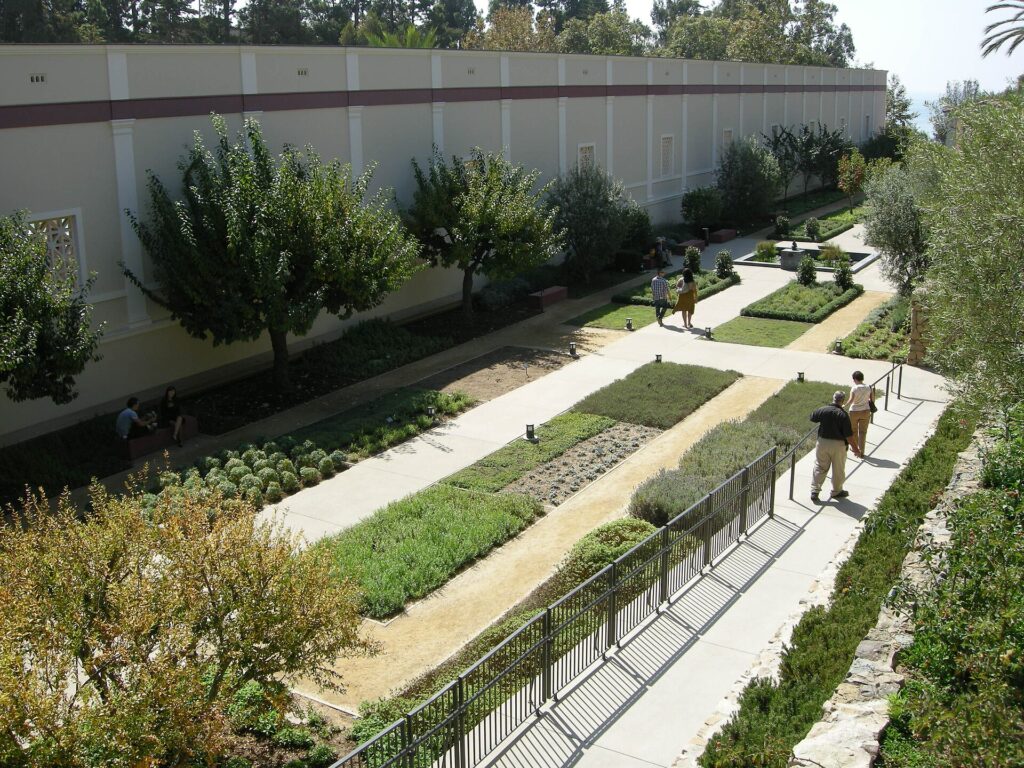
Roman houses had working kitchen gardens, and this is the Villa’s version. Mediterranean fruit trees (apple, pomegranate, apricot, fig, quince and pear) and herbs such as mint, basil, thyme, oregano, marjoram and sage grow in ornamental beds, each labeled with botanical and common names. Papyrus and water lilies grow in the central pool, and a waterspout of Silenos, copied from the atrium of the Villa dei Papiri, pours into it.
The Inner Peristyle and East Garden
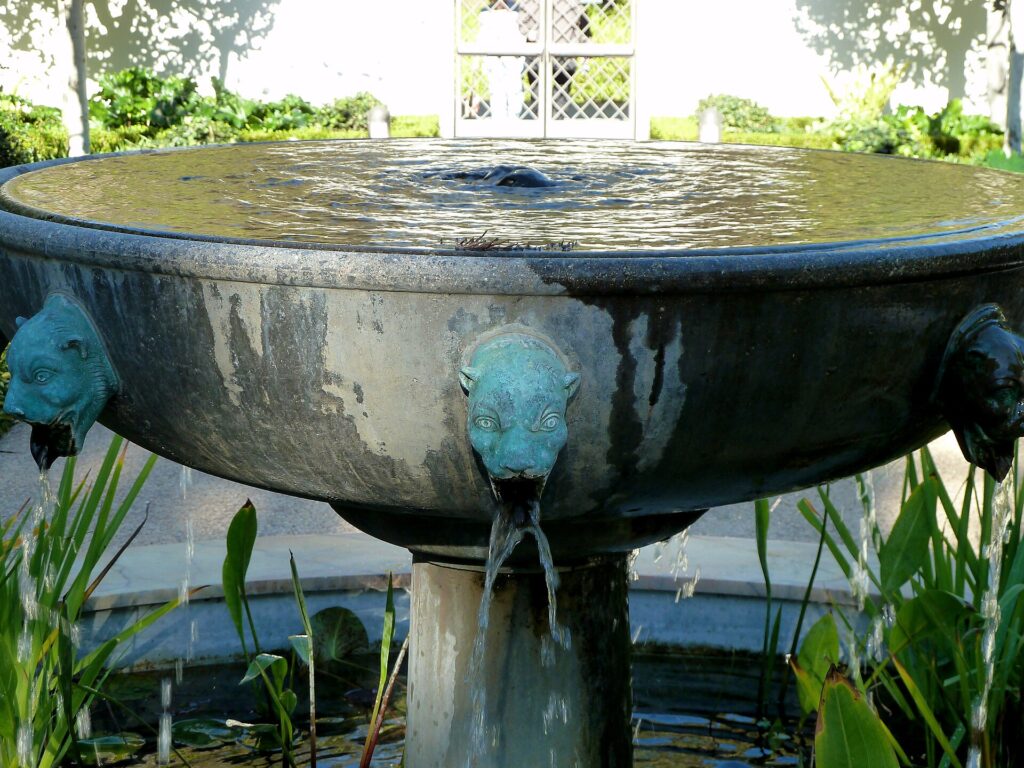
The Inner Peristyle is the first open-air space inside the building, just as it would have been at the Villa dei Papiri. It is a square colonnade with Ionic columns modeled on a house in Pompeii, and bronze statues of young women stand around a narrow pool. Ground-floor galleries open off it, and there are benches for a break. Beyond the east stairway is the shaded East Garden, with sycamore and laurel trees, a mosaic-and-shell fountain framed by theatrical masks, and a central fountain where bronze civet heads spout water.
The galleries
The permanent collection covers about 4,000 years, from the Stone Age to the last days of the Roman Empire. It is spread across both floors of galleries. Getty singles out the Roman-era mummy of Herakleides and the engraved gems as highlights. Galleries 105 to 108 tell the story of J. Paul Getty’s own collecting with objects he bought himself. Families should look for the Family Forum in Gallery 125, a hands-on room about how Greek vases were made and decorated. Getty suggests 60 to 90 minutes for the collection. The free GettyGuide app works as an audio guide, and free architecture tours run daily.
The outdoor theater
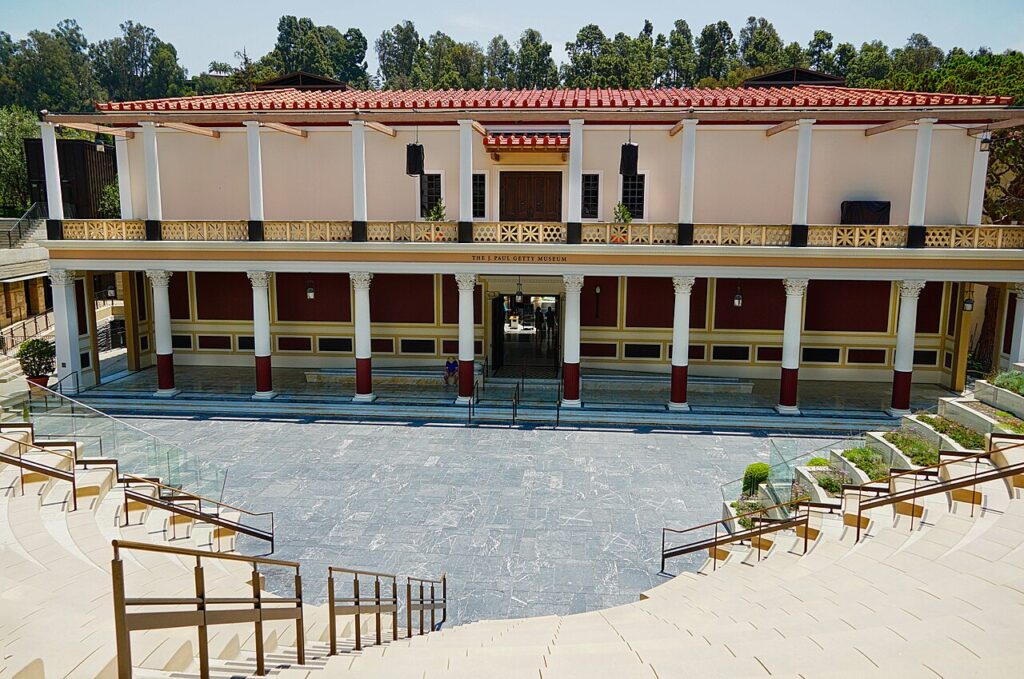
Your first view of the museum is across the Barbara and Lawrence Fleischman Theater, a 450-seat outdoor theater based on ancient designs. Every fall it hosts Getty’s Outdoor Classical Theater production of a Greek or Roman play. The 2026 season, the series’ 20th, was the Latino Theater Company’s “Antigone: In the Language of Kings”, set in pre-conquest Tenochtitlan. Evening performances need a separate paid ticket. During the day you can sit on the steps and look across at the museum’s façade.
Café and Garden Tea
The café serves casual Mediterranean-inspired food. On Thursdays and Saturdays, the Founder’s Room upstairs offers a reservation-only Garden Tea with a menu inspired by the Herb Garden. You may bring your own food and non-alcoholic drinks to eat in the outdoor seating areas, but not glass containers or metal cutlery.
Getty Villa Exhibitions, 2026–2027
Changing exhibitions are on the second floor. Getty has announced the following dates, which can change, so check the exhibitions page at getty.edu before you go:
- Ancient Queenship: Art, Power, and Presence, February 3 to May 3, 2027: queens and royal women of northern Africa, western Asia and the Mediterranean in the first millennium BCE, organized by the Cincinnati Art Museum.
- Ancient Anatolia and the Classical World, July 21 to November 29, 2027: art from the region of Troy and King Midas, including objects never before shown on the US West Coast.
The paintings gallery from the Getty Center collection will also open at some point during the Center’s closure.
Getting to the Getty Villa on PCH
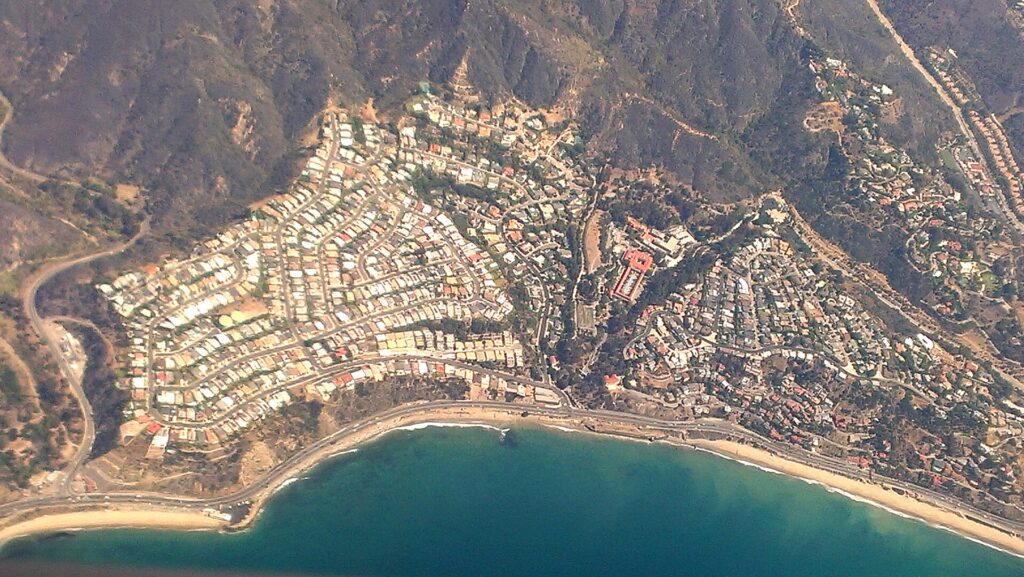
The Villa is on Pacific Coast Highway between Santa Monica and Malibu. The rule that catches most first-time drivers: you can only enter from the northbound, right-hand lane of PCH, just before Coastline Drive. Left turns across PCH from the southbound lanes are illegal, and you cannot enter via Coastline Drive. From Malibu, drive past the Villa, turn around and come back northbound.
PCH through the Palisades is still a fire recovery zone. As of August 2026, Caltrans and utility crews were still doing recovery work between Temescal Canyon Road and Malibu, with lower speed limits and daytime and overnight lane closures. Check the Caltrans QuickMap or Caltrans District 7’s Palisades Fire repairs page on the day, and allow extra time to make your entry slot.
Without a car, Metro bus line 134 stops at PCH and Coastline Drive, directly across from the Villa entrance. Bus riders are the one group allowed to walk in. Cyclists park free at racks inside the main entrance.
How Long to Allow
Getty’s own suggested times add up quickly: about 45 minutes for the building and architecture, 60 to 90 minutes for the antiquities, 30 to 45 minutes for the special exhibition and 20 to 30 minutes in the Outer Peristyle. Most visitors need two and a half to three hours, and a bit more with lunch or Garden Tea. On a half day, book a morning slot and spend the afternoon on the coast. Note that parking drops to $15 after 3pm but the museum closes at 5pm, so a late arrival works only for a quick garden visit.
Pairing the Villa with Malibu and Santa Monica
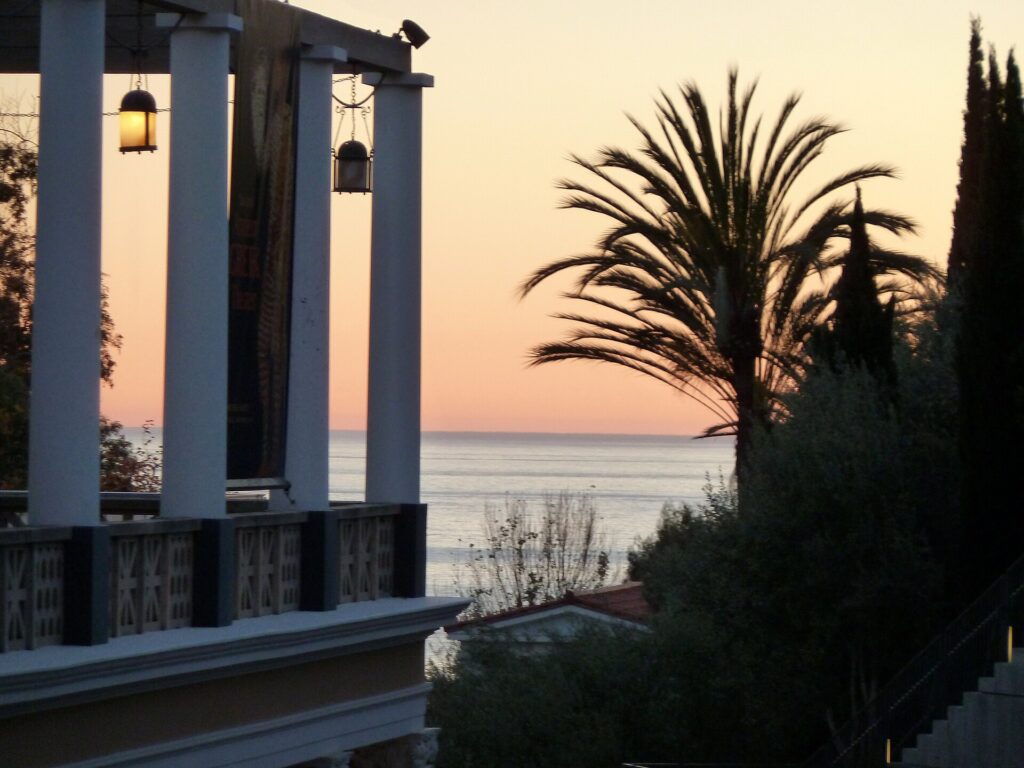
Because the Villa sits right on the coast road, it fits easily into a beach day. Heading north, continue to Malibu for its beaches, pier and canyon tasting rooms. Our guides to things to do in Malibu and Malibu wineries have ideas, and the Pacific Coast Highway road trip guide covers the drive farther up the coast. Heading south, Santa Monica is only a few minutes down PCH, so lunch, the pier or a walk along the beach is easy to add. See things to do in Santa Monica.
If you are building a whole day around art, our Los Angeles museum tour guide covers the other major collections. That matters from March 2027 to spring 2028, when the Villa is the only Getty museum open. If you would rather leave PCH traffic and the northbound-only entrance to someone else, this stretch of coast can also be seen with a driver, on a classic car tour in an open convertible or a private SUV tour planned around your own Villa reservation.
Getty Villa: FAQ
Is the Getty Villa free?
Yes. Admission and exhibitions are free, but you need a timed-entry reservation, booked online or by calling (310) 440-7300. Parking costs $25 per car, or $15 after 3pm.
Is the Getty Villa open after the Palisades Fire?
Yes. The Villa closed on January 7, 2025, and reopened on June 27, 2025. The museum building, collection and formal gardens were spared, though the surrounding hillsides lost many trees and are being replanted. It is open 10am to 5pm every day except Tuesday.
Is the Getty Villa open while the Getty Center is closed?
Yes. The Getty Center closes from March 15, 2027, with reopening planned for spring 2028. The Getty Villa stays open the whole time, and Getty plans to show a selection of paintings from the Center’s collection there during the closure.
Can you enter the Getty Villa from southbound PCH?
No. The only entrance is from the northbound, right-hand lane of Pacific Coast Highway, just before Coastline Drive. Turning left from southbound PCH is illegal, and entry via Coastline Drive is not allowed.