
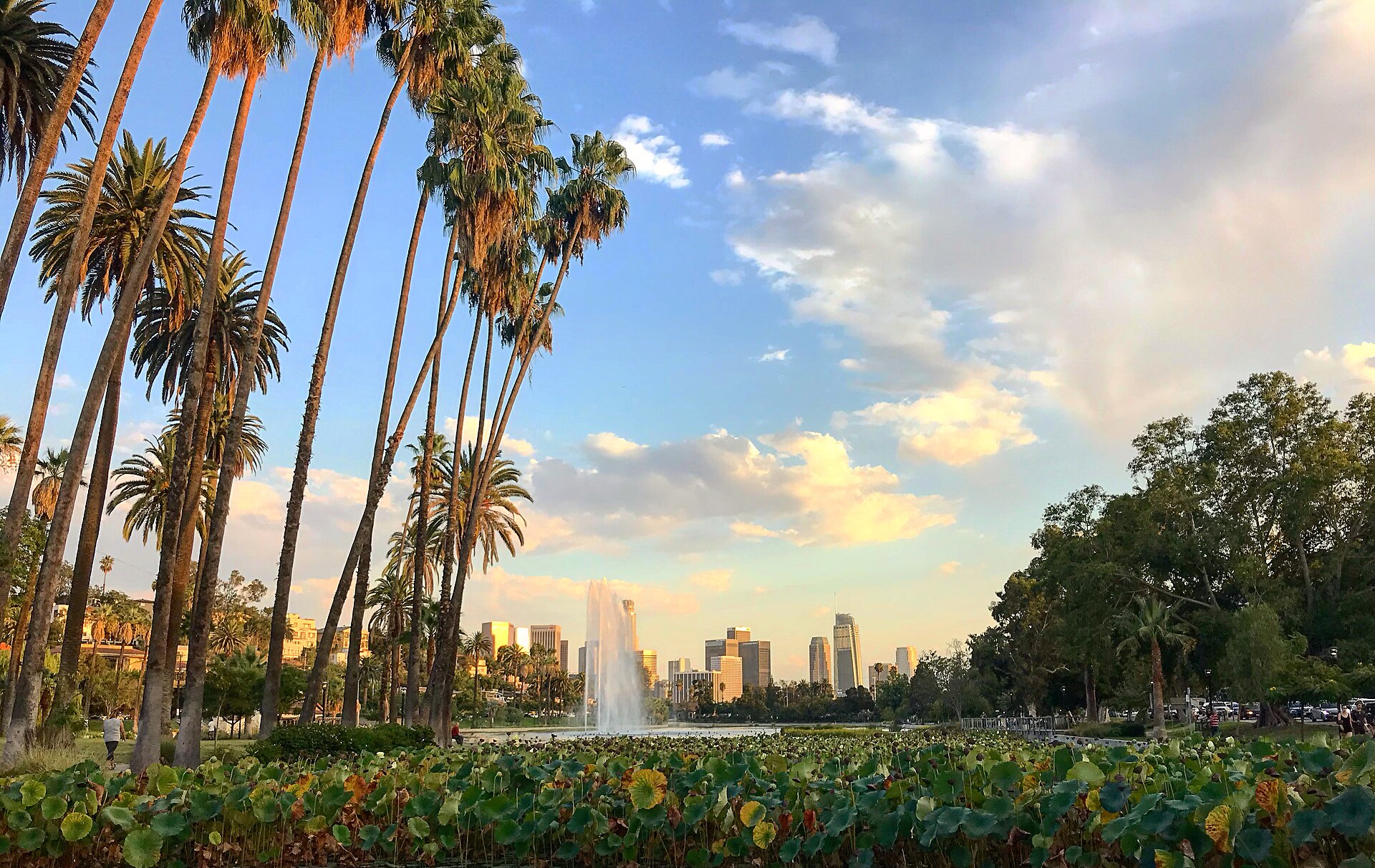
Echo Park Lake is the palm-lined city lake just northwest of downtown Los Angeles, known for its swan pedal boats, its summer lotus beds and one of the best free views of the downtown skyline. It sits at the heart of the Echo Park neighborhood, a few blocks from the cafés and taco spots of Sunset Boulevard and a short drive from Dodger Stadium and Elysian Park. This guide covers the lake’s history and its 2013 restoration, when the lotus blooms, how the swan boats work, the walking loop, the Lotus Festival, and where to eat, park and go next. Boat hours, prices and restaurant details change, so check before you go.
Echo Park Lake at a Glance
- Address: 751 Echo Park Ave., Los Angeles, CA 90026, in Echo Park, northwest of downtown LA
- What it is: a city park run by LA Recreation and Parks around a lake of about 14 acres, with a fountain, a boathouse, wetland plantings and lotus beds
- Walking loop: roughly one mile, paved and flat
- Cost: the park is free; swan pedal boats are rented by the hour and must be reserved in advance
- Best time for lotus: late June through July, usually peaking around the Lotus Festival in mid-July
- Time needed: an hour for a loop and photos, two to three hours with a boat ride and lunch on Sunset Boulevard
A Short History of Echo Park Lake
The lake started as infrastructure, not scenery. In 1868 the Los Angeles Canal and Reservoir Company dammed the valley here to form Reservoir No. 4, part of the young city’s drinking water supply. In 1891 four landowners gave 33 acres around the water to the city, and landscaping began in October 1892. The park’s name comes from that work: parks superintendent Joseph Henry Tomlinson reportedly coined it after hearing his crews’ voices echo across the valley. The park and its boathouse were finished by 1895.
By the 1920s lotus plants were growing in the lake, and Echo Park grew up around it. The neighborhood was once part of Edendale, an early film district where Mack Sennett’s Keystone Studios worked on what is now Glendale Boulevard before the industry consolidated in Hollywood. Directly across the street from the lake stands Angelus Temple, the domed church that evangelist Aimee Semple McPherson opened on January 1, 1923, with seats for about 5,300 people. It is still an active church and one of the most recognizable buildings on the shoreline.
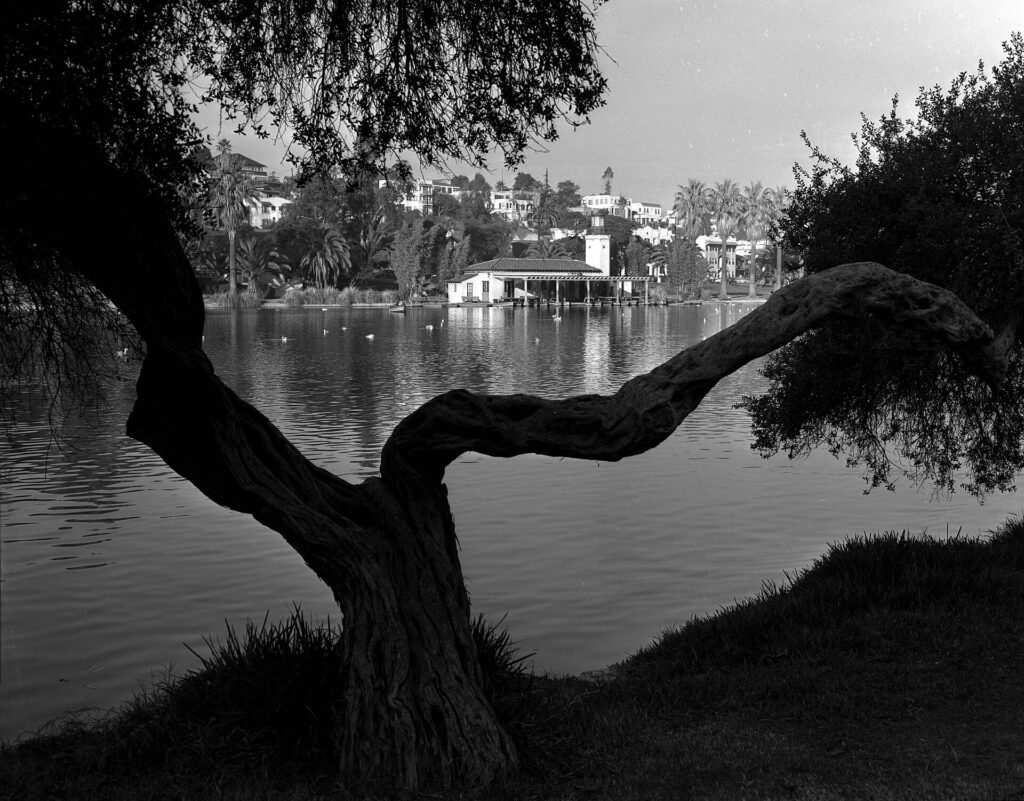
Today the lake no longer serves as drinking water. It works as a stormwater detention basin, catching runoff from the surrounding hills, while also serving as a park and a habitat for wildlife.
The 2013 Restoration
By the 2000s the lake had serious problems. The state listed it as an impaired water body in 2006, algae and pollution were persistent problems, and the famous lotus beds had almost disappeared by 2008. The city answered with a rehabilitation funded by Proposition O, a city clean-water bond measure. The lake was drained in the summer of 2011 and rebuilt over the next two years: crews removed sediment, installed a liner to reduce seepage, and added planted wetlands that filter pollutants out of the water without chemical treatment. New paths and a boardwalk went in along the edge.
The lotus came back too. Horticulturalist Randy McDonald had collected cuttings from the original plants in 2005, and those were used when the city replanted the beds in 2013. Echo Park Lake reopened on June 5, 2013, after a project costing about $45 million, and the design firm’s project director described it as finished under budget and on schedule.
The 2021 Closure and the Fence
Visitors who read older news may see references to the lake being closed. A large homeless encampment grew in the park from late 2019. On March 25, 2021, the city closed the park, cleared the encampment and fenced the lake with chain-link for repairs. It reopened on May 26, 2021, with an overnight closure, after about $1.1 million in cleanup and repairs. The fence stayed up for nearly two years and was taken down in late March 2023. Since then the park has been open without the fence; it still closes overnight, so plan daytime and evening visits.
The Lotus Beds and When They Bloom
The lotus beds are the main reason many people seek out Echo Park Lake. For most of the year they look like a field of large, round green leaves standing above the water. The first flowers usually appear in June, more open through late June, and the bloom typically peaks around mid-July, the same time as the Lotus Festival. Flowers keep appearing into August in a good year. How early and how full the bloom is depends on the weather: a long stretch of cloudy “June Gloom” tends to delay it, and a warm early summer brings it forward.
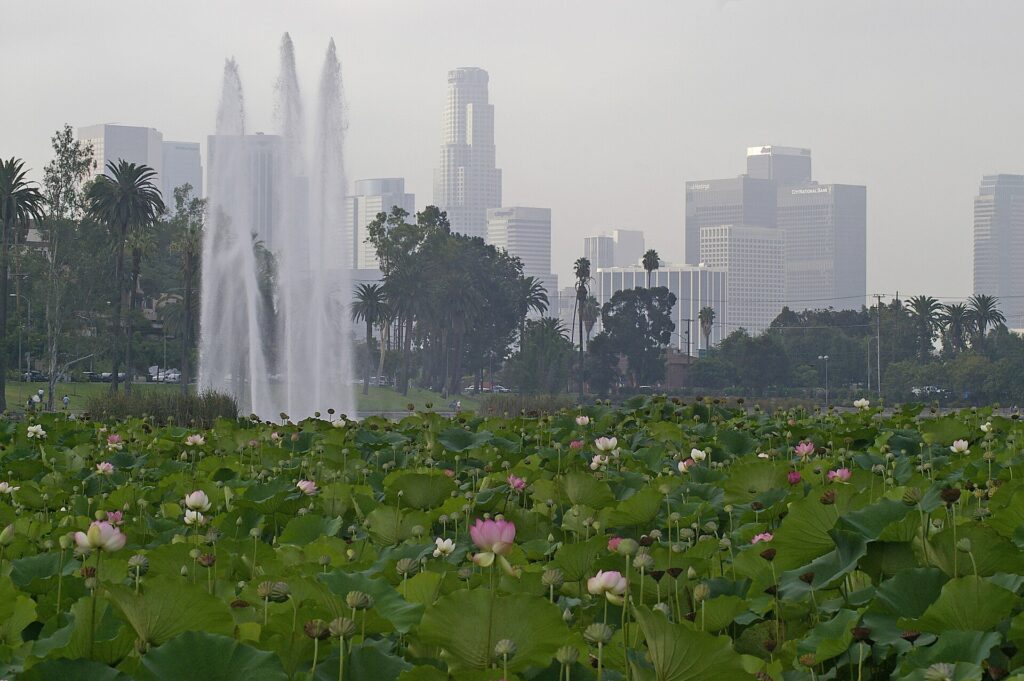
An early visit in bloom season means softer light for photos and fewer people on the path. Lotus plants go dormant in the cooler months, when the beds look brown and flat; the lake is still worth a walk then, but do not plan a trip around the flowers outside summer.
Swan Pedal Boats on Echo Park Lake
The white swan-shaped pedal boats are the lake’s best-known activity. They are run by Wheel Fun Rentals under a concession with LA Recreation and Parks. As listed on the operator’s site in November 2026:
- Reservations are required. The operator does not accept walk-ups; book online in advance.
- Price: $13 per adult (18 and over) and $7.50 per child, for a one-hour rental, with no extra taxes or fees listed.
- Hours: from November 2, 2026, to March 5, 2027, boats run daily from 9 a.m. to 10 p.m.; from early March to early September the listed hours are 9 a.m. to 11 p.m. The last rental goes out one hour before closing, and everything is weather permitting.
- Boats: large swans seat up to five people (1,400 pounds in total); small swans fit two adults and two children aged 10 or under.
- Rules: the person who books must be 18 or older with photo ID to sign the waiver; riders under 15 need a parent or guardian on board; life jackets are provided in sizes from infant to adult.
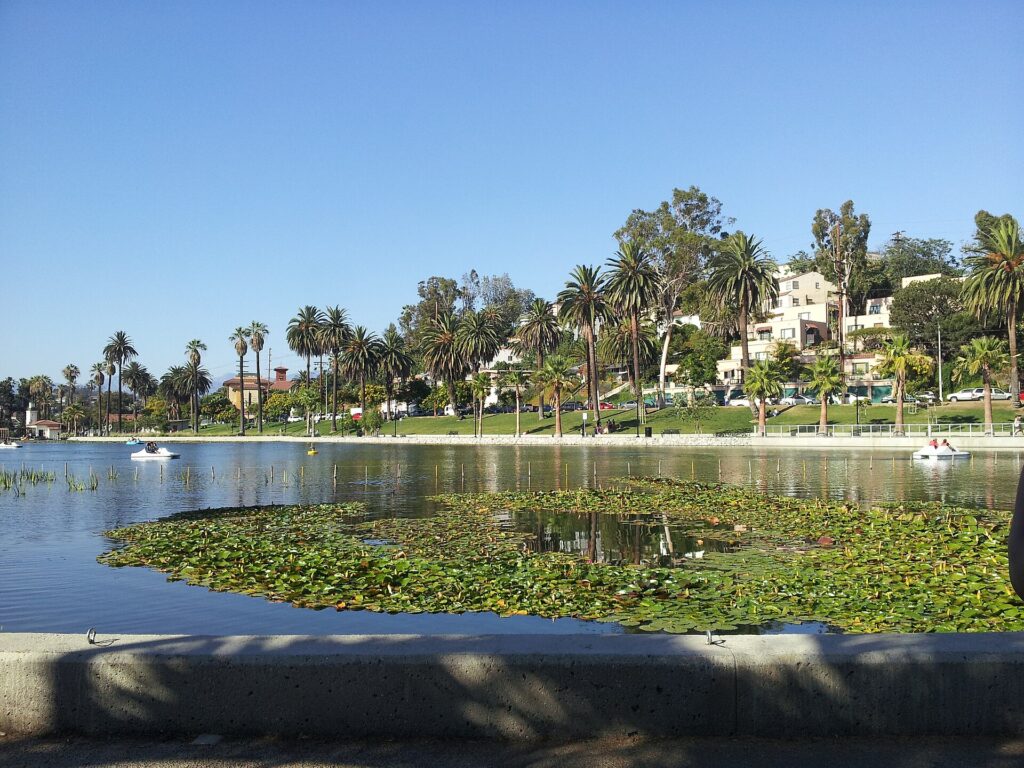
Night rides run from sunset until closing, when the downtown towers are lit up beyond the water. Weekday mornings are usually the quietest time for a ride.
The Walking Loop and the Skyline View
A paved path runs all the way around Echo Park Lake. The loop is roughly a mile, depending on which inner paths you take, and it is flat enough for strollers and wheelchairs. Most people walk it in 20 to 30 minutes, longer with stops.
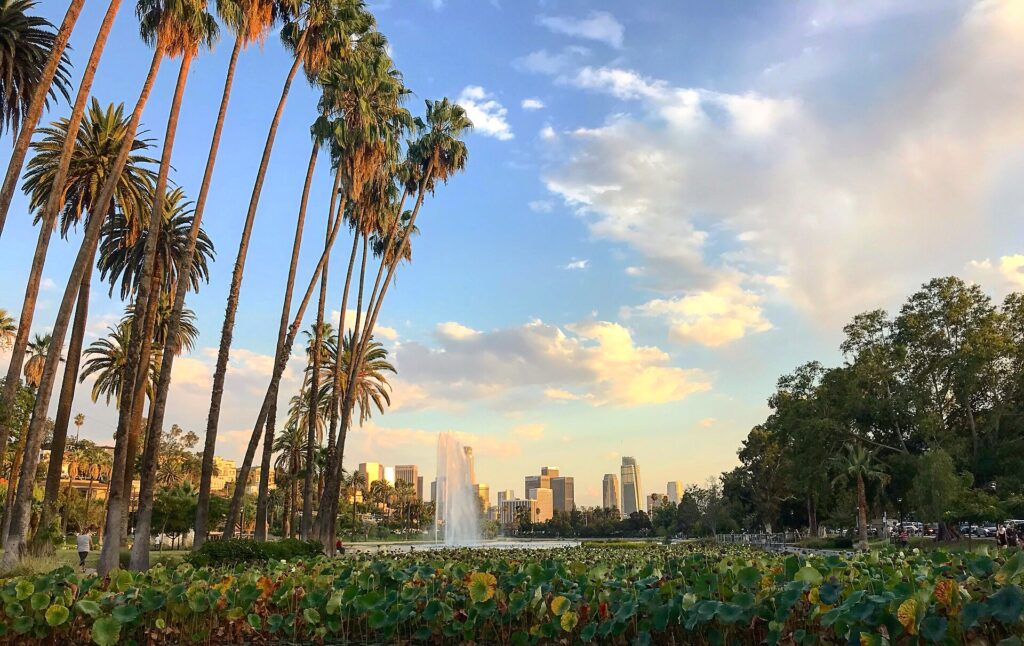
The classic photo frames the lotus beds in the foreground, the tall fountain in the middle and the downtown Los Angeles towers rising behind the palms. The boardwalk through the wetland plantings gives a lower, closer view of the water and the birds. Late afternoon and the half-hour before sunset are the best times for skyline photos, when the light hits the towers from the west.
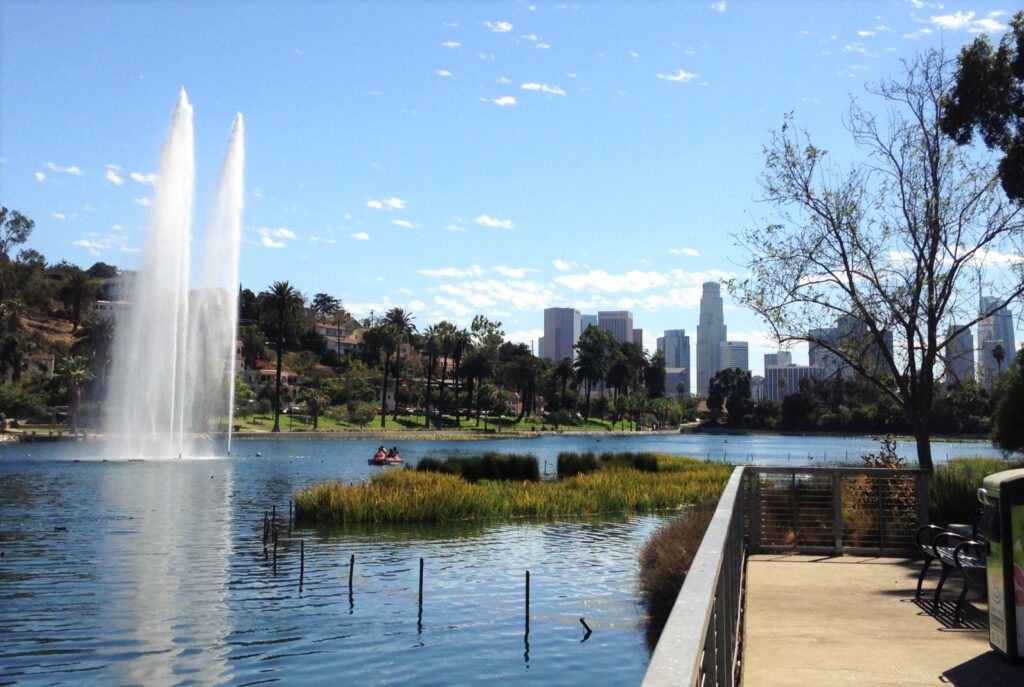
Along the way are lawns for a picnic, benches under the palms and the boathouse, which has housed a series of casual food concessions over the years. What is operating there changes, so treat it as a bonus rather than a lunch plan. The lake also has a well-known 1930s statue on its shore, popularly called the “Lady of the Lake.”
The Lotus Festival
The Lotus Festival is the lake’s big annual event, held over a weekend in July when the flowers are near their peak. Presented by LA Recreation and Parks, it celebrates the Asian American, Native Hawaiian and Pacific Islander communities of Los Angeles, with a different featured culture each year. Admission is free; food, crafts and merchandise cost extra.
The 45th edition was scheduled for July 11–12, 2026, honoring Sri Lanka. The program included an opening ceremony, Sri Lankan music and dance, dragon boat races with eight-person teams from community groups, companies and city departments, an evening light display on the water called Lights of Dreams, food stalls, a beer garden and a 5K run. As of late November 2026 the city had not yet announced dates for 2027; the festival page at laparks.org/lotusfestival is the place to watch. If you plan a July visit, expect road closures and much tighter parking around the lake on festival weekend.
Sunset Boulevard in Echo Park
Sunset Boulevard runs a few blocks south of the lake, and this stretch is the neighborhood’s main street, with small restaurants, bars and coffee shops close together. It is the same road that continues west through Silver Lake, Hollywood and the Sunset Strip to the ocean; our Sunset Boulevard guide follows it all the way. The streets just north of the lake, along Echo Park Avenue, are quieter and residential.
Where to Eat and Drink Near the Lake
All of these appeared in current 2026 local food coverage; opening days vary, so check each one’s own site before you go.
- Angel’s Tijuana Tacos (1185 W. Sunset Blvd.): a taqueria known for trompo pork tacos and long lines.
- A Tí (1498 W. Sunset Blvd.): creative Mexican cooking, such as blue corn tacos and duck confit with date mole, in a plaza with its own small parking lot.
- Donna’s (1538 W. Sunset Blvd.): a red-sauce Italian spot for chicken parm, lasagna and martinis.
- Fluffy McCloud’s (1814 W. Sunset Blvd.): a retro soda fountain for banana splits and ice cream after a lake walk.
- Stories Books & Cafe (1716 W. Sunset Blvd.): an independent bookstore with new and used books, a small café in the back and a patio.
- Henrietta (343 Glendale Blvd.): sandwiches by day and table-service dinners at night, known for its roast chicken.
- Tsubaki and Ototo (1356 and 1360 Allison Ave.): a Japanese izakaya with a long sake list, and its more casual sake-bar sibling next door.
- Alejandra’s Quesadilla Cart (1246 Echo Park Ave.): Oaxacan-style quesadillas on handmade blue corn tortillas, from Friday to Monday.
For more coffee ideas across the city, see our guide to the best coffee shops in Los Angeles and Beverly Hills.
Elysian Park and Dodger Stadium
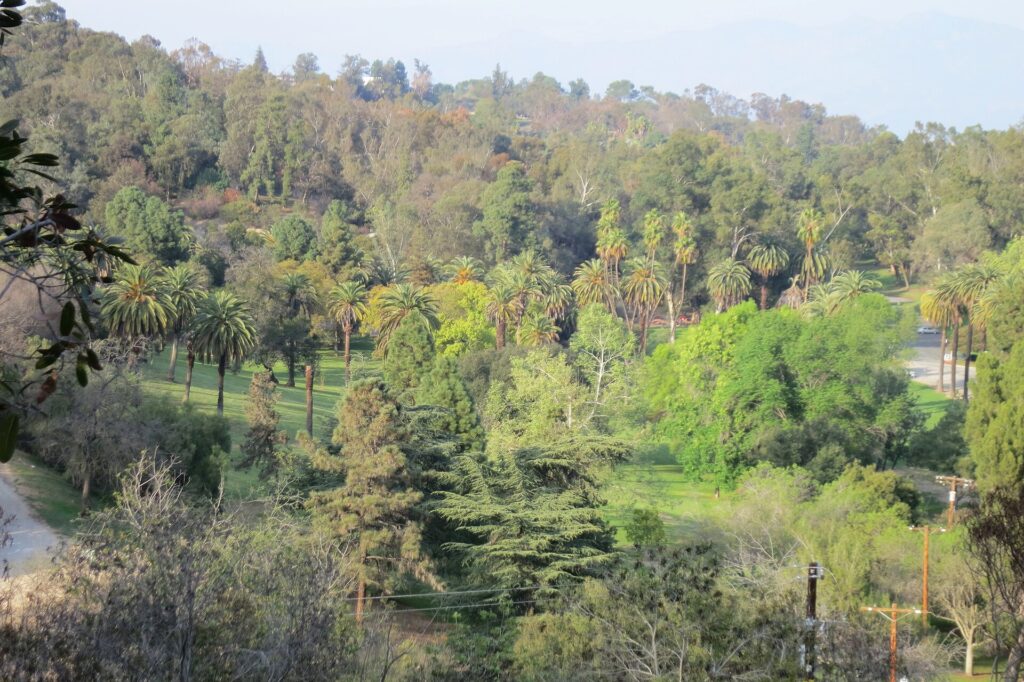
Just northeast of the lake, the hills of Elysian Park border Echo Park. Created by city ordinance in 1886, it is the oldest park in Los Angeles and, at roughly 600 acres, one of the largest. Its winding roads, trails and picnic areas feel far from the city even though downtown is minutes away. The best-known viewpoint is Angels Point, a small hilltop that looks down on Dodger Stadium with the downtown skyline behind it.
Dodger Stadium sits inside the Elysian Park area in Chavez Ravine and opened on April 10, 1962. It is the oldest Major League ballpark west of the Mississippi and the third-oldest in the league after Fenway Park and Wrigley Field, with a listed capacity of 56,000. Its construction has a painful history: the mainly Mexican American residents of Chavez Ravine were forced out over a decade-long fight, first for a public housing project that was never built and then for the stadium, a story still remembered in the neighborhood.
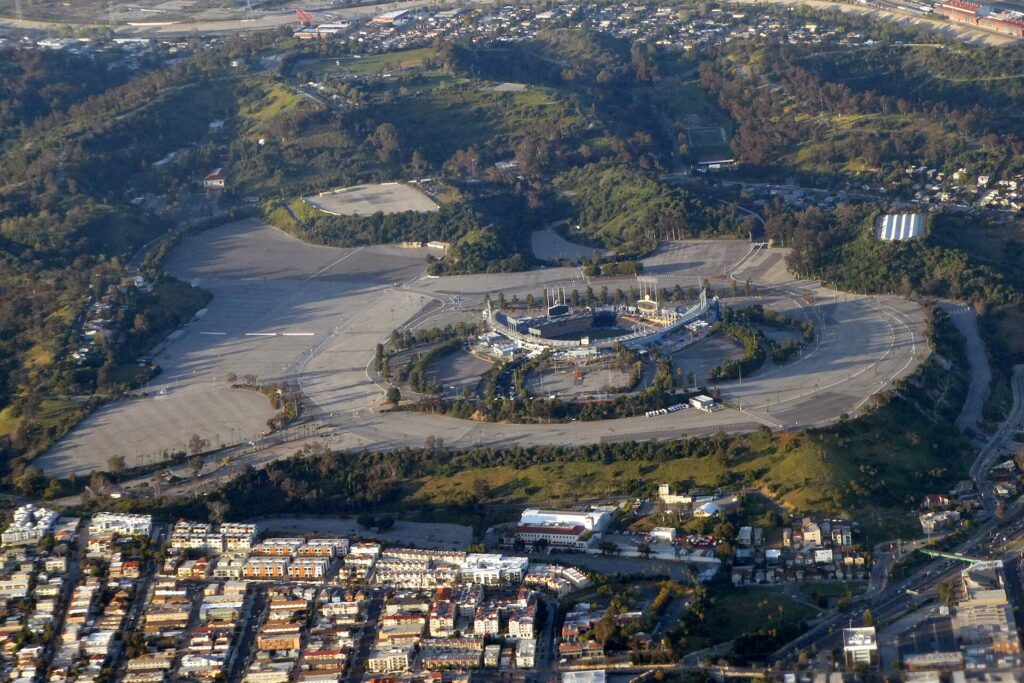
Outside of games, the Dodgers run stadium tours year-round, with several formats; tours do not run during daytime home games, and a clear bag policy applies. Book through the Dodgers’ official site. On game days, the Dodger Stadium Express buses run from Union Station in downtown LA, which is easier than driving into the stadium lots.
Getting to Echo Park Lake and Parking
Echo Park Lake sits between Glendale Boulevard on the west and Echo Park Avenue on the east, just northwest of downtown Los Angeles.
- Parking: very limited. The boat operator points visitors to street parking along the surrounding streets and to a small paid public lot at 1149 Echo Park Ave., and advises arriving early. On weekends and during the Lotus Festival, expect to circle.
- Rideshare: the simplest option; ask to be dropped on Echo Park Avenue or Glendale Boulevard at the lake.
- Bus: Metro buses serve Sunset Boulevard a few blocks south of the lake; use the Metro trip planner for current lines.
- Hours: the park is open daily but closes overnight. Boat hours are separate and listed above.
A half-day in this corner of the city combines easily with neighbors. Silver Lake begins just northwest, with its reservoir loop and public stairways (see our Silver Lake guide). Chinatown is a few minutes southeast (Chinatown guide), and downtown is close enough for an afternoon of museums and rooftops (things to do in downtown LA). For a longer outdoor day, Griffith Park and the Griffith Observatory are a short drive north.
Parking is the hardest part of an Echo Park visit, which is one reason some visitors see it from a car with a driver. Classic Experiences runs a classic car tour in a 1970 Cadillac DeVille convertible and a full-day One Day in LA tour, both with hotel pickup; ask about including Echo Park on the route.
Echo Park Lake: FAQ
Is Echo Park Lake free to visit?
Yes. The park and the walking loop are free and open daily, closing overnight. Only the swan pedal boats cost money: $13 per adult and $7.50 per child for one hour, as listed by the operator, Wheel Fun Rentals, in November 2026.
When do the lotus flowers bloom at Echo Park Lake?
The first flowers usually appear in June, and the bloom typically peaks around mid-July, the time of the annual Lotus Festival. Some flowers keep opening into August. Mornings are the best time to see them open.
Do you need a reservation for the swan boats?
Yes. Wheel Fun Rentals requires advance reservations and does not take walk-ups. Rentals are one hour, the last boat goes out an hour before closing, and rides depend on the weather.
How long is the walk around Echo Park Lake?
The paved loop is roughly one mile and flat, which takes most people 20 to 30 minutes without stops. Allow longer for skyline photos and a stop at the lotus beds.