
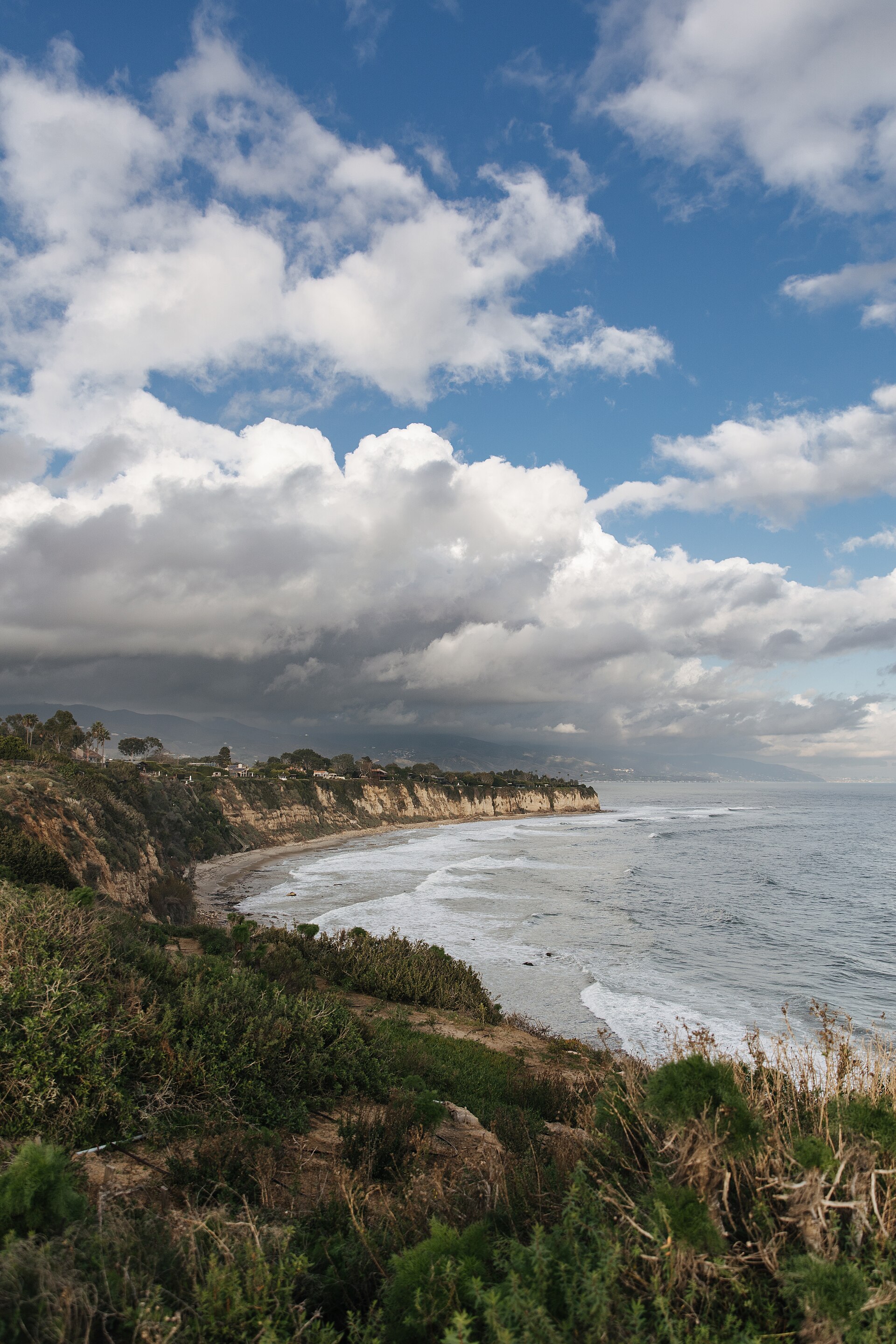
Point Dume is the rocky headland that pushes south into the Pacific at the western end of Santa Monica Bay, between Zuma Beach and Paradise Cove in Malibu. From the top you get one of the widest views on the Southern California coast: Zuma’s long sweep of sand to the west, the Malibu bluffs and the Santa Monica Mountains to the east, and in winter, the spouts of gray whales passing close to shore. Below the cliffs are a sandy cove, tide pools and a climbing wall, and the whole point sits inside a state park and a pair of marine protected areas.
This guide covers the bluff trail and lookout, whale season, the beaches on either side, tide pool etiquette, climbing, parking and the film history, plus the closures you need to know about right now. Access around Point Dume changed in 2026 because of storm erosion at Westward Beach, and parking rules and fees change, so check the official State Parks and LA County Beaches pages before you go.
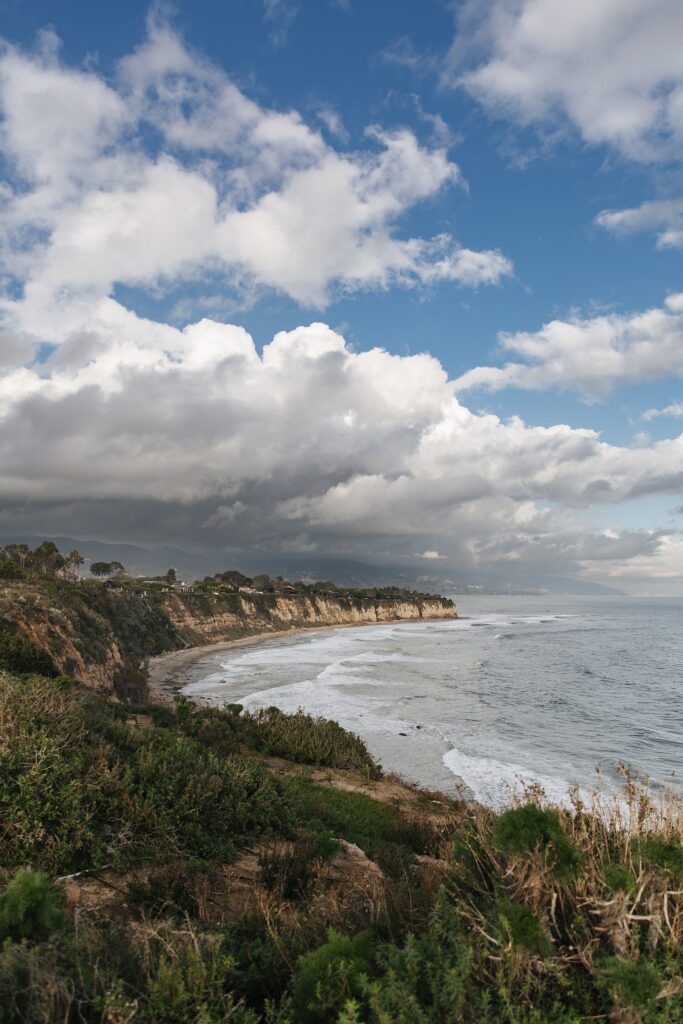
Point Dume at a glance
- What it is: Point Dume State Beach, a 63-acre unit of California State Parks, including the 34-acre Point Dume Natural Preserve on the headland.
- Hours: sunrise to sunset.
- Who runs what: State Parks manages the headland and preserve; Los Angeles County operates Westward Beach (the beach and lot on the west side of the point) as well as Zuma Beach.
- Dogs: not allowed on the trails or the beach.
- Drones: the park is posted as a no-drone zone.
- Best for: a short scenic walk, winter whale watching, sunset, and low-tide tide pooling.
- Current status (November 2026): the headland and preserve are open, but the road to the lower Westward Beach parking lot is closed to vehicles while LA County repairs erosion damage. Details are in the parking section below.
A short history of the headland
The Chumash lived along this coast for thousands of years, and State Parks describes the point as a place they treated as sacred. In 1542 the headland served as a navigation marker for the Spanish explorer Juan Rodríguez Cabrillo. It got its name in 1793, when the British captain George Vancouver named it after Father Francisco Dumetz of Mission San Buenaventura. The spelling lost a few letters along the way.
During World War II the U.S. Army used the point for anti-aircraft artillery training, and State Parks believes the top of the headland was flattened after the war for planned construction. The State of California acquired the land in 1979 and has been restoring it since. In 1992, 34 acres were designated a State Natural Preserve, one of the strongest protections available under state law. State Parks calls the preserve one of the last and finest examples of coastal bluff scrub in Southern California.
The bluff trail and lookout
The main reason most people come is the walk to the top. A gradual trail climbs through low coastal scrub and over an ancient sand dune that has built up on the bluff, and near the summit a boardwalk leads to a wooden viewing platform. State Parks puts the total network at about two miles of trails through grassland, bluff scrub and foredune habitat, so you can make it a 20-minute stroll or a longer loop.
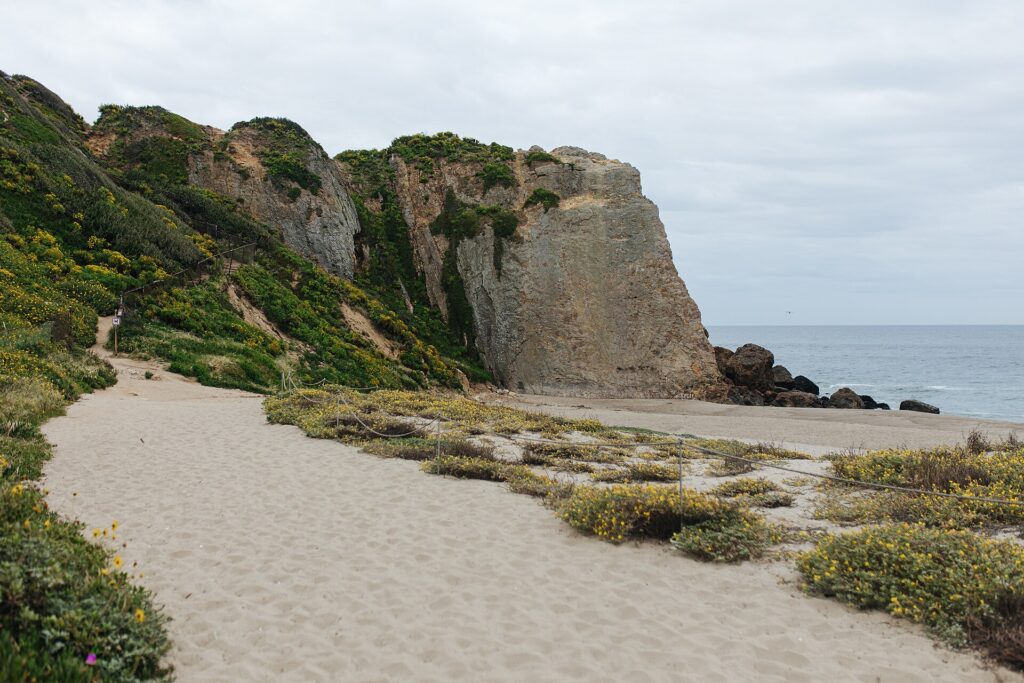
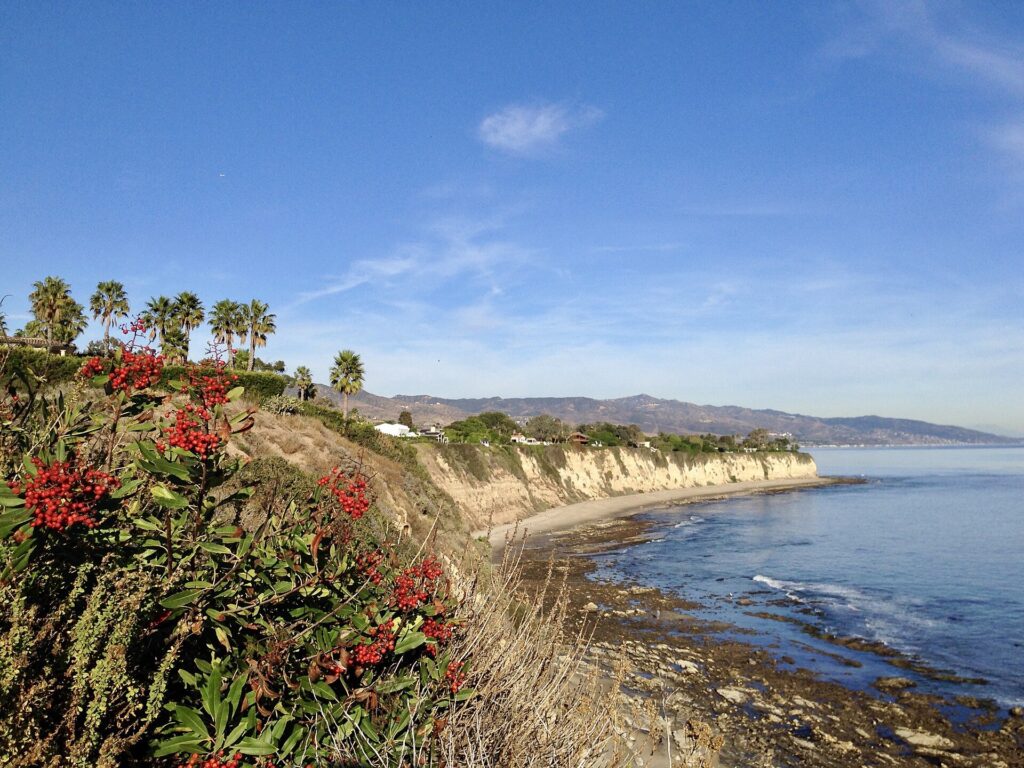
From the platform you look west along Westward Beach and Zuma Beach, and east toward Paradise Cove and the rest of the Malibu coastline. In spring the preserve is one of the southernmost places to see giant coreopsis, a tall native plant with bright yellow flowers, along with dudleya and other coastal plants.
A few rules keep the bluff intact:
- Stay on the fenced trail. Shortcuts erode the sandy cliff and destroy habitat, and State Parks specifically asks visitors to keep off the dune.
- No fires at any time.
- No dogs. Even the scent of a dog can keep nesting birds away.
- Accessibility: disabled parking is along Cliffside Drive, and the viewing platform is reached on a slight grade. State Parks asks visitors who need help to call the park ahead of time.
If you enjoy this kind of short coastal climb, our roundup of the best hikes in Los Angeles has longer options in the Santa Monica Mountains.
Whale watching at Point Dume
Point Dume is one of the few dry-land spots on this coast where you can get close to the California gray whale migration. State Parks gives the main viewing season as December to mid-April. Because the headland sticks out into their path, they often pass close enough to see clearly without binoculars, though a pair helps. State Parks notes that from February onward you have a chance to see mothers with newborn calves heading north.
Tips for whale watching from the lookout:
- Look for the spout first: a puff of mist on the horizon, often repeated a few times before a dive.
- Calm mornings with little wind make spouts much easier to see than choppy afternoons.
- Year-round, watch for sea lions, harbor seals and dolphins in the surf below, and brown pelicans flying low along the cliffs.
- Bring a layer. The top of the point is exposed and can feel much colder than the beach.
Tide pools and the marine protected areas
The rocky shelf around the base of the point forms tide pools at low tide, with sea stars, anemones, crabs, mussels, sea urchins and the occasional octopus. The water off the point is protected by two state marine protected areas: the Point Dume State Marine Reserve on the east side and the larger Point Dume State Marine Conservation Area to the west.
In the marine reserve it is unlawful to injure, damage, take or possess any living, geological or cultural marine resource, which includes shells and rocks. The conservation area has the same rule with a few narrow fishing exceptions. On land, the State Parks rules say the same thing in plain terms: look, don’t take.
- Go at a low tide. Check a tide table before you set out; a minus tide in winter usually exposes the most.
- Don’t turn over rocks, pick up animals or pry anything off the reef.
- Step on bare rock or sand, not on mussel beds or anemones, and wear shoes with grip.
- Keep an eye on the incoming tide so you don’t get cut off at the base of the cliff.
The beaches around Point Dume
Westward Beach
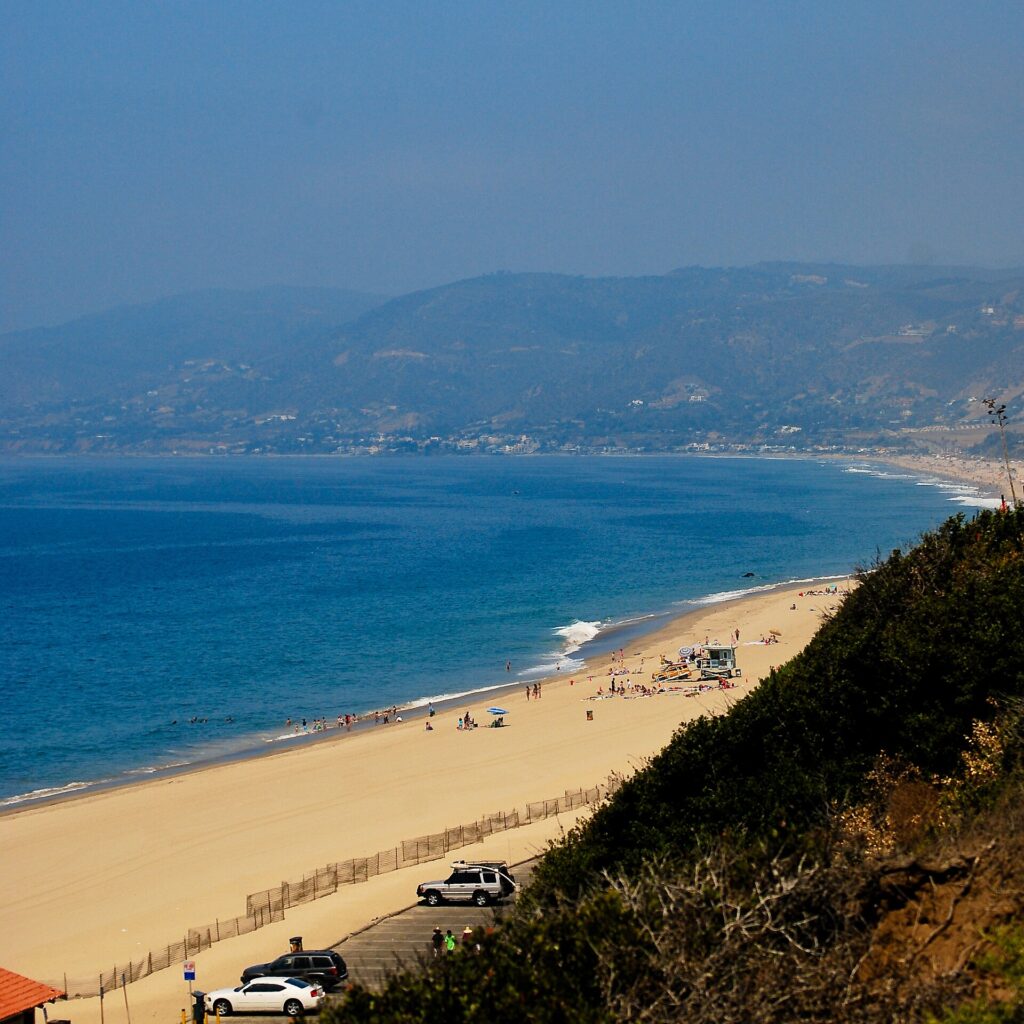
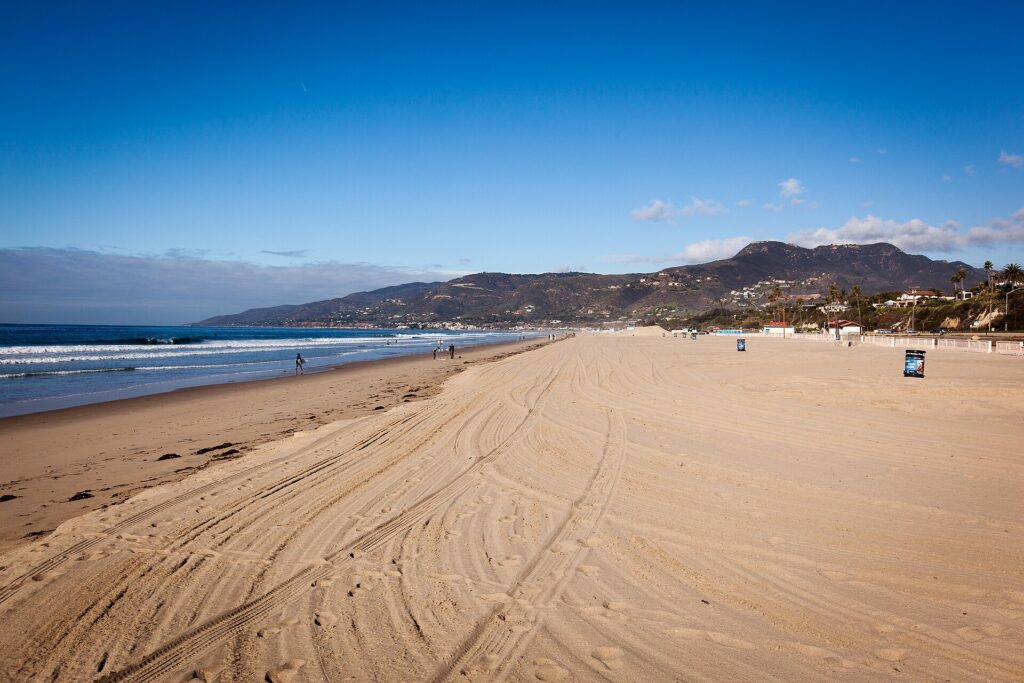
Westward Beach is the wide strip of sand on the west side of the point, running from the base of the headland toward Zuma. It is operated by LA County, and in normal times it has a paid lot with 373 spaces, restrooms and a lifeguard station, plus a trail up to the preserve from the far end. It is also where most people start the walk to the climbing wall and Pirates Cove.
In summer 2026 that changed. High tides and surf on July 31 and August 1, 2026 badly eroded the beach and damaged the access road and water lines. LA County closed the access road beginning at the Westward Beach Road and Birdview Avenue intersection to vehicles, closed the three restrooms (portable toilets and handwashing stations are in place), and has been building and repairing rock revetment along the shore since August. As of the county’s November 10, 2026 update, revetment work was still underway, and roadway and drainage repairs were still being planned. State Parks says the beach itself remains accessible on foot, but the lower parking lot is not. Construction zones are off-limits to pedestrians and cyclists.
Pirates Cove
Pirates Cove is a small sandy pocket tucked beneath the headland, reached along the shore from the far end of Westward Beach. It is sheltered and photogenic, but it is also small, rocky at the edges and easy to get trapped in when the tide comes up, so time your visit for a falling or low tide.
Older guides describe the cove as clothing-optional. That is out of date. California state regulations (Title 14, section 4322) prohibit nudity in state park units except in areas specifically designated for it, and State Parks has not designated any clothing-optional beaches. Plan to keep your swimsuit on.
Zuma Beach
Just west of Westward Beach, Zuma Beach is one of the biggest beaches in Los Angeles County: 1.8 miles of sand on 105 acres at 30000 Pacific Coast Highway. LA County runs about 2,000 parking spaces across eight lots, open from 6 a.m. to 10 p.m., along with restrooms, showers, volleyball nets, picnic tables and concession stands at each end. Lifeguards are on duty during the day. It is the easier choice for a long swim-and-sun day, and the stretch nearest the point gives you a straight view of the headland. For more options along the coast, see our guide to Los Angeles beaches.
Rock climbing on the bluff
The sheer face at the western base of the point, above the end of Westward Beach, is a long-standing local climbing spot, and the National Park Service lists climbing among the activities at Point Dume. Climbing guides such as Mountain Project describe a short wall with mostly moderate routes, many of them top-roped. They also warn that some of the fixed bolts are old and may be unreliable, and that the rock can be slick on cool, damp days.
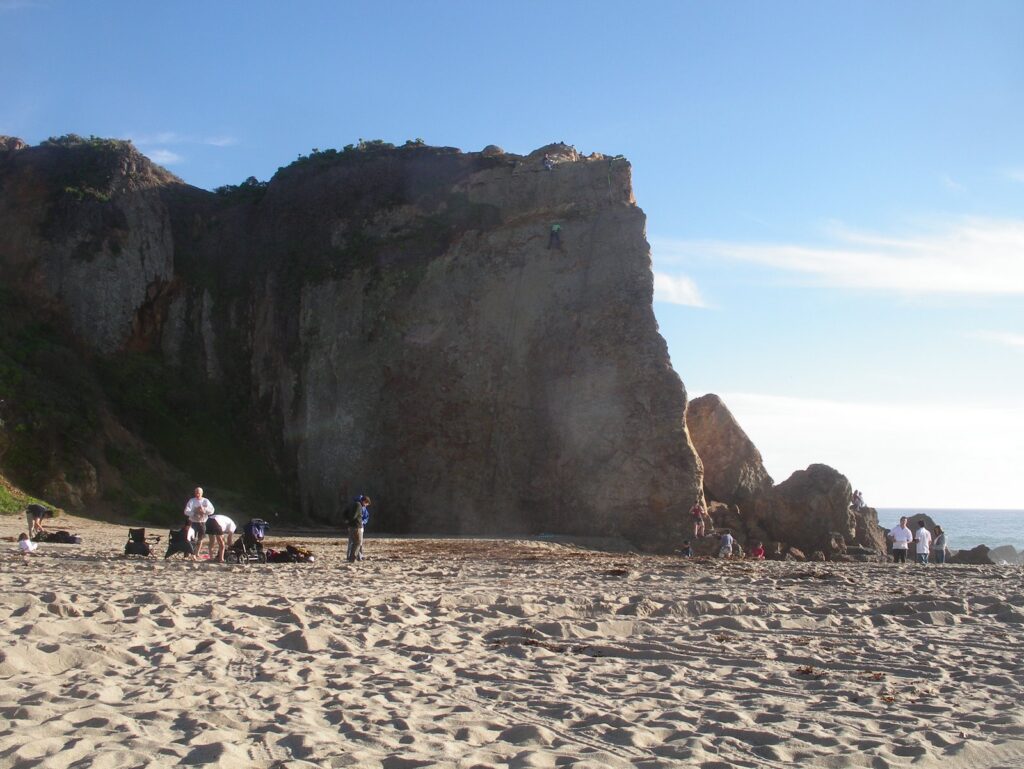
This is for experienced climbers with their own gear, not something to try on a whim. Climbing is limited to park hours, and while the Westward Beach repairs continue, check that the approach along the beach is open before you carry a rope out. Never climb or scramble on the sandy, eroding bluffs elsewhere on the point.
The Planet of the Apes ending
Point Dume’s best-known screen moment is the final scene of the 1968 Planet of the Apes, when Charlton Heston’s character rides along the shore and finds the ruined Statue of Liberty half-buried in the sand. Film location guides place the shoot in the cove at the far eastern end of Westward Beach, at the foot of the headland. Nothing of the set remains, but the cliffs in the background are instantly recognizable to anyone who has seen the film.
Parking and getting to Point Dume
Parking is the hardest part of a visit, especially while the Westward Beach lot is closed.
- Top of the point: State Parks offers free two-hour parking at the top of Point Dume, near the preserve entrance, but it is extremely limited. Arrive early on weekends and in whale season.
- Street parking: the streets around the preserve run through a residential neighborhood. Read every sign, respect time limits and no-parking zones, and don’t block driveways. Keep voices down early and late.
- Westward Beach lot: normally a paid LA County lot, but road access was closed to vehicles as of November 2026. Check the LA County Beaches and Harbors page for reopening news and current rates.
- Zuma Beach lots: paid LA County lots with the most capacity in the area, useful if you plan to spend most of the day on the sand. County lots take Visa, Mastercard or cash in $1 and $5 bills, with no change given.
- By bus: Metro Bus 534 runs along Pacific Coast Highway and stops at Cliffside Drive and Dume Drive, a short walk from the point.
The Point Dume neighborhood is a residential area. Please visit the park, not the houses: stay on public land and leave residents their privacy.
Best times to visit
- Sunset: the lookout faces west down the length of Zuma Beach, which makes it one of Malibu’s classic sunset spots. Remember the park closes at sunset, so time your walk back.
- Low tide: for tide pools and Pirates Cove, plan around a low or minus tide.
- December to mid-April: gray whale season, with calves more likely from February.
- Spring: wildflowers, including giant coreopsis, on the bluff.
- Weekday mornings: the best chance at a parking space and a quiet platform.
Staying safe at Point Dume
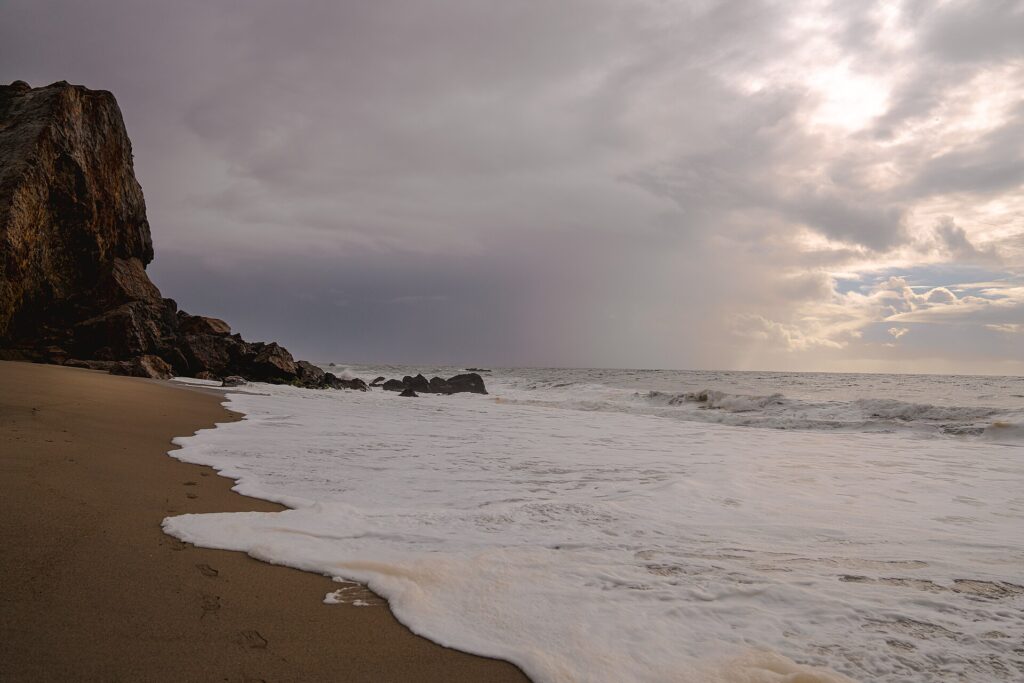
- Cliff edges: the cliffs are volcanic rock topped with sand and soil, and edges can crumble without warning. Stay behind fences and off the cliff face.
- Surf: waves wrap around the point and can be strong, with rocks close to shore. Swim near a staffed lifeguard tower at Zuma or Westward, not off the rocks.
- Tides: the coves below the headland can flood at high tide. Know when the tide turns before you walk around the point.
- Construction: obey closure signs and fencing around the Westward Beach repair work.
- Water quality: after rain, check LA County Public Health beach advisories before you go in the water.
- Supplies: there are no restrooms at the preserve itself, so bring water, sunscreen and a layer.
Pairing Point Dume with other Malibu sights
Point Dume fits into almost any Malibu day. Combine a morning on the bluff with lunch along Pacific Coast Highway and an afternoon at one of the other stops in our guide to things to do in Malibu, or head up into the canyons for a tasting from our list of Malibu wineries. If you are driving the coast further north, Point Dume is a natural first stop on a Pacific Coast Highway road trip.
If you would rather not deal with traffic and parking, our classic car tour in an open 1970 Cadillac convertible makes the drive along the coast part of the experience, and the private SUV tour works well for families or groups who want more room and a flexible Malibu itinerary.
Point Dume: FAQ
Is Point Dume open right now?
The headland, trail and preserve are open from sunrise to sunset. As of November 2026, the road to the lower Westward Beach parking lot is closed to vehicles while LA County repairs erosion damage from summer 2026, and the beach restrooms there are closed. The beach can still be reached on foot outside construction zones. Check the LA County Beaches and Harbors page for updates.
When can you see whales from Point Dume?
State Parks gives the gray whale migration season as December to mid-April. From February on, look for mothers and calves heading north.
Can you bring a dog to Point Dume?
No. Dogs are not allowed on the trails or the beach at Point Dume State Beach.
Can you take shells or rocks from the tide pools?
No. The waters off Point Dume are a state marine reserve and marine conservation area, where taking or damaging any living, geological or cultural marine resource is prohibited. State Parks asks visitors not to touch or remove anything from the tide pools.