
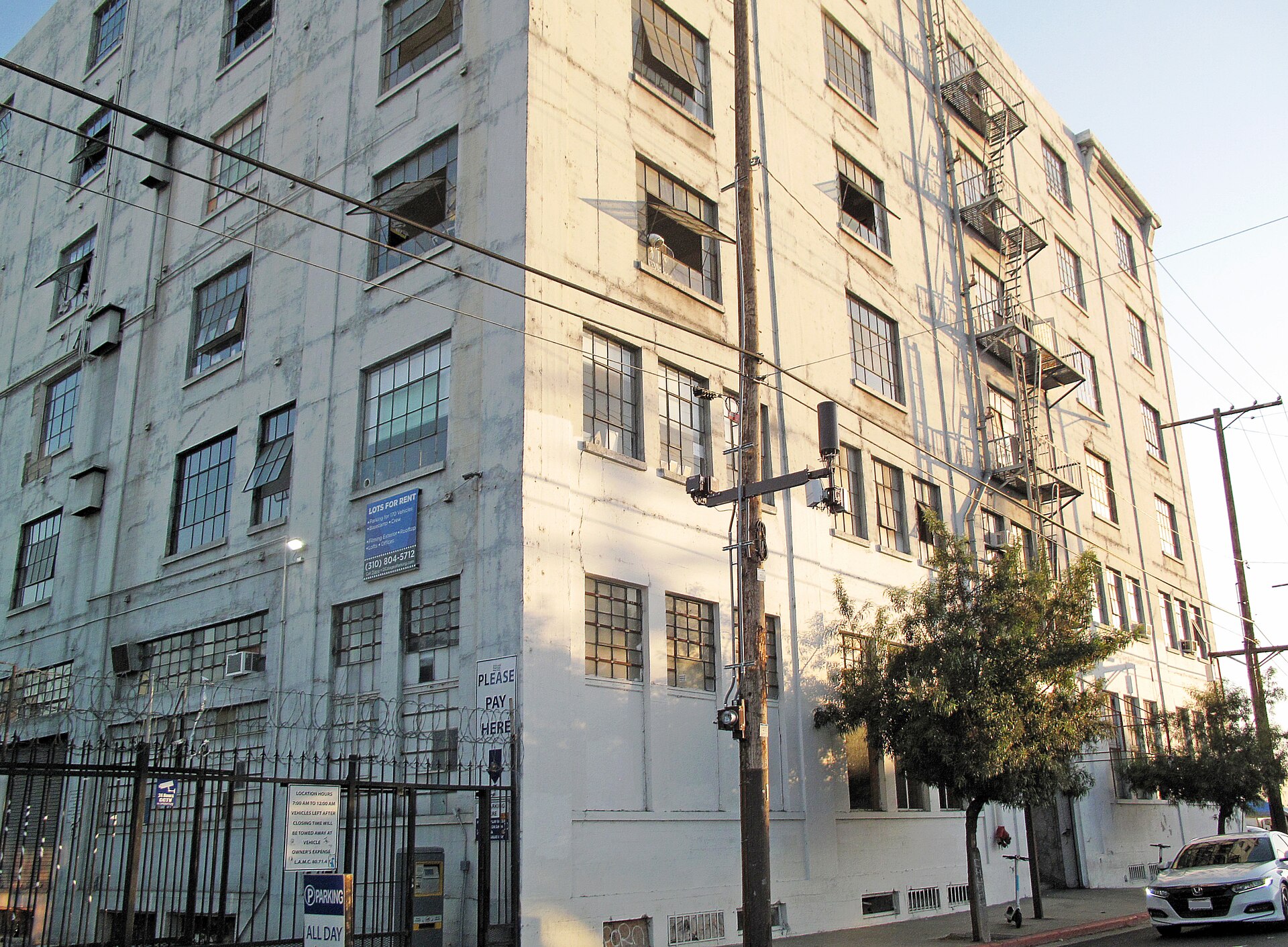
The Arts District in Los Angeles is the old warehouse quarter on the eastern edge of downtown, between Alameda Street and the Los Angeles River. A century ago it was rail yards, freight depots and factories. Artists moved into the empty buildings in the 1970s, and today the same brick and concrete blocks hold a major contemporary art gallery, a free museum, some of the city’s most talked-about restaurants, breweries and a Sunday food market. At its southeastern edge rises the arched 6th Street Bridge, the city’s newest landmark.
This guide covers the neighborhood’s history, what to see in 2026 and 2027, where to eat and drink, and how to get there and park. Hours and prices below come from each venue’s own website as of November 2026; they change, so check before you go.
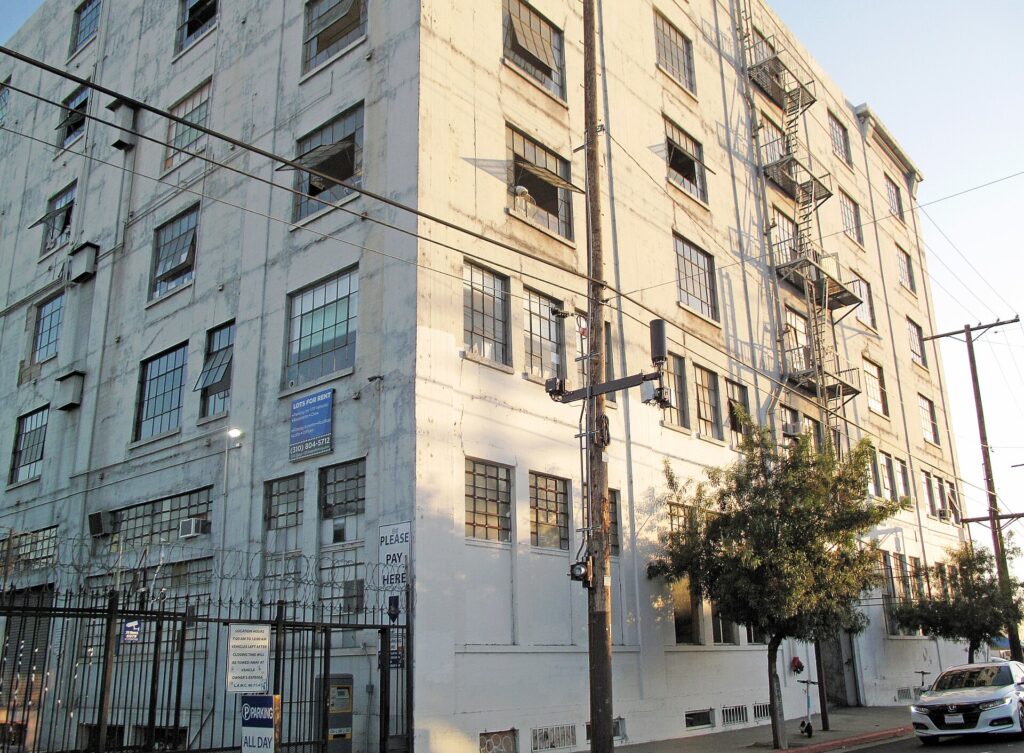
The Arts District at a glance
- Where: the east side of Downtown LA. The city’s planning boundaries are Alameda Street on the west (where it meets Little Tokyo), First Street on the north, the Los Angeles River on the east and Violet Street on the south.
- Known for: converted warehouses and lofts, galleries, design shops, destination restaurants and craft beer.
- Free things to do: Hauser & Wirth gallery, the Institute of Contemporary Art, Los Angeles (ICA LA), walking the 6th Street Bridge and browsing Smorgasburg on Sundays (food is extra).
- Nearest Metro: Little Tokyo/Arts District station on the A and E Lines.
- Best time: Wednesday to Sunday daytime for galleries, Sunday for Smorgasburg, evenings for dinner.
History: from citrus and rail to artists’ lofts
In the mid-1800s the land along the river was vineyard country. Jean-Louis Vignes, who arrived in 1831, planted vines here, and by 1849 his El Aliso vineyard was California’s largest wine producer. By the late 19th century oranges and grapefruit had replaced the grapes, and citrus groves covered the land west of the riverbank.
The railroads changed everything. The Southern Pacific reached Los Angeles in 1876, and the Atchison, Topeka & Santa Fe built depots, warehouses and rail yards in and around the district. Warehouses served the citrus industry’s shipping needs, and in 1922 the city rezoned the area to remove housing, locking it in as an industrial zone. After World War II, trucks replaced trains and manufacturers moved out to cities such as Vernon and Commerce, leaving block after block of empty buildings.
That emptiness is what drew the artists. In the 1970s artists priced out of Venice and Hollywood began converting the warehouses into studios and living space, even though the buildings were zoned for industry only. LA Artcore, founded in 1976, became one of the area’s early anchors, and Al’s Bar in the old American Hotel on Hewitt Street became a home for the punk scene until it closed in 2001. In 1981 the city created its Artist-in-Residence (AIR) program, which legalized living in formerly industrial buildings and gave the loft scene a legal footing.
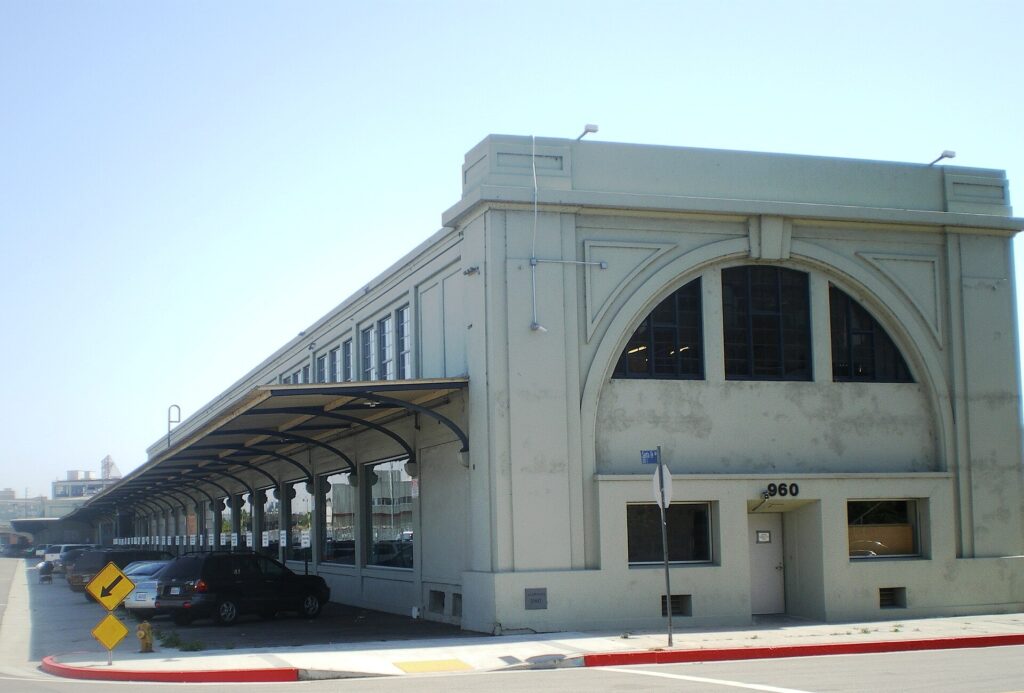
The last 25 years brought a different kind of change. The Southern California Institute of Architecture (SCI-Arc) moved into the long former Santa Fe Freight Depot on East 3rd Street in 2001, and it remains one of the district’s anchors. Restaurants, galleries and new apartment buildings followed, and rising rents have since pushed many working artists out, a tension that still shapes local debates.
Galleries and museums
Hauser & Wirth Los Angeles
The district’s biggest art draw fills most of a block at 901 East 3rd Street. The buildings were a flour mill complex: the Globe Grain & Milling Company processed Central Valley wheat here for nearly forty years, and Pillsbury ran the site from 1941 until the mid-1960s. Look for the wheat sheaves and the ship’s steering wheel still worked into the architecture. The international gallery Hauser & Wirth bought the complex in 2014 and opened it in 2016 after a two-year rehab, and it marked ten years downtown in 2026.
Admission is free. Expect large museum-scale exhibitions of established and emerging artists, indoor and outdoor spaces, and a courtyard garden with a chicken coop and vegetable beds that supply the on-site restaurant, Manuela. Opening days and late nights vary, so check the gallery’s website for current hours.
Institute of Contemporary Art, Los Angeles (ICA LA)
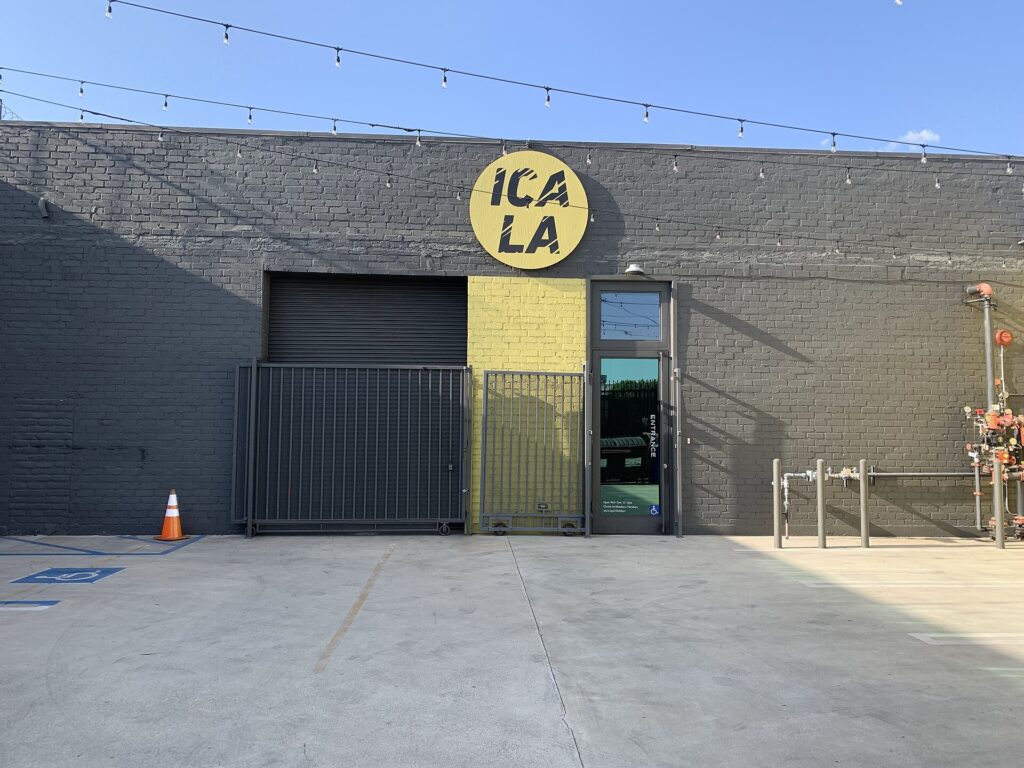
ICA LA started life in 1984 as the Santa Monica Museum of Art. It renamed itself and moved to the Arts District, reopening in September 2017 in a renovated 12,700-square-foot former manufacturing building at 1717 East 7th Street. It is a non-collecting museum, so everything on view is a changing exhibition of contemporary art.
According to the museum, it is open Wednesday to Sunday, 11am to 6pm, closed Mondays, Tuesdays and public holidays, and admission is always free. Free onsite parking is available for visitors during opening hours, which is rare in this neighborhood. The building is wheelchair accessible.
SCI-Arc and the architecture of the district
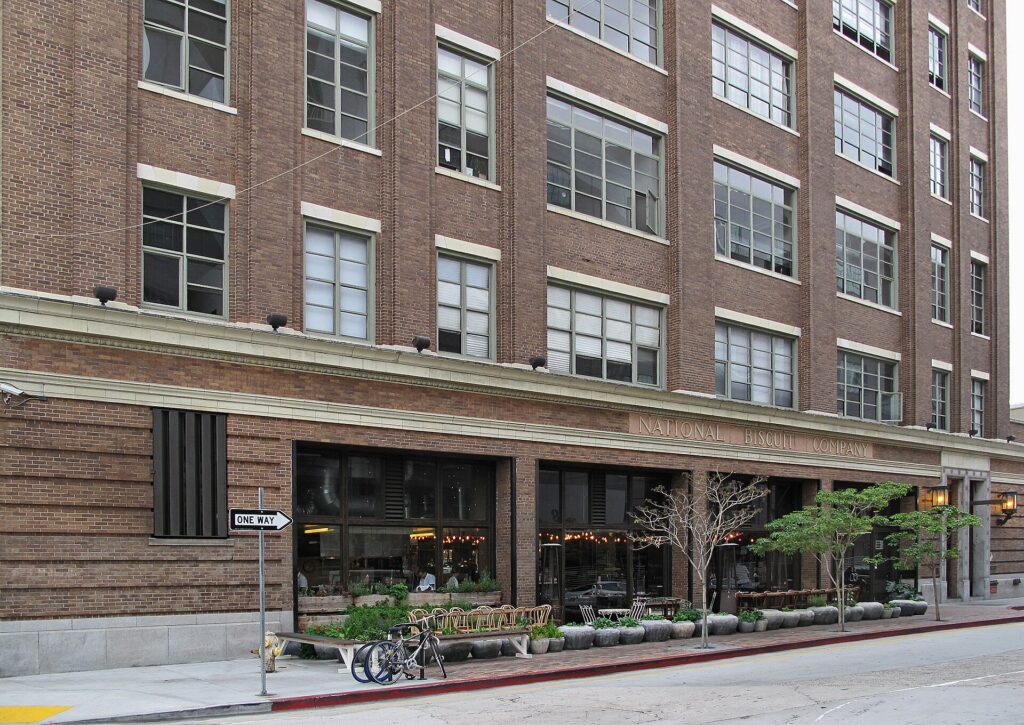
Even if you don’t go inside anywhere, the buildings themselves are the attraction. Walk East 3rd Street past SCI-Arc’s freight-depot campus and Hauser & Wirth, then head down Traction Avenue and Hewitt Street for the densest stretch of converted warehouses, cafes and bars. Further south, the former National Biscuit Company building at 1850 Industrial Street is a good example of a factory turned into lofts with a restaurant on the ground floor.
Many walls in the district carry murals and street art that change often. Please remember most are private property and the work of living artists; enjoy them from the sidewalk and respect any “no filming” or “private” signs. If museums are the main reason for your trip, our guide to Los Angeles museums covers the big institutions across the city.
The 6th Street Bridge (Sixth Street Viaduct)
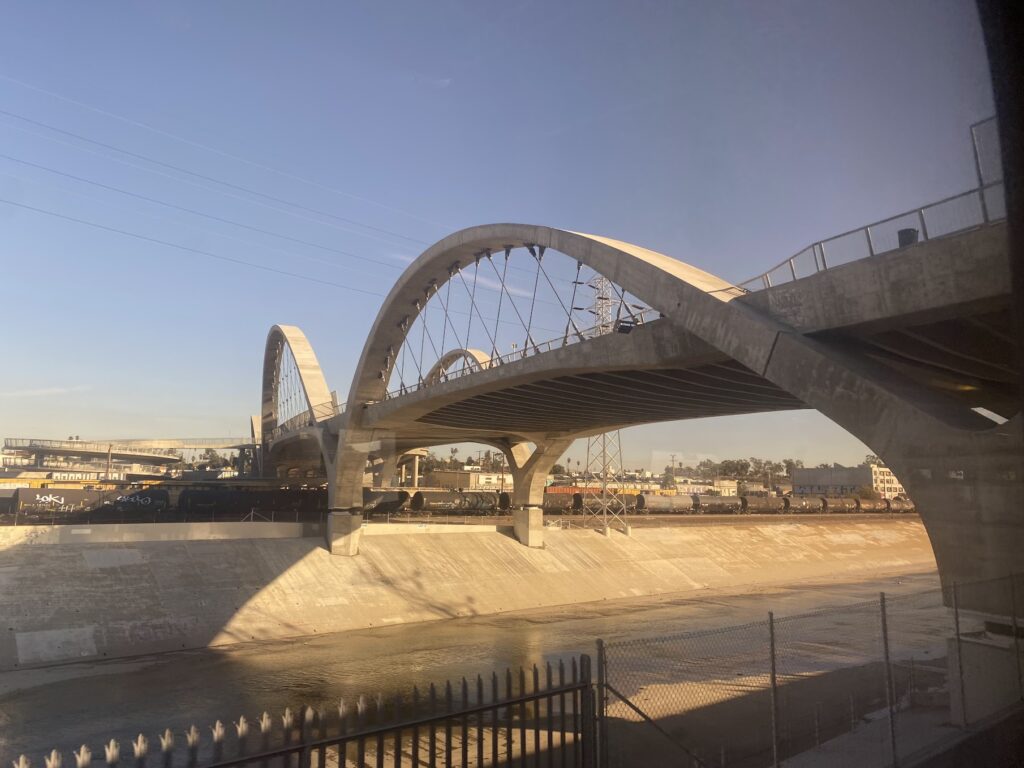
The Sixth Street Viaduct opened on July 9, 2022, replacing a 1932 bridge whose concrete was cracking from an alkali-silica reaction; the old span closed in January 2016 and was demolished that year. The new bridge links 6th Street in the Arts District with Whittier Boulevard in Boyle Heights, crossing the Los Angeles River, two freeways and several rail lines over roughly 3,500 feet.
The design, by architect Michael Maltzan with HNTB, is known as the “Ribbon of Light”: ten pairs of concrete arches that lean outward and hold up the deck with cables, a nod to the old bridge’s steel arches. LED lights under the deck were designed to light the arches at night, but copper wire thieves have repeatedly stripped the system, so the bridge has gone dark for long stretches since 2024. Daylight and sunset are the reliable times to see it.
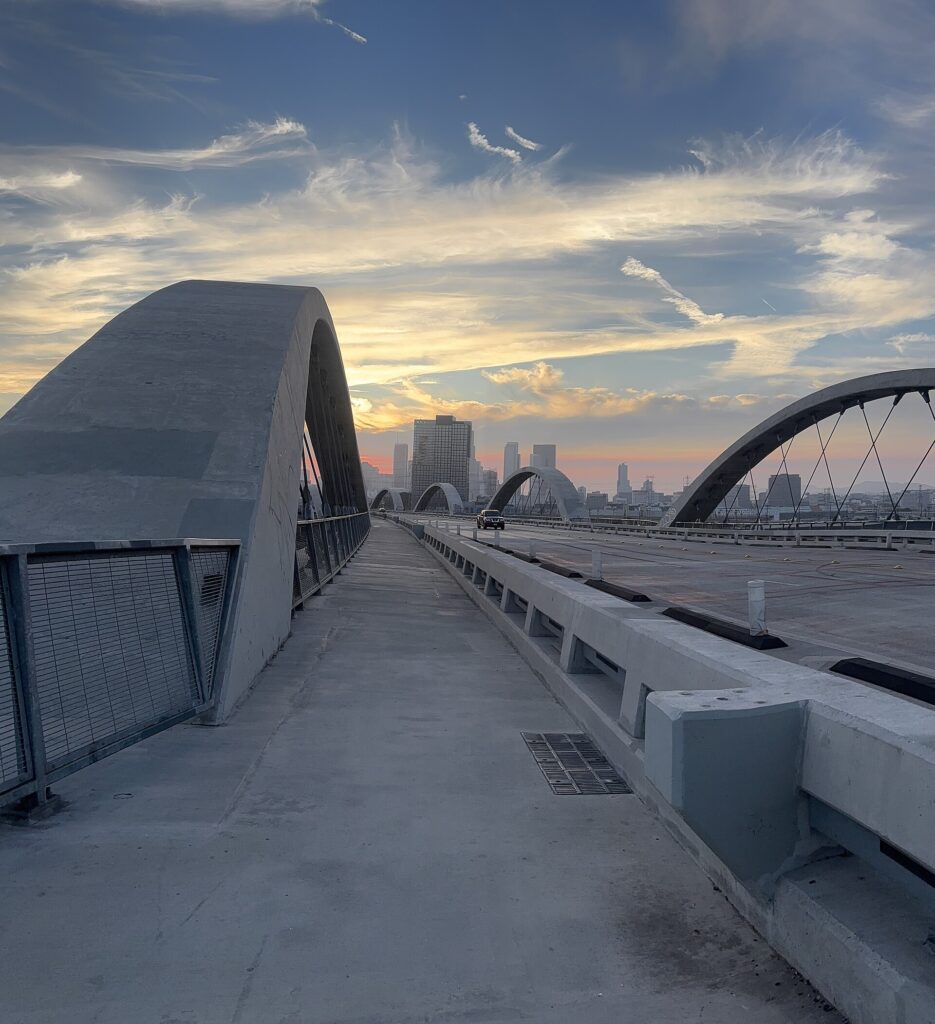
You can walk the bridge on its sidewalks; the views west toward the downtown skyline are the classic shot, especially in the late afternoon. Stay on the sidewalk, never climb the arches, and avoid the bridge late at night, when it has drawn illegal street takeovers.
The park under the bridge: not open yet
A 12-acre park, the Sixth Street PARC, is being built underneath and beside the viaduct, with an arts plaza and amphitheater, a performance lawn, a dog park, sports courts and play areas. Construction began in 2023 and the city had aimed for late 2026, but as of LAist’s September 2026 reporting the opening has slipped to early 2027, with no firm date. Until it opens, the grounds under the bridge are fenced construction sites.
ROW DTLA and Smorgasburg
At the southwest corner of the district, ROW DTLA (777 South Alameda Street) is a 30-plus-acre complex built between 1917 and 1923 as the Los Angeles Terminal Market, a produce hub at the end of a Southern Pacific rail line designed by architect John Parkinson. It reopened in 2017 as a campus of shops, restaurants and creative offices. ROW lists its hours as daily 10am to 10pm, though individual businesses set their own.
Every Sunday from 10am to 4pm, the market area hosts Smorgasburg LA, the outdoor food market that started here in 2016 and celebrated its tenth anniversary in June 2026. Entry is free; you pay the vendors. Expect around 50 food stalls, a beer garden and shopping vendors, and plan to arrive early for the shortest lines. Pets are not allowed. The market’s site lists it as running in its 2026–2027 season.
Parking at ROW is in its garage, entered at Alameda and Center streets. On weekends the first two hours are free, with charges rising after that, so it works well for a Smorgasburg visit.
Where to eat and drink in the Arts District
The Arts District’s dining scene took off with Bestia in 2012 and has become one of the strongest in the city. The places below were all operating in fall 2026. For the dinner-only restaurants, book ahead, especially on weekends. For a wider list across the city, see our best restaurants in Los Angeles guide.
Restaurants
- Bestia (2121 East 7th Place): the Italian restaurant from chefs Ori Menashe and Genevieve Gergis that put the neighborhood on the dining map, known for house-made pasta, pizza and charcuterie in a big warehouse room. Open daily 5pm to 11pm, closed most major holidays; reservations through OpenTable.
- Bavel (500 Mateo Street): the same team’s Middle Eastern restaurant, opened in 2018, with hummus, fresh pita, fire-roasted meats and a lively, plant-filled room. Open daily 5pm to 11pm.
- Damian (2132 East 7th Place): upscale Mexican cooking from Mexico City chef Enrique Olvera, with seafood plates and a plant-filled dining room. Its small sister taco window, Ditroit, is around the corner on Violet Street.
- Kato (ROW DTLA): chef Jon Yao’s Taiwanese-inspired tasting menu, promoted to two Michelin stars in the 2026 California guide. A special-occasion splurge that needs booking well ahead.
- Camélia (1850 Industrial Street): a French-Japanese bistro in the former National Biscuit Company building.
- Camphor (923 East 3rd Street): an elegant, all-white French dining room with South Asian touches and a well-regarded dessert menu.
- Baroo (905 East 2nd Street): a Korean tasting menu built around fermentation.
- Manuela (907 East 3rd Street, inside Hauser & Wirth): Southern-inspired small plates next to the gallery garden, an easy lunch stop between exhibitions.
- Casual options: Afuri Ramen (688 Mateo Street) for yuzu-scented ramen, and De La Nonna (710 East 4th Place) for pan pizzas on a patio.
Breweries and bars
- Arts District Brewing Co. (828 Traction Avenue): a warehouse brewpub with beer brewed on site, vintage Skee-Ball lanes, pool tables, pinball and a dog-friendly turf patio. Open Monday to Thursday 3pm to midnight, Friday 3pm to 2am, Saturday noon to 2am and Sunday noon to midnight. All ages until 7pm, 21+ after.
- Death & Co (818 East 3rd Street): the Los Angeles branch of the well-known cocktail bar, dim and underground.
- Tony’s Saloon (2017 East 7th Street): a relaxed neighborhood dive with a back patio, darts and ping pong.
A note on older guides: Angel City Brewery, long the district’s best-known brewery, closed its Alameda Street taproom at the end of April 2026, and Everson Royce Bar announced it would close on December 20, 2026. Both still appear on many older lists.
Getting there and parking
By Metro
The Little Tokyo/Arts District station (A and E Lines) is underground on 1st Street between Alameda Street and Central Avenue. It opened in June 2023 with the Regional Connector, so trains run straight through downtown: the A Line connects to Pasadena and Long Beach, and the E Line to Santa Monica and East LA. From the station, the northern part of the district (3rd Street, Traction Avenue, Hauser & Wirth) is an easy walk east. The southern end around 7th Street, Bestia, Damian and ICA LA is farther, so many visitors take a short rideshare.
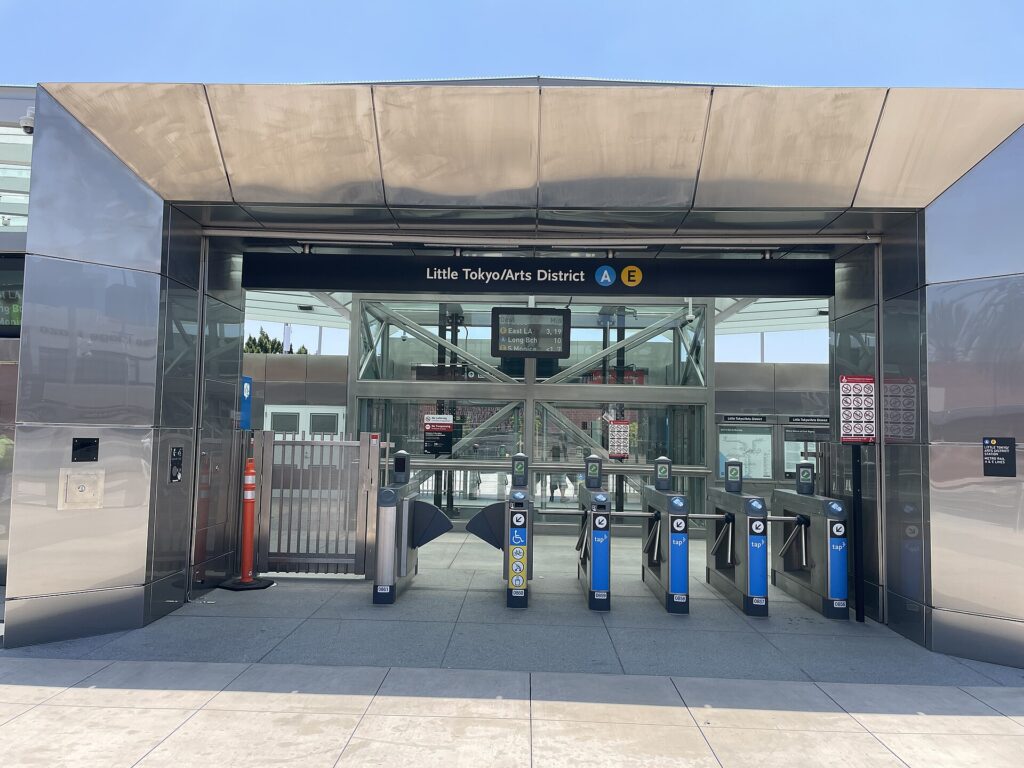
The station also puts you at the doorstep of Little Tokyo, so it is easy to combine the two neighborhoods; see our Little Tokyo guide. For more ideas downtown, from The Last Bookstore to Grand Central Market, see things to do in downtown Los Angeles.
Parking
- ROW DTLA garage (enter at Alameda and Center streets): the first two hours are free, then hourly charges apply.
- ICA LA: free onsite parking for museum visitors during opening hours; nearby street parking is limited.
- Street parking and paid lots are scattered across the district. Read the signs carefully for street-cleaning days, permit zones and time limits.
If you would rather not deal with parking at all, the Arts District fits neatly into a guided day of downtown; our One Day in LA tour and private SUV tour both pick up from your hotel and can include a stop here.
Safety and timing tips
- Go in daylight for sightseeing. The district is busiest from late morning through dinner. Some blocks between the main streets are quiet industrial stretches, especially at night, so stick to well-lit, busier streets after dark and use rideshare between far-apart stops.
- Leave nothing visible in your car. Car break-ins are a problem across downtown LA; take bags and electronics with you or keep them out of sight.
- Plan around closed days. ICA LA is closed Mondays and Tuesdays, and many restaurants open only for dinner. Wednesday to Sunday is the best window.
- Respect residents and businesses. Many of the warehouses are homes and working studios. Keep photo shoots to public sidewalks and don’t block driveways or loading docks.
- Wear comfortable shoes. The district is spread out, and the sidewalks are uneven in places.
A simple half-day plan
Start at the Little Tokyo/Arts District station late in the morning and walk east on 3rd Street to Hauser & Wirth; have lunch at Manuela inside the gallery complex. In the afternoon, take a short ride south to ICA LA (Wednesday to Sunday), then on to the 6th Street Bridge for the skyline view toward sunset. Finish with dinner at Bestia, Damian or Bavel, booked in advance. On a Sunday, swap lunch for Smorgasburg at ROW DTLA.
Arts District Los Angeles: FAQ
Is the Arts District free to visit?
Yes, for the main sights. Hauser & Wirth and ICA LA both have free admission, walking the 6th Street Bridge is free, and Smorgasburg has free entry on Sundays; you only pay for food, drinks and parking.
Which Metro station serves the Arts District?
Little Tokyo/Arts District station on the A and E Lines, on 1st Street between Alameda Street and Central Avenue. It is closest to the northern part of the district; the southern end around 7th Street is a longer walk.
Is the park under the 6th Street Bridge open?
Not yet. The 12-acre Sixth Street PARC was expected to open in late 2026, but as of September 2026 the opening had slipped to early 2027 with no firm date. The bridge itself has been open since July 2022.
When is Smorgasburg LA?
Sundays from 10am to 4pm at ROW DTLA, 777 South Alameda Street. Entry is free, and the first two hours in the ROW garage are free on weekends.