
South Coast Botanic Garden covers 87 acres on the Palos Verdes Peninsula, about 10 miles south of LAX, and it has one of the strangest back stories of any garden in Southern California. The ground under its rose beds and fig groves was once an open-pit diatomite mine, then a county landfill. Today it holds more than 2,500 plant species, from South African aloes to a formal rose garden, and more than 200 kinds of birds are spotted here each year.
This guide covers the history, the garden areas worth your time, hours and admission, parking, food, the dog rules, current events (including the Tinker Bell light trail running this holiday season), and how to fold a visit into a day along the South Bay coast. Hours, prices and event details below come from the Garden’s official website as of November 2026; they change from time to time, so check before you go.
South Coast Botanic Garden at a glance
- Address: 26300 Crenshaw Boulevard, Palos Verdes Peninsula, CA 90274
- Hours: 8:00 a.m. to 5:00 p.m. daily, last entry 4:30 p.m. Open 364 days a year; closed Christmas Day.
- Admission: adults $18; seniors (62+) and students with ID $14; children 3–12 $8; age 2 and under free; members free.
- Tickets: reserved timed tickets are required for entry and are non-refundable.
- Parking: free during regular garden hours.
- Phone: (424) 452-0920
From diatomite mine to landfill to garden
Long ago this part of the peninsula sat under the Pacific Ocean. Single-celled algae called diatoms lived and died in those waters, and their remains settled into thick beds of diatomaceous earth, a chalky material used in filters, insulation and building products.
In the early 1900s the Dicalite Company began surface mining the deposit, and by 1929 it had become an open-pit operation. The Great Lakes Carbon Company bought the mine in 1944 and worked it hard until production fell off in the mid-1950s. In 1956 the site was sold to the County of Los Angeles, which used it as a sanitary landfill while planning to reclaim the land later.
That later came quickly. In 1961 a group of local residents led by Frances Young persuaded the County Board of Supervisors to turn the site into a botanic garden. The first major planting took place in April 1961 with more than 40,000 donated trees, shrubs and other plants. The collection has since grown to more than 200,000 plants, and the Garden describes itself as one of the world’s first botanic gardens developed over a sanitary landfill. The project drew horticulturists from around the world, including the future King Charles, to study it.
The landfill is still there, quietly settling under your feet. It is the reason the Garden bans bicycles, skateboards and scooters on its paths, and why some trails are uneven. The Garden is on unincorporated Los Angeles County land, and the county’s Department of Parks and Recreation helps set admission prices.
Garden areas worth seeking out
The Garden sits in Sunset climate Zone 23, a mild coastal zone where a wide range of plants thrive. About 100 of its trees and shrubs are rare mature specimens seldom seen elsewhere. A paved loop called Tram Road runs about a mile around the grounds, with smaller paths branching off into the themed gardens below.
The Dorothy and John Bohannon Rose Garden
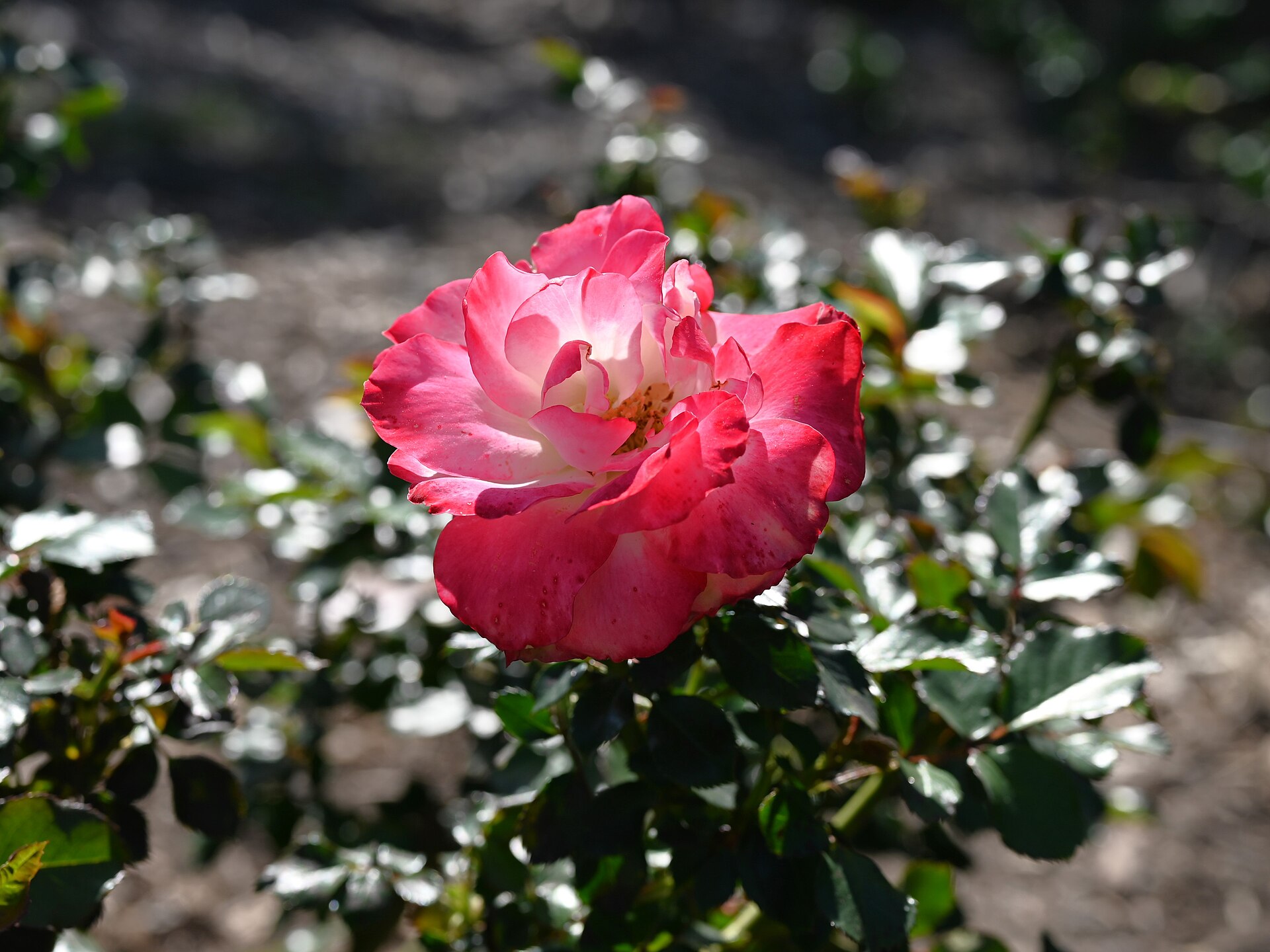
The formal Rose Garden first bloomed in April 2018 and is the Garden’s showpiece. It has more than 80 rose selections, from climbers to ground covers, including fragrant David Austin English roses and some varieties hybridized in the 1800s that were saved from the original rose garden. Wrought-iron fencing with rose emblems, curved staircases, shaded cabanas and a large fountain with a glass mosaic frame the beds. Companion plantings such as jacaranda, crape myrtle, cherry trees, sage and succulents are mixed in, so the space still has color when the roses are pruned back.
Desert Garden and WaterWise Garden
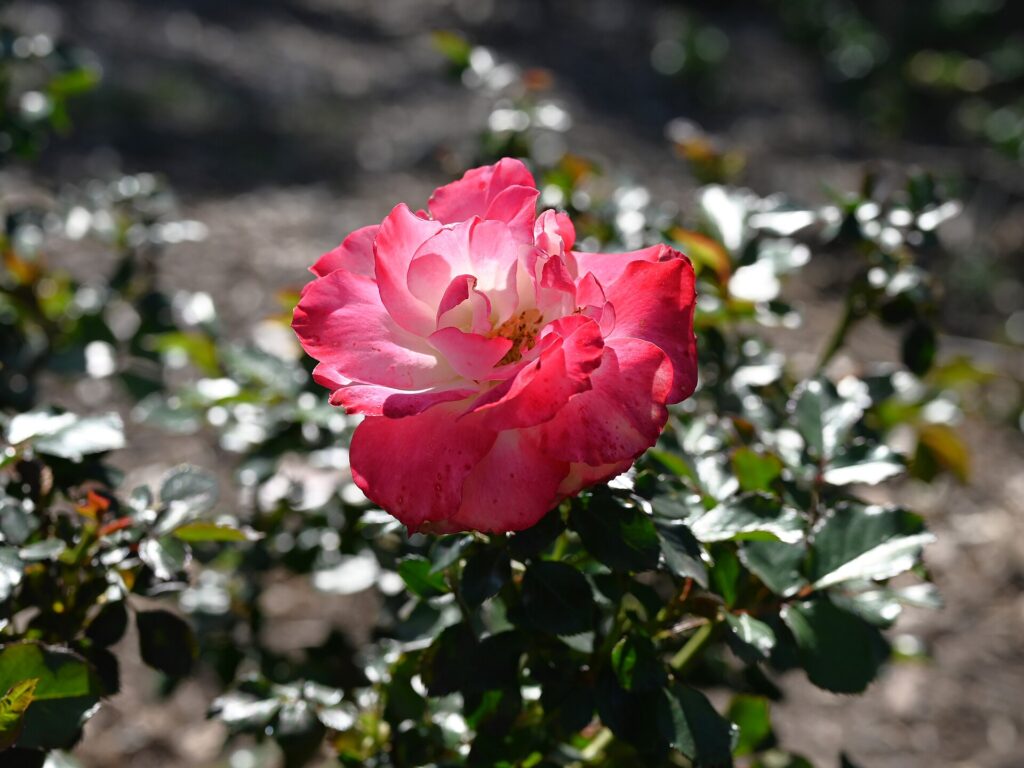
The Desert Garden is where to go for cacti, euphorbias, aloes and other succulents, with specimens from the United States, Africa, Mexico and South America. Late winter and early spring are a good time to visit, when many of the aloes are in flower. Nearby, the WaterWise Garden uses acacia, toyon, palo verde, junipers and sedum to show what a low-water home garden can look like.
Japanese Garden and Koi Pond
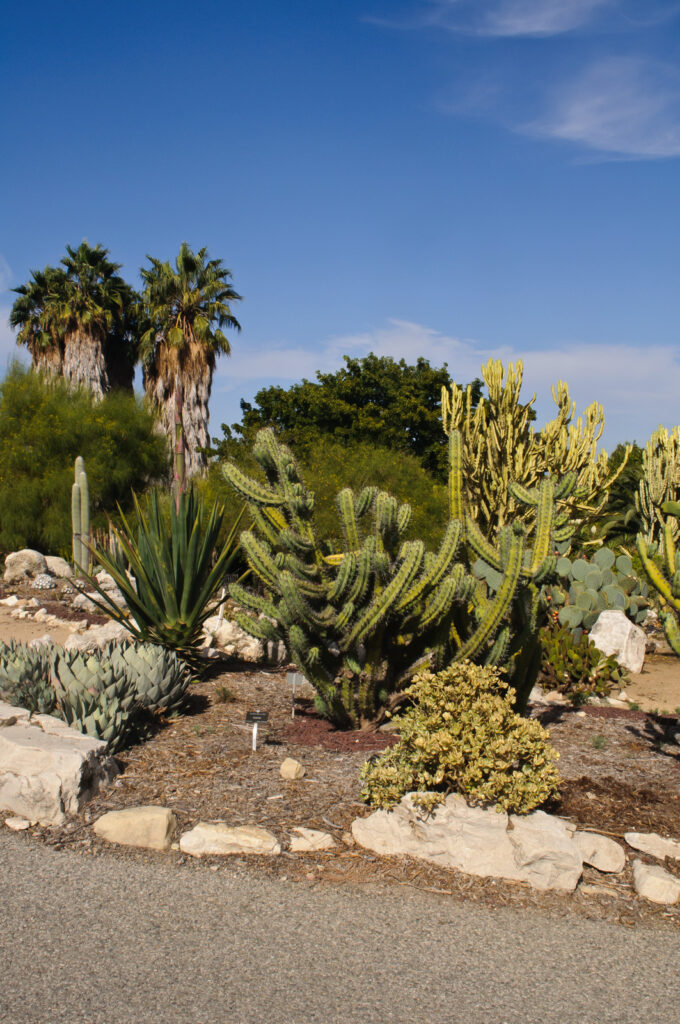
A quieter corner built around a koi pond, with evergreen shrubs, the sound of running water and stone lanterns made of Okazaki stone more than 200 years ago. The South Coast Bonsai Association maintains a bonsai display here. Dottie’s, the Garden’s café, is currently set up next to the Koi Pond on weekends.
Banyan Grove
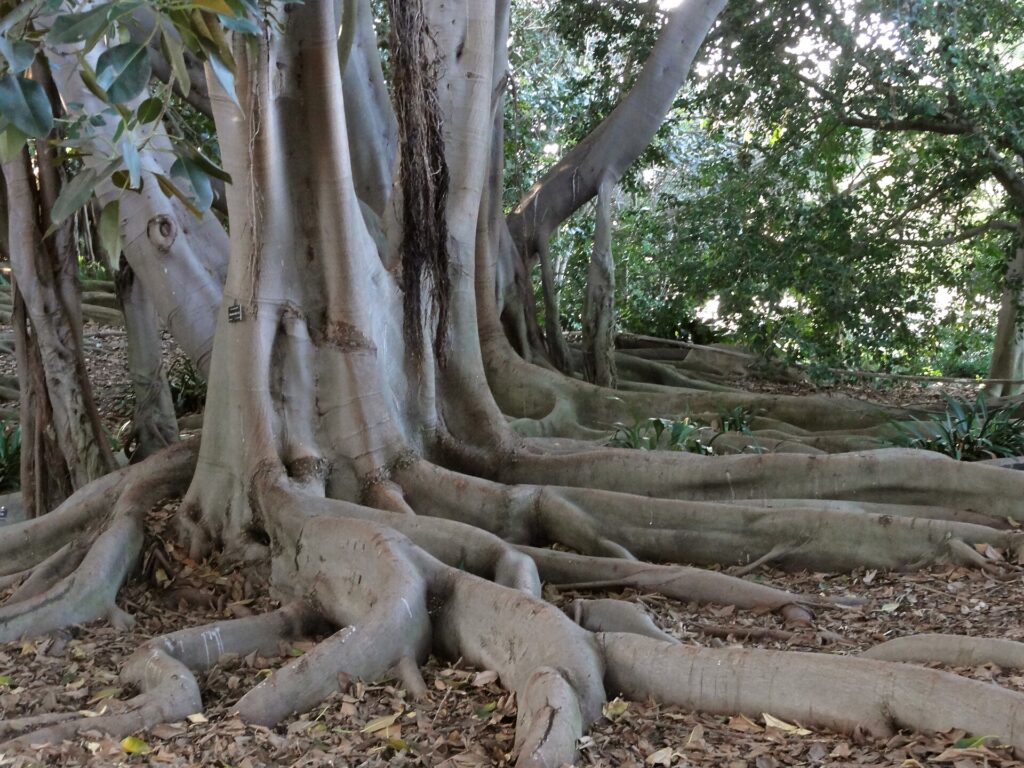
The highlight of the Garden’s ficus collection is a grove of Moreton Bay fig trees whose huge, tangled buttress roots spread across the ground. Clivias brighten the shade beneath them in spring. Part of the grove and the Banyan Grove Lawn are closed for the foreseeable future while the Garden builds its new Children and Family Garden.
More specialty gardens
- Display Greenhouse (open 9:00 a.m. to 3:00 p.m. daily): tropical plants including orchids, bromeliads, anthuriums, begonias, hoyas and carnivorous plants, arranged by color from warm to cool.
- Mediterranean Garden: plants from the five mild-winter, dry-summer regions of the world, with an emphasis on California natives.
- Garden for the Senses: raised beds of plants meant to be touched and smelled, with labels showing which sense each one engages.
- Fuchsia Garden: species and cultivars cared for by the South Coast Branch of the National Fuchsia Society, under shade cloth.
- Dahlia Garden: in bloom from midsummer to late fall.
- Volunteer Flower Garden: seasonal flowers tended by volunteers.
The lake and creek (currently dry)
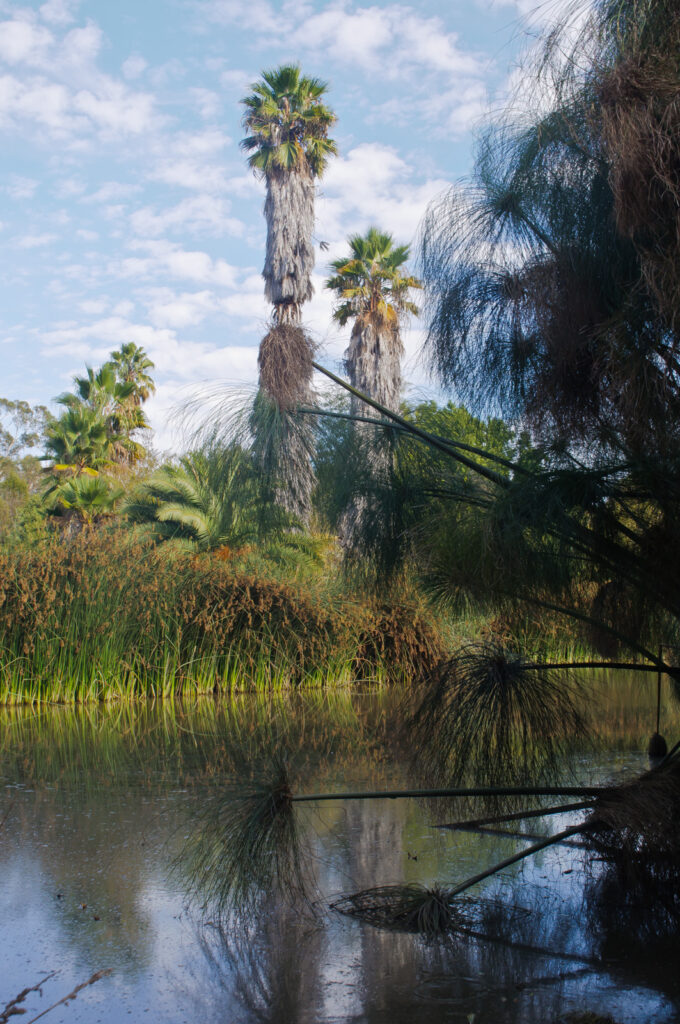
Older photos of the Garden often show a palm-lined lake with reeds and waterbirds. As of November 2026 the Garden lists the creek and lake bed as dry, a long-term closure; plans to bring the area back are part of the Garden’s Vision Plan. If the lake is the reason for your visit, check the Garden’s area-updates page first.
What’s in bloom through the year
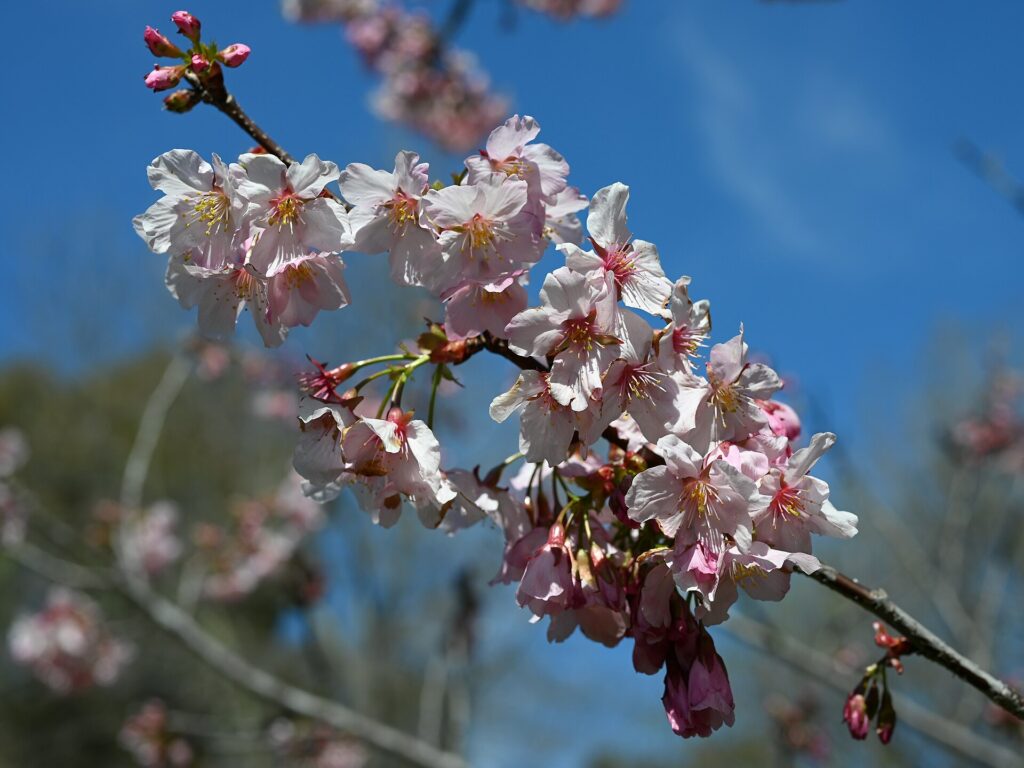
- Late winter to spring: aloes in the Desert Garden, cherry blossoms, clivias in the Banyan Grove, and California natives starting their flower season.
- Spring into summer: roses at their fullest, plus jacaranda and crape myrtle around the Rose Garden.
- Midsummer to late fall: the Dahlia Garden.
- Year-round: succulents, the greenhouse, the fig grove and the birdlife.
Hours, admission and tickets
The Garden is open every day from 8:00 a.m. to 5:00 p.m., with last entry at 4:30 p.m., and closes only on Christmas Day. Entry is by reserved timed ticket, which the Garden uses to manage crowds and parking, so book online before you set out, especially on weekends and during special exhibits. Tickets are non-refundable.
- Adults: $18
- Seniors (62 and over): $14
- Students with ID: $14
- Children 3–12: $8
- Toddlers 2 and under: free
Visitors under 18 must come with an adult. Free Tuesdays have ended: Los Angeles County eliminated free days at county botanic gardens in 2025. Free entry is still available through a few programs, including for EBT cardholders (up to two adults and four children per household with card and photo ID), members of other American Horticultural Society reciprocal gardens 90 miles or more away, and, from Memorial Day weekend through Labor Day, teachers, students aged 13–17 and military veterans with valid ID.
If you live nearby or plan to come back, a membership includes free daytime admission all year and discounts on special exhibits. The Garden lists its levels on the membership page.
Parking
Parking in the Garden’s lot is free during regular hours. Evening events work differently. For the Tinker Bell light trail, the on-site Blue Lot is paid and can be booked in advance with your ticket. When it fills, guests are sent to offsite lots and need a round-trip shuttle pass for each person; allow about 15 minutes for the shuttle.
Accessibility
The roughly 10-acre area around the administration buildings has paved and hard-packed paths suitable for most mobility equipment. Tram Road is paved for its full mile but has steep sections where a wheelchair user may need help. Mobility scooters are welcome, though some trails are not accessible.
Food, picnics and garden rules
Dottie’s, the Garden’s food and drink stand, is open Saturdays and Sundays from 10:30 a.m. to 4:00 p.m., currently located near the Koi Pond. It serves light food and craft cocktails, is cashless (bring a card), and uses compostable foodware. On weekdays there is no food service, so plan to eat before or after, or bring your own.
Picnics and outside food and drink are welcome, as long as setups stay casual: no furniture, tents or staked umbrellas. Outside alcohol is not allowed, and drinks bought at Dottie’s must stay inside the gates. A few other rules worth knowing:
- No bicycles, skateboards, recreational scooters, balls, Frisbees or kites.
- No balloons, which endanger birds and wildlife.
- No smoking or vaping anywhere on the grounds or in the parking lot.
- Handheld nature and portrait photography is fine with general admission; commercial shoots need a permit.
- Outside guides may not lead tours inside the Garden. Tours must be run by the Garden itself.
- Coyotes live on the grounds. Keep children close and do not approach or feed wildlife.
Can you bring a dog?
Only on designated Dog Walking Hours days, and only with an advance reservation. Dogs are not allowed at any other time. On those days, people pay regular admission and dogs need their own ticket ($7 for non-members’ dogs, $6 for members’). Dogs must be leashed everywhere, including the parking lot, must be socialized and vaccinated, and must stay on the paths. The Rose Garden and the Koi Pond stay dog-free. The Garden posts upcoming dates on its Dog Walking Hours page.
Events and exhibits in 2026–2027
Tinker Bell’s Neverland: An Illuminated Adventure
This holiday season the Garden hosts an after-dark light trail themed on Peter Pan. It runs November 13, 2026 to January 3, 2027, from 5:30 to 8:30 p.m., and is closed on Thanksgiving and Christmas Day. The one-way walking route starts in the Darlings’ London and passes through the Neverland Arch to Mermaid Lagoon, Skull Rock and Captain Hook’s ship, with costumed characters along the way. Tickets are sold through Fever and start at $33 for adults and $18 for children (ages 3–15); children 2 and under go free. Prices vary by date, weekends sell out first, and there’s no seating on the trail. Parking for the event is separate (see the parking section above). For more evening displays across the city, see our Christmas lights in Los Angeles guide.
Dinosaurs Around the World
Back for a second year, this daytime exhibit places 10 life-sized animatronic dinosaurs, plus one climbable Parasaurolophus, along a route through the Garden, with signs explaining where each species lived on the ancient supercontinent Pangea. It is included with general admission. Optional guided add-ons include a walking tour and the Pangea Express ride, which cost extra.
Classes and other programs
The Garden also runs workshops and classes, an outdoor sculpture exhibition called Hide and Seek, and seasonal events such as a Halloween jack-o’-lantern trail. The calendar on the Garden’s website lists current dates.
Current closures to know about
As of late November 2026, the Upper, Lower, Memorial, Hawk’s, Hidden and Phoebe’s meadows are closed for lawn rehabilitation through December, and the Amphitheatre Lawn is also closed. Parts of Tram Road may close at short notice for construction, with detours in place. The Garden notes that it sits outside the area affected by the Portuguese Bend landslide and is safe to visit.
Getting there from Los Angeles and the beach cities
The Garden is on Crenshaw Boulevard on the inland side of the Palos Verdes Peninsula, about 10 miles south of LAX. From central Los Angeles, Hollywood or Beverly Hills, most drivers take the I-405 or I-110 south toward Torrance, then follow Crenshaw Boulevard south across Pacific Coast Highway into the hills. Travel time depends heavily on freeway traffic, so allow extra time on weekday afternoons.
From the beach cities it’s a short drive. From Redondo Beach or Hermosa Beach, head inland to Pacific Coast Highway and turn south onto Crenshaw. From Manhattan Beach, take Sepulveda Boulevard or the I-405 south, then follow Crenshaw.
Another option is to let someone else handle the drive. On our private SUV tour or classic car tour, the Garden can be one stop on a South Bay route. Outside guides cannot lead tours inside, so you walk the grounds on your own.
Make a day of it: nearby stops
The Palos Verdes coast drive
From the Garden, a few minutes’ drive west puts you on Palos Verdes Drive, the peninsula’s cliff-top coast road, with wide views over the Pacific. Ongoing land movement in the Portuguese Bend area can affect the southern stretch of the road, so check conditions before planning a full loop. Our Palos Verdes guide covers the lookouts, trails and coves.
Redondo Beach Pier
The closest of the South Bay piers is a natural lunch or sunset stop after a morning in the Garden, with seafood counters, the harbor and a long beach to the north. See our Redondo Beach Pier guide for what to eat and where to park.
Manhattan Beach Pier
A little farther north, Manhattan Beach Pier is a classic place to watch surfers and volleyball players, with the town’s restaurants a short walk uphill. Our Manhattan Beach Pier guide has the details.
Other Los Angeles gardens
If you enjoy the Garden, Los Angeles has two other large public gardens on the opposite side of the basin. Descanso Gardens in La Cañada Flintridge is known for its camellias and oak woodland, and The Huntington in San Marino adds a famous desert garden and Japanese garden to its library and art collections.
Tips for a good visit
- Book your timed ticket online. Weekend and exhibit days fill first.
- Arrive early. The gates open at 8:00 a.m., and mornings are usually cooler and quieter.
- Wear comfortable shoes. Many paths are dirt or uneven, and Tram Road has hills.
- Allow two to three hours to see the Rose Garden, Desert Garden, Japanese Garden and greenhouse without rushing.
South Coast Botanic Garden: FAQ
How much does South Coast Botanic Garden cost?
General admission is $18 for adults, $14 for seniors 62+ and students with ID, $8 for children 3–12, and free for children 2 and under and for members. Parking is free during regular hours. Special evening events such as Tinker Bell’s Neverland are ticketed separately.
Does South Coast Botanic Garden still have free Tuesdays?
No. Los Angeles County ended free Tuesdays at county botanic gardens in 2025. Free admission is still offered to EBT cardholders, members of distant American Horticultural Society reciprocal gardens, and, in summer, to teachers, students aged 13–17 and veterans.
Are dogs allowed at South Coast Botanic Garden?
Only during scheduled Dog Walking Hours with an advance reservation and a dog ticket. Dogs must be leashed at all times and are not allowed in the Rose Garden or near the Koi Pond.
Was South Coast Botanic Garden really built on a landfill?
Yes. The site was a diatomite mine from the early 1900s until the 1950s, then a Los Angeles County sanitary landfill. Residents led by Frances Young persuaded the county to turn it into a botanic garden in 1961, and the first major planting took place that April.