
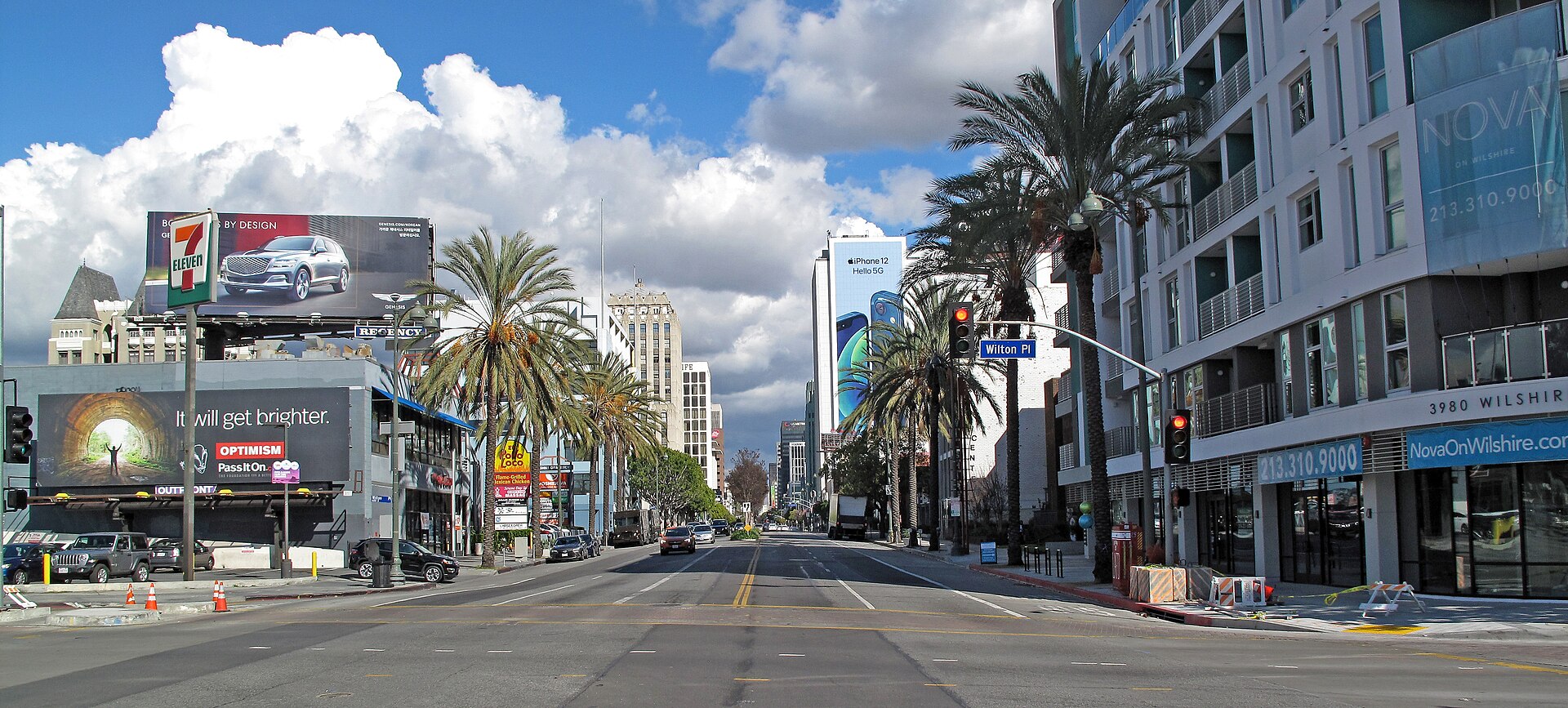
Koreatown Los Angeles is one of the most densely packed neighborhoods in the city, and one of the easiest to enjoy on foot. In a few square miles west of Downtown you will find tabletop Korean barbecue, bowls of bubbling tofu soup at midnight, a 1931 Art Deco theater, 24-hour bathhouses, and karaoke rooms that stay busy until closing time. This guide covers the history, the boundaries, where to eat, what to see, and how to get there and park. Restaurants and bars in LA change hours and policies often, so check before you go.
Koreatown at a Glance: Where It Is and How Big
Koreatown sits in central Los Angeles, between Downtown to the east and Hancock Park and the Miracle Mile to the west. The City of Los Angeles defines it roughly as the area bounded by Vermont Avenue on the east, Western Avenue on the west, Third Street on the north and Olympic Boulevard on the south, plus a business corridor that runs down Western Avenue. Many maps, including the LA Times Mapping L.A. project, draw it larger and fold in the older Wilshire Center office district. Either way, it covers only about 2.7 square miles, and it is home to well over 100,000 people, which makes it one of the most densely populated neighborhoods in Los Angeles.
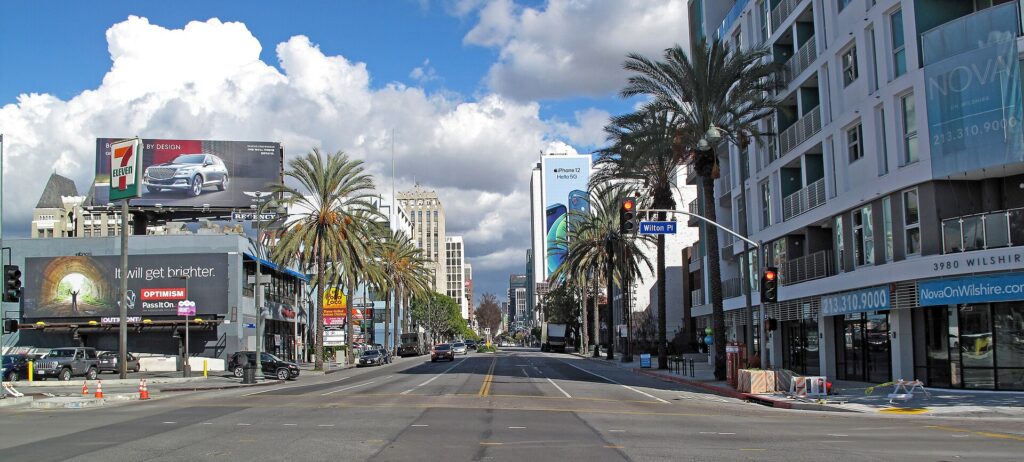
Wilshire Boulevard is the spine of the neighborhood. The big landmarks, the hotels and the Metro stations line Wilshire, while the restaurant rows run along 6th Street, 8th Street, Vermont Avenue and Western Avenue. Koreatown is not only Korean: it has a large Latino community, the officially designated Little Bangladesh area, and long-running Oaxacan and Peruvian restaurants alongside the Korean ones.
A Short History of Koreatown
Korean immigrants have lived in Los Angeles since the early 1900s. One of the first Korean communities in California was Pachappa Camp in Riverside, founded in 1905 by the independence leader Dosan Ahn Chang Ho, whose family later moved to Los Angeles. By the 1930s a few hundred Koreans lived in the city, mostly south of today’s Koreatown, because racially restrictive housing covenants kept them out of many neighborhoods. After the U.S. Supreme Court ruled such covenants unenforceable in 1948, Korean families began moving north toward the Wilshire district.
The big change came with the Immigration and Nationality Act of 1965 (the Hart-Celler Act), which ended the quota system that had sharply limited Asian immigration. Korean immigration to Southern California grew quickly in the years that followed. At the same time, the once-glamorous mid-Wilshire area was losing businesses to other parts of the city, which left affordable storefronts and office space behind. One of the best-known early investors was Hi Duk Lee, who immigrated in 1968 and bought land around Olympic Boulevard and Normandie Avenue. Olympic Boulevard itself had been named only a few decades earlier: it was originally 10th Street and was renamed to honor the 1932 Summer Games that Los Angeles hosted.
Los Angeles officially recognized Koreatown as a neighborhood in 1980, and the first Koreatown signs went up in 1982. Korean-owned businesses were among the hardest hit during the 1992 civil unrest, and the rebuilding that followed strengthened the community groups that still work in the neighborhood today. Today Koreatown is one of the city’s busiest dining and nightlife districts.
Korean BBQ in Koreatown
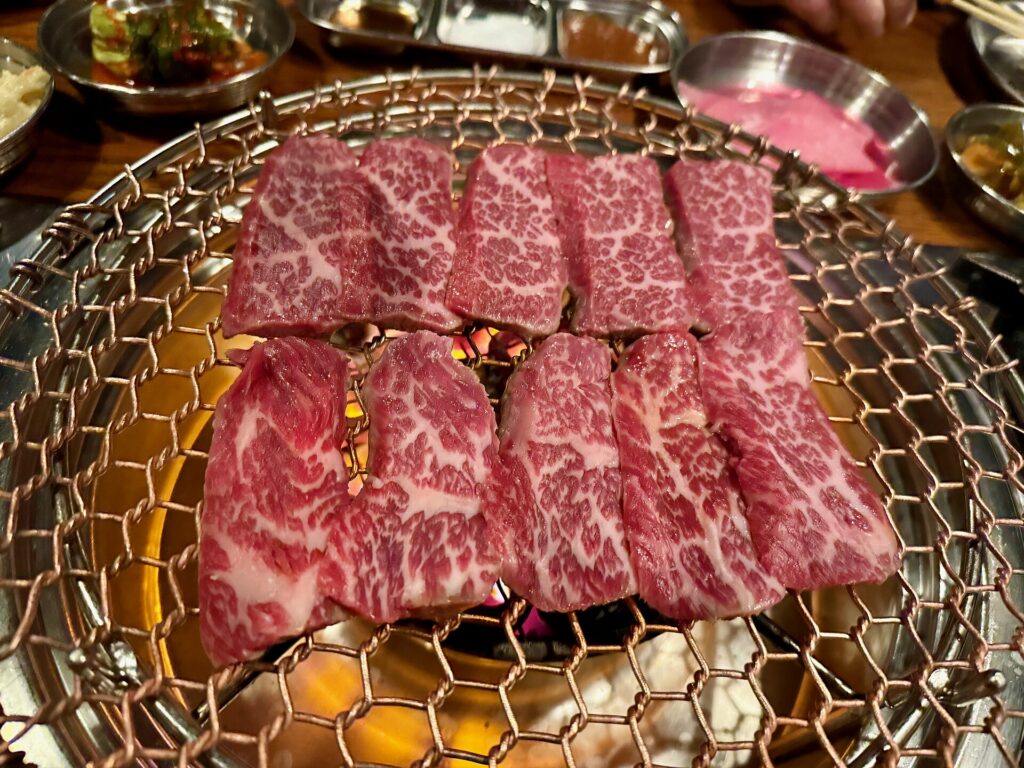
Korean barbecue is the reason many visitors come. The format is simple: you order cuts of beef or pork, they are cooked on a grill built into your table (often by the staff), and the meal comes with a spread of small side dishes called banchan, plus dipping sauces and lettuce for wrapping. Most places expect groups to order at least two portions of meat. These four are among the best-established names, all open in 2026.
Park’s BBQ
Park’s BBQ (955 S. Vermont Ave.) is often called the benchmark for Korean barbecue in Los Angeles. It focuses on premium beef, including prime and American Wagyu cuts, in a sleek dining room that suits a special occasion. It is one of the pricier options in the neighborhood. The same team runs KTeam BBQ across the street at 936 S. Vermont Ave., a more casual, pork-focused spot.
Soowon Galbi
Soowon Galbi (856 S. Vermont Ave.) is a long-running, more casual favorite known for good-value combination sets that work well for groups of four or more, and for its tteokgalbi, a grilled patty of marinated minced short rib. Waits tend to be shorter here than at the busiest Chapman Plaza spots.
Baekjeong
Baekjeong, the Korean chain founded by TV personality and former wrestler Kang Ho-dong (and long known in LA as Kang Ho-dong Baekjeong), left its original Chapman Plaza location in early 2024 and reopened in 2025 in a larger space at 3429 W. 8th St. It is a reliable choice for first-timers, with plenty of banchan, a neon-lit dining room and weekday lunch specials.
Quarters Korean BBQ
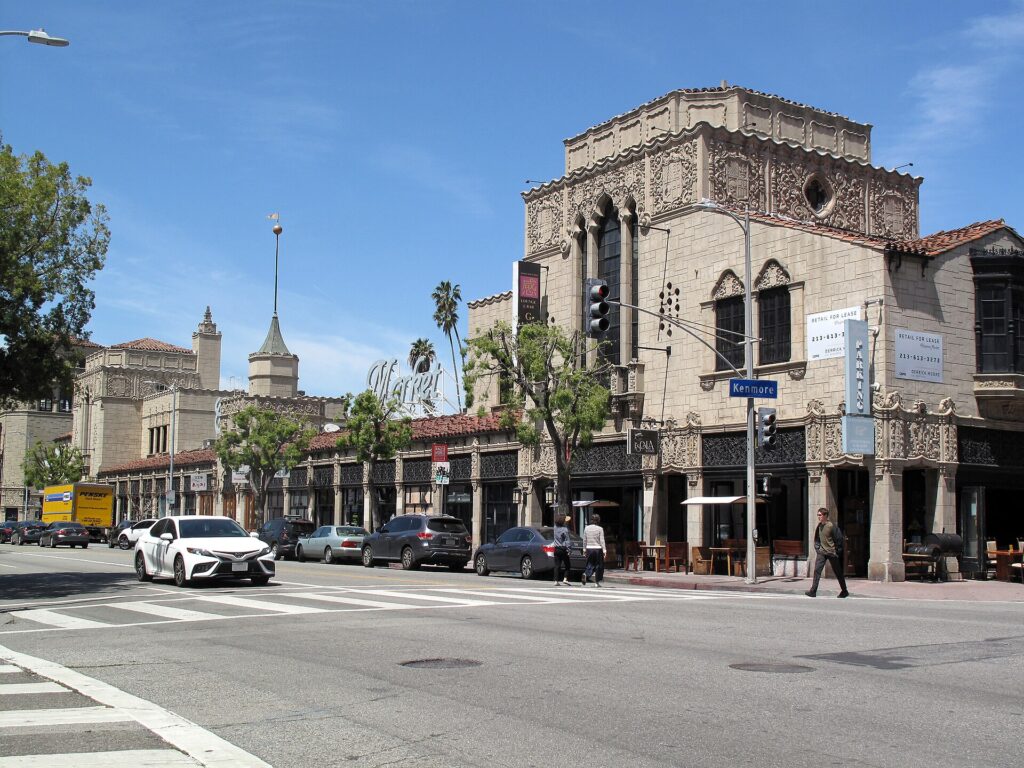
Quarters Korean BBQ (3465 W. 6th St.) is inside Chapman Plaza and sells its meat by the quarter pound, which makes it easy to try several cuts. It is lively, beginner-friendly and popular with a younger crowd, so weekend waits can run past an hour. Chapman Plaza itself is worth a look: the Spanish Revival complex opened in 1929 as the Chapman Park Market, one of the first drive-in markets in the West designed around the automobile, and it is a Los Angeles Historic-Cultural Monument.
Other well-reviewed options include Jeong Yuk Jeom (dry-aged beef) and all-you-can-eat Hae Jang Chon. For a wider look at where to eat across the city, see our guide to the best restaurants in Los Angeles.
Beyond Barbecue: Fried Chicken, Tofu Soup and Late-Night Food
Korean Fried Chicken
Korean fried chicken is thin-crusted, very crisp and often glazed with soy-garlic or sweet-spicy sauce. Kyochon (3833 W. 6th St.), the Korean chain, is known for its hand-brushed honey and soy wings. Gol Tong Chicken is a tiny one-man operation known for boneless thigh meat served with sauces and fresh fruit. The Prince, a historic bar set in a 1920s dining room, serves whole fried chicken alongside kimchi fried rice, and you can also try the chicken at Witch’s, a counter inside the Koreatown Galleria.
Tofu Soup, Beef Soup and Cold Noodles
Soondubu jjigae, a spicy soft-tofu stew served boiling in a stone pot with a raw egg to crack in, is a Koreatown staple. BCD Tofu House opened its first restaurant on Wilshire Boulevard in Koreatown in 1996 and still runs its flagship at 3575 Wilshire Blvd. Surawon Tofu House makes its tofu in-house, and LA Tofu House on Vermont Avenue stays open into the early morning on weekends. For something milder, Han Bat Sul Lung Tang serves milky ox-bone soup, and Lee Ga on Vermont and The Corner Place (open since 1982) are known for naengmyeon, cold buckwheat noodles that are especially good on a hot day. Sun Nong Dan is famous for galbi jjim, braised short ribs topped with melted cheese.
Late-Night Eating
Koreatown is one of the best places in Los Angeles to eat after 11 p.m. Dan Sung Sa (3317 W. 6th St.) is the classic: a dim, wood-paneled pocha (drinking house) with dozens of anju, the Korean bar snacks meant to go with soju and beer. It is walk-in only, and the crowd grows as the night goes on. Many tofu houses and barbecue restaurants also serve past midnight on weekends.
The Wiltern: Koreatown’s Art Deco Landmark
At the corner of Wilshire Boulevard and Western Avenue stands the neighborhood’s most famous building. The Wiltern (3790 Wilshire Blvd.) and the 12-story Pellissier Building above it were completed in 1931. The exterior, clad in blue-green terra-cotta, was designed by Stiles O. Clements of Morgan, Walls & Clements, and the theater interior by G. Albert Lansburgh. It opened as the Warner Bros. Western Theatre; the name “Wiltern” comes from the intersection of Wilshire and Western.
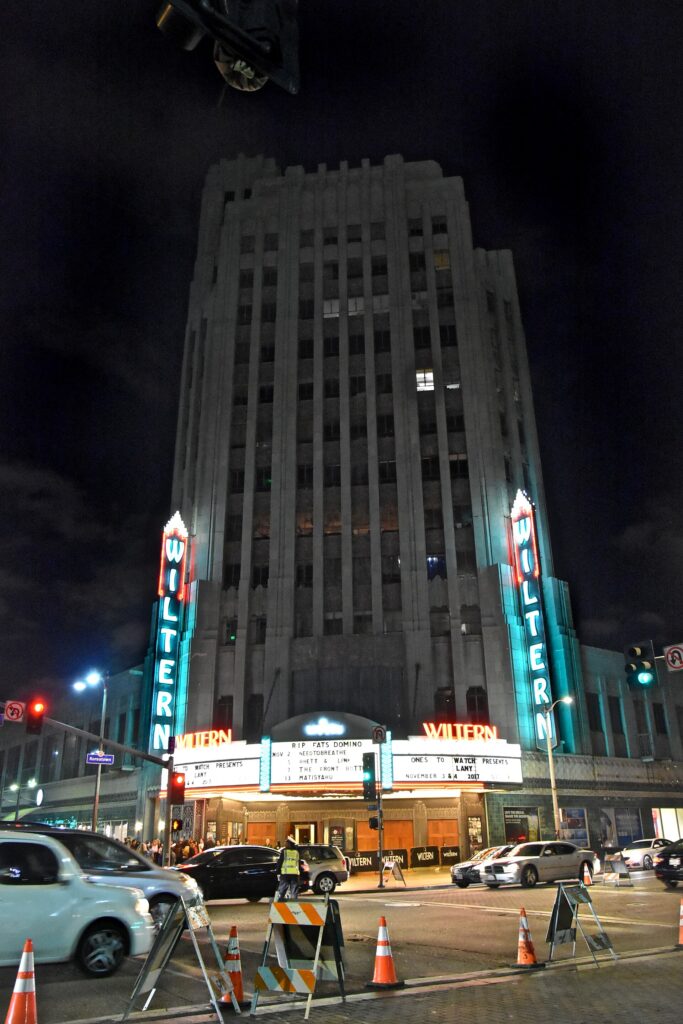
By the late 1970s the complex faced demolition. A 1979 demolition application set off one of the Los Angeles Conservancy’s first major preservation fights, and the building was later bought by developer Wayne Ratkovich, who restored it with architect Brenda Levin. It reopened in 1985 and is now a Los Angeles Historic-Cultural Monument, listed on the National Register of Historic Places, and a busy live music venue. Even if you do not have a ticket, the facade and the sunburst ceiling over the entrance are worth seeing. Our guide to historic theaters in Los Angeles covers more of the city’s movie palaces.
The LINE Hotel and Other Wilshire Landmarks
The LINE LA (3515 Wilshire Blvd.) occupies a 1964 tower that was originally the Wilshire Plaza Hotel. It is now a design-focused hotel with 384 rooms and suites and a hub for the neighborhood’s social life. Its restaurant, Openaire, sits in a glass greenhouse by the pool and serves weekend brunch, and the hotel also houses Break Room 86, an 1980s-themed bar with private karaoke suites reached through a hidden entrance.
A short walk east, the site of the famous Ambassador Hotel, where the Academy Awards were held in 1930, 1931, 1932 and 1934, is now the Robert F. Kennedy Community Schools campus.
Karaoke, Bars and Nightlife
In Koreatown, karaoke means noraebang, literally “song room”: you rent a private room by the hour for your group, with a screen, microphones, a big song catalog in Korean and English, and a button to order drinks and snacks. Dozens of noraebang operate around 6th Street, 8th Street and Western Avenue, and most stay open until late at night. Rooms are fairly similar from place to place, so choose by location and room size.
A typical Koreatown night out moves in rounds: barbecue first, then a pocha such as Dan Sung Sa for soju and snacks, then noraebang or a bar. For more ideas across the city, see our guide to Los Angeles nightlife.
Korean Spas (Jjimjilbang)
Koreatown has several Korean-style bathhouses. The best known is Wi Spa (2700 Wilshire Blvd.), which is open 24 hours a day, seven days a week. It has separate floors for men and women with hot and cold pools, saunas and body scrubs, plus a co-ed jjimjilbang floor with heated rooms (including salt and clay saunas), a restaurant, a fitness room and a rooftop terrace. According to Wi Spa’s own rules, no clothing is worn in the men’s and women’s bath areas, you shower before entering the pools, and in the co-ed areas everyone wears the shirt and shorts the spa provides. The daily admission fee is listed at $40, and parking is valet.
Other long-running options include Olympic Spa on Olympic Boulevard, a women-only spa known for its scrubs and massages, and Crystal Spa.
Shopping: Malls, Markets and Bakeries
Koreatown’s shopping is spread across multi-level malls with free or validated parking, food courts and Korean grocery stores.
- Koreatown Plaza (928 S. Western Ave.): a three-level indoor mall anchored by an H Mart flagship (which replaced the former Plaza Market in 2019), with a food court and shops including Music Plaza for K-pop albums and the Artbox stationery store.
- Madang (621 S. Western Ave.): an open-air courtyard mall near Wilshire and Western with restaurants and dessert cafes, including Jeong Yuk Jeom and the bingsu shop Sul & Beans.
- Zion Market: the Korean supermarket chain’s Koreatown store is now on the ground floor of the Rise Koreatown building at 8th Street and Oxford Avenue.
- Koreatown Galleria: a multi-level mall that houses Witch’s, a supermarket counter known for its crisp fried chicken.
- Chapman Plaza (3465 W. 6th St.): more for eating and drinking than shopping, but the 1929 architecture makes it a good stop between meals.
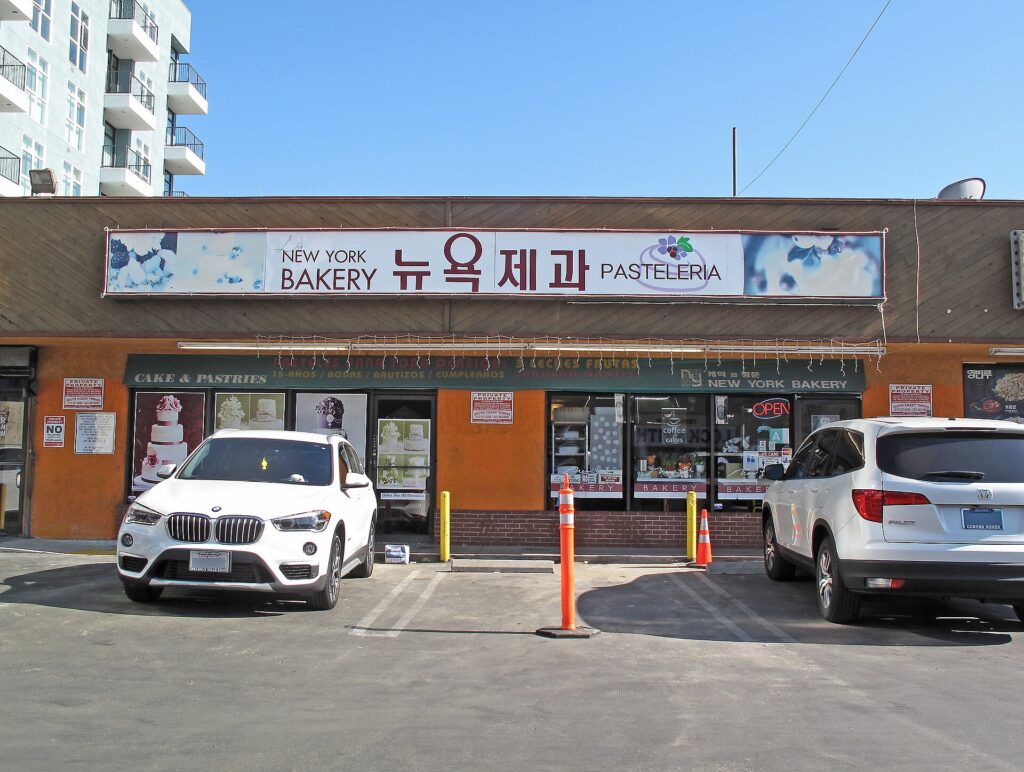
Walking between them you will see Korean, English and Spanish signs side by side, a good reminder of how mixed the neighborhood is.
Getting to Koreatown
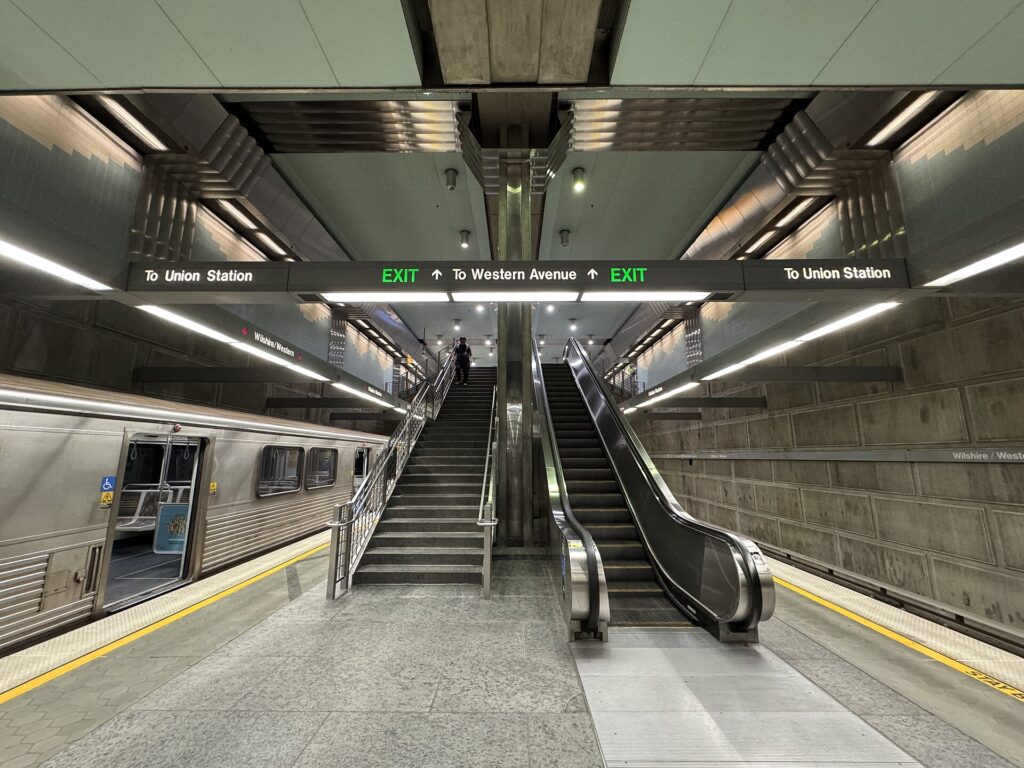
Koreatown has some of the best rail access in Los Angeles. The Metro D Line runs beneath Wilshire Boulevard with three stations in the neighborhood:
- Wilshire/Vermont: the eastern edge, closest to Park’s BBQ, Soowon Galbi and the Vermont Avenue restaurants. It is also a B Line station, so you can transfer here for Hollywood.
- Wilshire/Normandie: the middle of the neighborhood, a short walk from 6th Street, 8th Street and The LINE.
- Wilshire/Western: right next to the Wiltern, Madang and the Western Avenue restaurant row.
Since May 8, 2026, the D Line also continues west from Wilshire/Western to new stations at Wilshire/La Brea, Wilshire/Fairfax (near LACMA and the museums of Museum Row) and Wilshire/La Cienega, so you can now ride from Koreatown to the edge of Beverly Hills by subway. In the other direction, the D Line runs to Downtown and Union Station, which makes it easy to pair Koreatown with Little Tokyo or Chinatown on the same day.
If you would rather not drive or navigate transit, Koreatown fits neatly into a full-day sightseeing loop of the city; the One Day in LA tour is one way to cover the major neighborhoods with hotel pickup.
Parking in Koreatown
Parking is the hardest part of a Koreatown evening. Street spaces are scarce, many residential blocks require permits, and meter and street-sweeping signs are strictly enforced, so read every sign before you leave the car. Most restaurants either offer valet (usually for a small fee, sometimes cash only) or share a validated lot or garage with the rest of their mall. Larger malls such as Koreatown Plaza and Madang have their own garages. On weekend nights, the Metro or a rideshare is often faster.
Safety Tips for Visiting Koreatown
Koreatown is busy until late, and the main restaurant streets are full of people most evenings. The usual big-city habits apply:
- Never leave bags, phones or shopping visible in a parked car, even for a few minutes. Car break-ins are the most common problem visitors face anywhere in Los Angeles.
- Stick to the lit, busy commercial streets (Wilshire, 6th, 8th, Vermont and Western) late at night, and use valet or a staffed lot when you can.
- Keep an eye on your phone and wallet in crowded bars and on Metro platforms.
- Plan your ride home before the soju starts. Rideshare pickups are easy along the main streets, and Metro trains run less often late at night.
If you want to see Koreatown alongside Hollywood, Beverly Hills and the coast without worrying about parking at all, a private SUV tour with a local driver can build a lunch stop in the neighborhood into the day.
Koreatown Los Angeles: FAQ
Where exactly is Koreatown in Los Angeles?
Koreatown is in central Los Angeles, a few miles west of Downtown. The city’s official boundaries are roughly Vermont Avenue, Western Avenue, Third Street and Olympic Boulevard, with Wilshire Boulevard running through the middle.
Which Metro stations serve Koreatown?
The D Line stops at Wilshire/Vermont, Wilshire/Normandie and Wilshire/Western. Wilshire/Vermont is also on the B Line to Hollywood, and since May 2026 the D Line continues west to Wilshire/La Brea, Wilshire/Fairfax and Wilshire/La Cienega.
What are the best-known Korean BBQ restaurants in Koreatown?
Park’s BBQ and Soowon Galbi on Vermont Avenue, Baekjeong on 8th Street and Quarters Korean BBQ in Chapman Plaza are four of the most established. Weekend evenings are busy at all of them, so go early or check for reservations.
Is Wi Spa open 24 hours?
Yes. Wi Spa at 2700 Wilshire Blvd. lists itself as open 24 hours a day, seven days a week, with separate men’s and women’s floors and a co-ed jjimjilbang area where guests wear spa-issued clothing. Overnight stays carry an additional fee.