
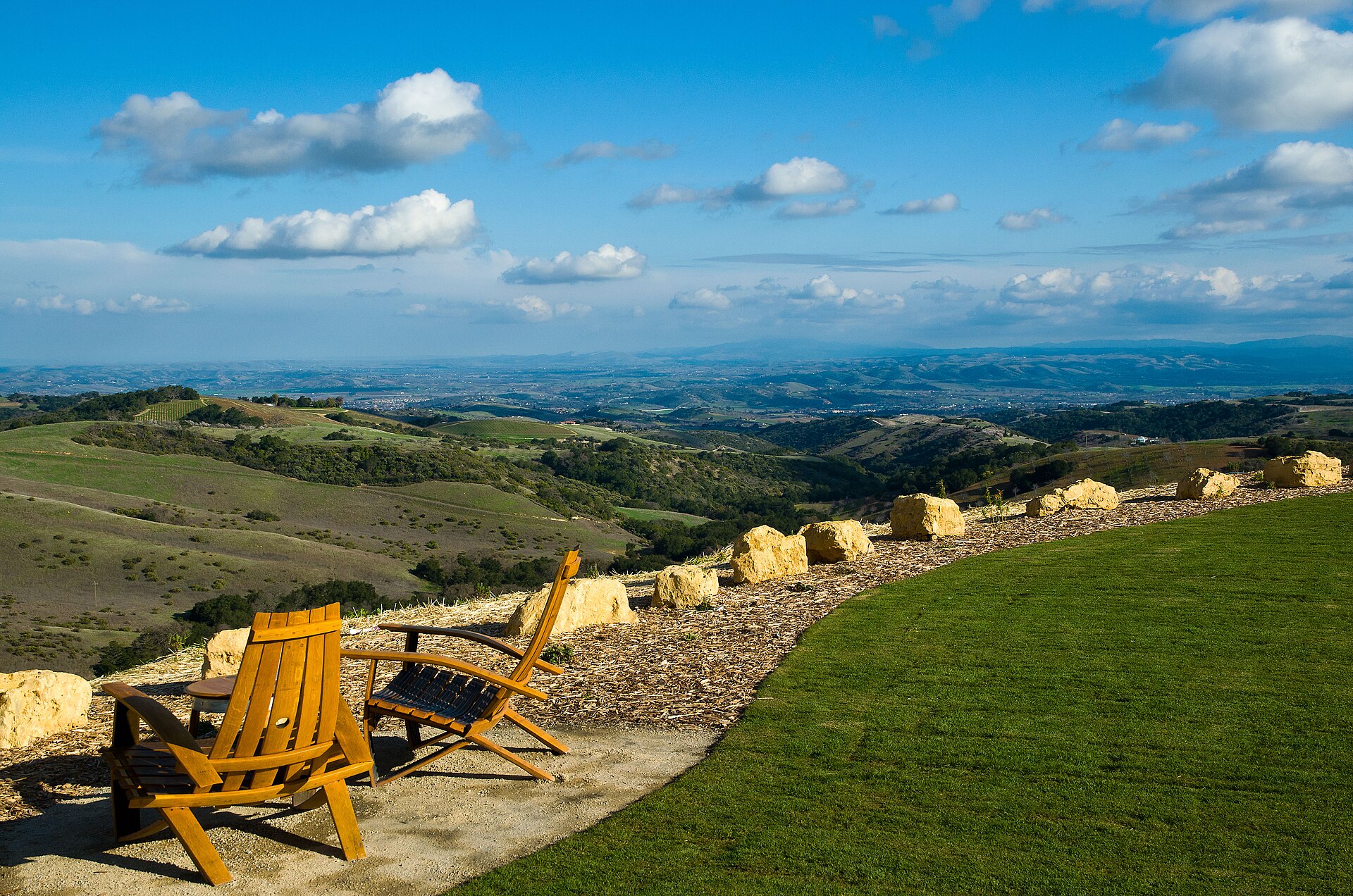
Paso Robles sits on US-101 in northern San Luis Obispo County, roughly halfway between Los Angeles and San Francisco. With more than 200 wineries, it is one of the largest and most varied wine regions in California. Its range runs from Westside hilltop estates with views to the Pacific to family tasting rooms in a historic schoolhouse and a walkable downtown built around a century-old park.
This guide to Paso Robles wineries for 2027 covers how the region is laid out, 16 wineries that were open to visitors in November 2026, the downtown and Tin City tasting rooms, a few things to do besides wine, and how to fit it all into a day or a weekend from Los Angeles. Tasting hours, fees and reservation rules change often, so check before you go.
Paso Robles Wine Country at a Glance
The Paso Robles American Viticultural Area (AVA) was established in 1983. In 2014 federal regulators approved 11 smaller districts inside it: Adelaida District, Creston District, El Pomar District, Paso Robles Estrella District, Paso Robles Geneseo District, Paso Robles Highlands District, Paso Robles Willow Creek District, San Juan Creek, San Miguel District, Santa Margarita Ranch and Templeton Gap District. Wine labels often name these districts, and they help explain why two wineries a few miles apart can make very different wines.
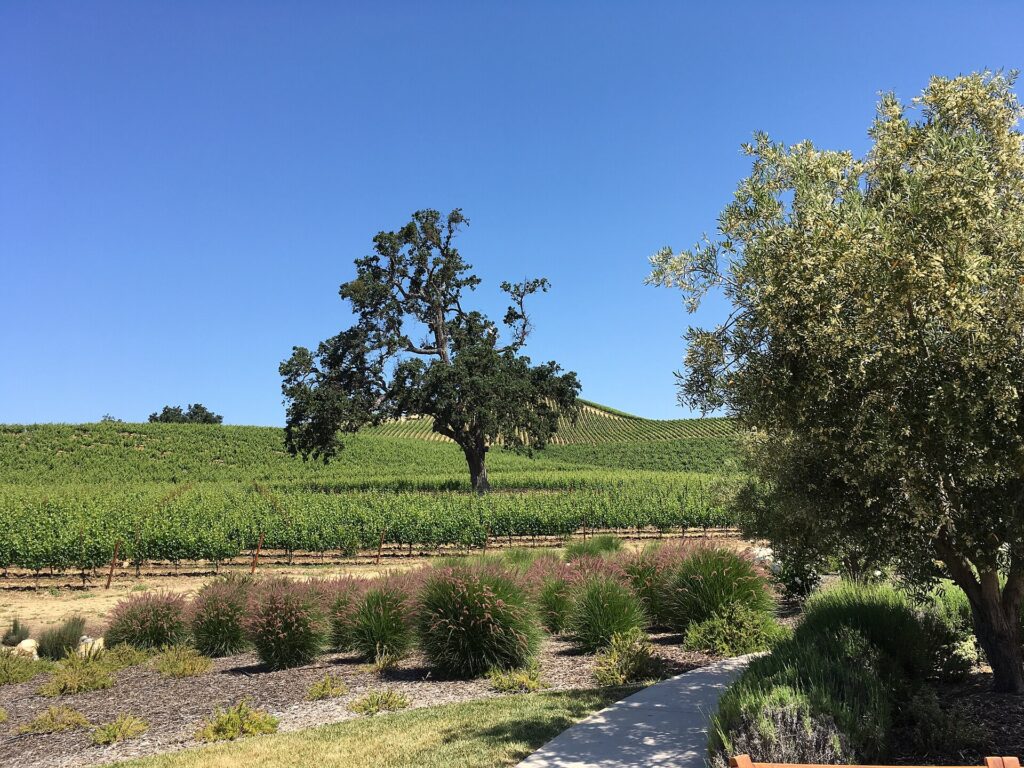
According to the Paso Robles Wine Country Alliance, the AVA covers more than 40,000 vineyard acres. The climate is Mediterranean, with warm days and cool evenings, and in several districts the difference between the daytime high and the overnight low is unusually large. Many Westside districts, especially Adelaida and Willow Creek, have calcareous (limestone-rich) soils, which local growers prize.
Westside vs Eastside
Locals divide the region along US-101. The Westside, reached by Highway 46 West and winding roads like Adelaida Road, Vineyard Drive and Peachy Canyon Road, is hillier and higher, with cooler air coming in from the ocean through the Templeton Gap. Its wineries tend to be smaller, and the drives between them are slower and more scenic. The Eastside, along Highway 46 East, is flatter, warmer and drier, with bigger estates and wineries closer together. Tablas Creek, one of the Westside’s best-known estates, has pointed out that north versus south can matter as much as east versus west, so treat the split as a rough guide rather than a rule.
What Paso Robles Grows: Cabernet, Rhône Varieties and Zinfandel
Cabernet Sauvignon is the most planted grape, at about 39 percent of vineyard acreage according to the Wine Country Alliance, followed by Merlot, Syrah and Zinfandel. Paso Robles is also known nationally for Rhône varieties such as Syrah, Grenache, Mourvèdre, Roussanne and Viognier, along with blends of them. Zinfandel has the deepest roots. Andrew York planted some of the area’s earliest Zinfandel vines in the 1880s, and the pianist Ignace Paderewski planted Zinfandel near Templeton in the early 1920s.
16 of the Best Wineries in Paso Robles
Each of these was open to visitors in November 2026. Most now book tastings online, usually through Tock, and several take reservations only. Weekends and harvest season (roughly August to October) book up first.
Westside Wineries
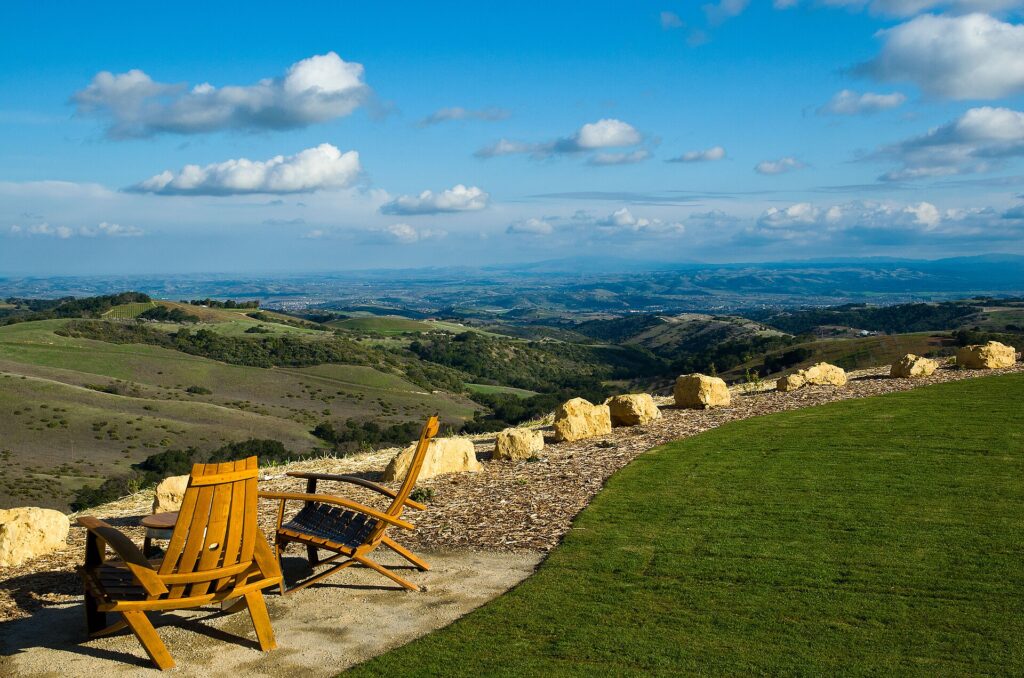
- DAOU Family Estates (2777 Hidden Mountain Road). This hilltop estate in the Adelaida District is known for Cabernet Sauvignon and has sweeping views over the surrounding hills. Seated tastings are by reservation only, with no walk-ins.
- JUSTIN Vineyards & Winery (11680 Chimney Rock Road). JUSTIN is best known for ISOSCELES, its flagship red blend. The estate offers patio tastings, cave and vineyard tours, and the JUST Inn. The Restaurant at JUSTIN holds one Michelin star and serves dinner Thursday to Sunday. Tastings are by reservation, and JUSTIN recommends booking on weekends.
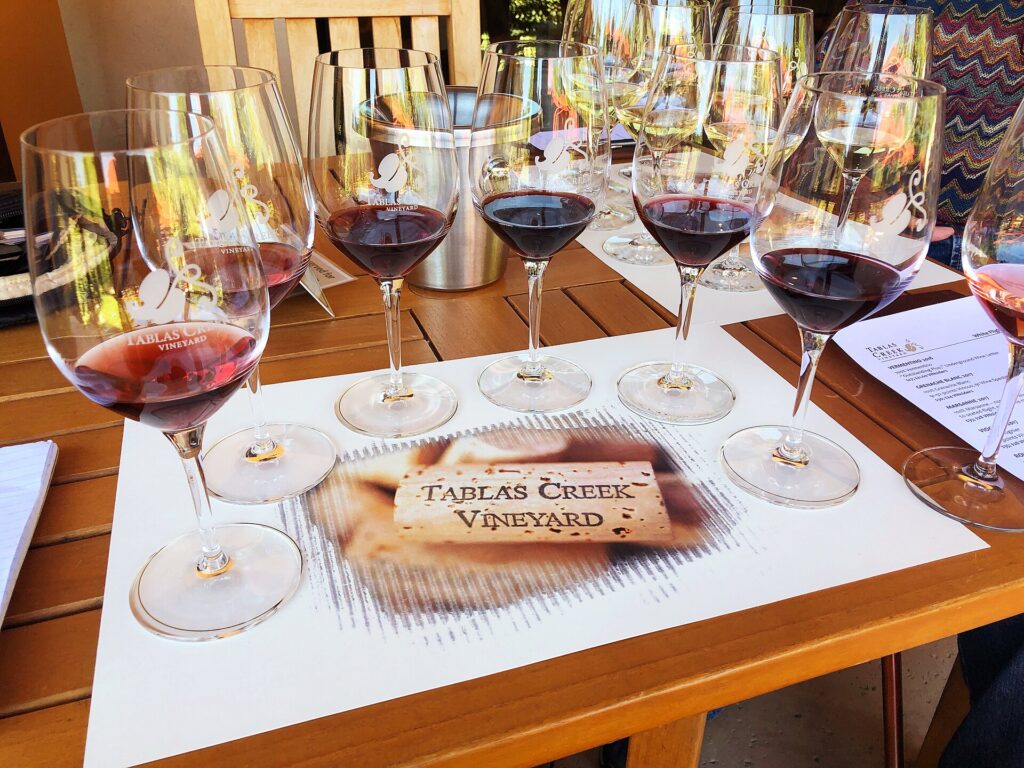
- Tablas Creek Vineyard (9339 Adelaida Road). The Perrin family of Château de Beaucastel and importer Robert Haas formed this partnership in 1987. They bought the land in 1989 and brought vine cuttings over from France in 1990. Tablas Creek is a Rhône specialist and the world’s first Regenerative Organic Certified vineyard. Seated tastings run daily. Booking is advised, though walk-ins are seated when there is room.
- Halter Ranch (8910 Adelaida Road). This 2,500-acre estate of vineyards, olive and walnut groves and wild land has what it describes as the largest wine caves on the Central Coast. Visitors can take a winery and cave tour, ride a Defender through the property, have lunch, and stroll under the Ancestor Tree.
- Adelaida Vineyards & Winery (5805 Adelaida Road). Adelaida has been making mountain-grown wines since 1981 and farms organically. It is open Wednesday to Monday and books tastings through Tock.
- L’Aventure (2815 Live Oak Road). Winemaker Stephan Asseo is known for unconventional blends. Tastings are personalized and by reservation only.
- Booker Vineyard (2644 Anderson Road). Booker is a small Westside producer of organically farmed Rhône blends, many of which sell out to its wine club. Visits are by appointment only.
- Linne Calodo (3030 Vineyard Drive). Founder Matt Trevisan was an early champion of Rhône-style blends in Paso Robles. Book your visit ahead.
- Calcareous Vineyard (3430 Peachy Canyon Road). The estate’s highest point is 1,800 feet up, with views across Paso Robles. It serves lunch daily alongside tastings, and reservations are encouraged.
- Epoch Estate Wines (7505 York Mountain Road, Templeton). In 2010 Epoch bought and began restoring the original York Mountain Winery, which Andrew York started in the 1880s. The tasting room is open daily by appointment.
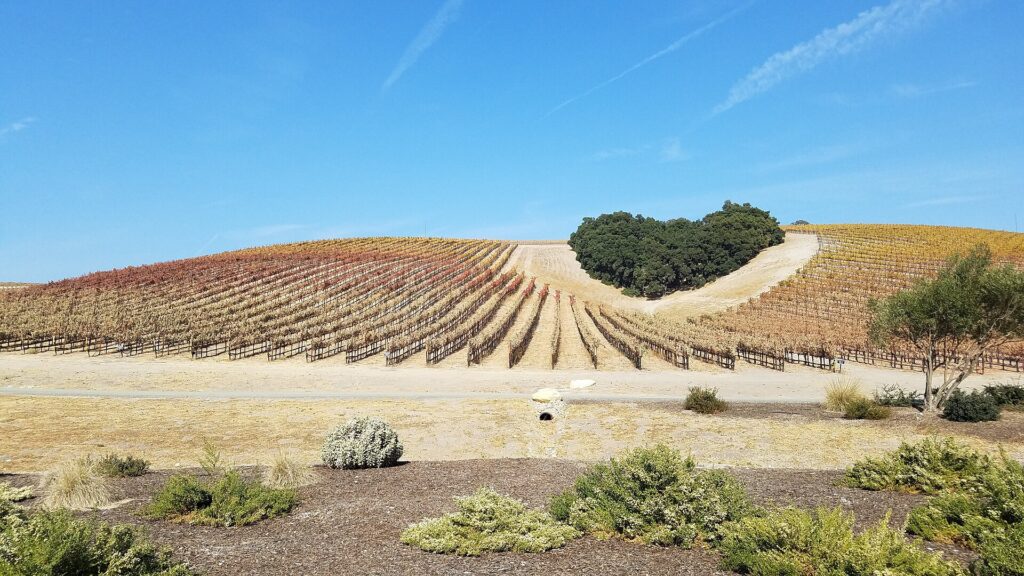
- Niner Wine Estates (2400 Highway 46 West). Niner is known for Heart Hill, a vineyard slope with a natural heart-shaped stand of oaks, and for a seasonal lunch menu that uses produce from its own garden. Its buildings are LEED-certified and the estate runs on solar power. Niner takes reservations and also accepts walk-ins.
- Peachy Canyon Winery (1480 N. Bethel Road, Templeton). A family-run winery since 1988, Peachy Canyon pours its estate Zinfandels in the historic Old Bethel Schoolhouse. Reservations are recommended but not required.
- Opolo Vineyards (7110 Vineyard Drive). Opolo is best known for Zinfandel and Cabernet Sauvignon. It also makes spirits and has a relaxed, social tasting room, and reservations are recommended.
Eastside Wineries
- Eberle Winery (3810 Highway 46 East). Gary Eberle, often called a pioneer of the Paso Robles wine region, released his first Eberle wine, a 1979 Cabernet Sauvignon. Below the tasting room are about 16,000 square feet of underground caves. Free public cave tours run at set times each day, but space for walk-ins is not guaranteed.
- Sculpterra Winery (5015 Linne Road). Sculpterra pairs its wines with a sculpture garden of bronze and granite works by John Jagger, including a 16-foot bronze horse. On Friday, Saturday and Sunday there is live music and food trucks. Book through Tock.
- Vina Robles (1650 Ramada Drive, Suite 140). In February 2025 Vina Robles closed its old Mill Road tasting room and moved into a 20,000-square-foot space that now also houses The Eatery. It is open daily, and reservations are recommended.
Paso Robles Wine Tasting Downtown and in Tin City
Downtown City Park
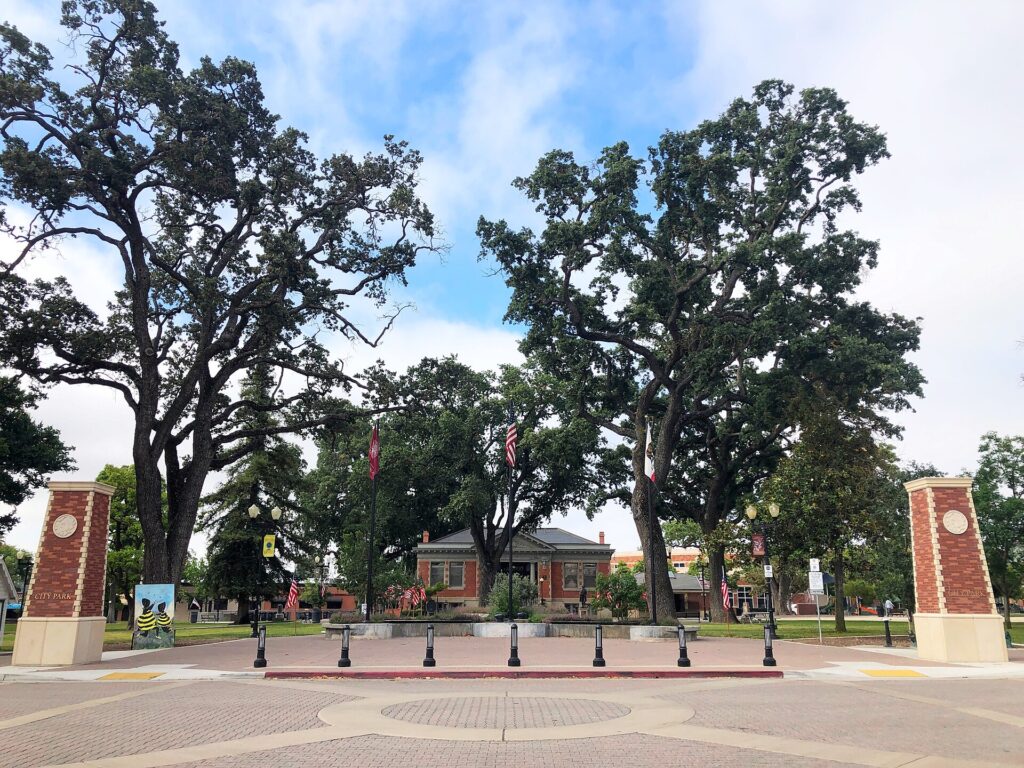
If you would rather walk than drive between tastings, start downtown. The five-acre Downtown City Park, between Spring and Park streets at 12th Street, was laid out around 1890 on land donated by town founders James and Daniel Blackburn. Around it are about 20 tasting rooms, including JUSTIN Downtown, along with restaurants and shops. Visit Paso Robles maps them on its Downtown Paso Winery Trail.
In the middle of the park stands the Carnegie Library, built with a 1906 grant from the Carnegie Foundation and listed on the National Register of Historic Places. It now houses the Paso Robles History Museum, run by the El Paso de Robles Area Historical Society, which is open Thursday to Sunday. The park also hosts the farmers’ market, free summer Thursday concerts, and Art in the Park every April and November. Good stops between tastings include Negranti Creamery for sheep’s milk ice cream, Pasolivo for olive oil tasting, and Les Petites Canailles, which is recommended by the Michelin Guide.
Tin City
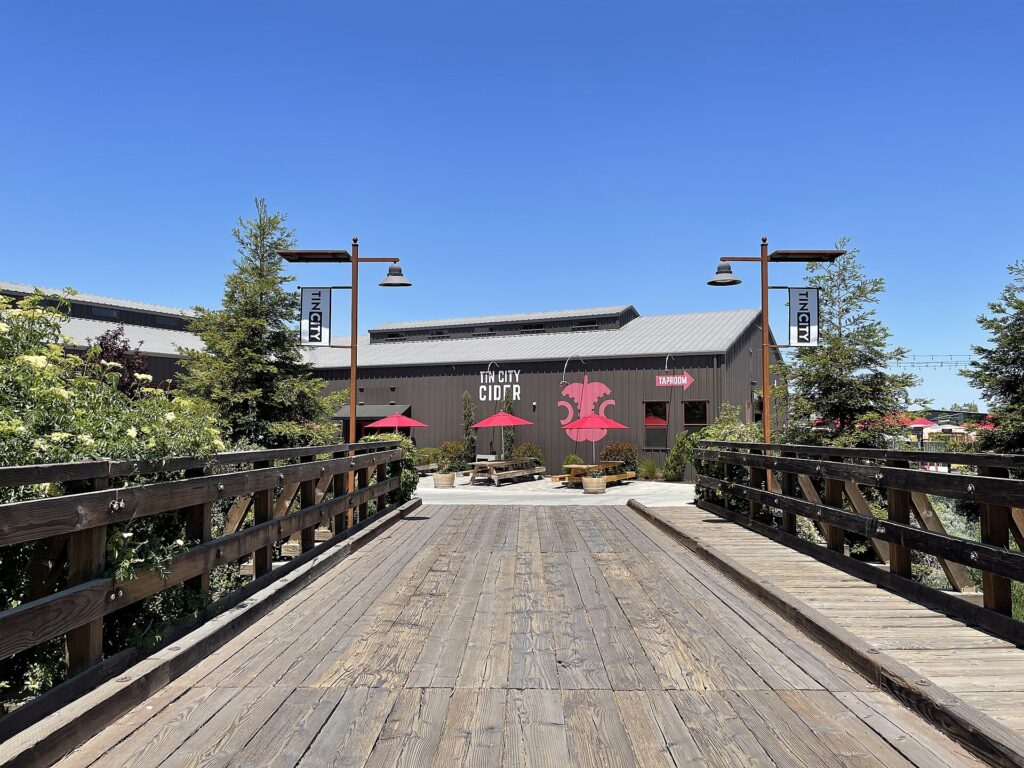
Tin City is an industrial park on the south side of town, off Marquita Avenue, Blue Rock Road, Limestone Way and Ruth Way. It has more than 40 small producers, including over 25 wineries, a brewery and a distillery. You will also find small-batch ice cream, a pasta factory and Six Test Kitchen, a 12-seat tasting-counter restaurant that became the county’s first with a Michelin star. The tasting rooms are close enough to walk between, which is not the case on the Westside. Tin City is a short drive from downtown, not a walk.
Things to Do in Paso Robles Beyond Wine
- Sensorio (4380 Highway 46 East). This outdoor art park is best known for Bruce Munro’s Field of Light, about 58,800 fiber-optic-lit spheres spread over 15 acres of hillside. Other works include Light Towers, built from more than 17,000 wine bottles, and Fireflies. Sensorio is open year-round on a seasonal evening schedule. In November and December 2026 that means Thursday to Sunday evenings plus some holiday weeknights. Tickets are timed, and the venue closes in bad weather, so check the calendar.
- Hearst Castle (750 Hearst Castle Road, San Simeon). William Randolph Hearst’s hilltop estate is about an hour west of Paso Robles, roughly 45 to 50 miles via Highway 46 West and Highway 1. In late 2026 it was open for guided tours, including the Grand Rooms, Upstairs Suites and Cottages & Kitchen. Book through ReserveCalifornia. The drive over the hills on Highway 46 West is a pleasure in its own right.
- Paso Robles History Museum. Inside the Carnegie Library in City Park, it covers local history and is an easy half-hour stop between downtown tastings. Check its limited opening days.
Getting to Paso Robles From Los Angeles
Paso Robles is about 210 miles north of LAX on US-101. Plan on 3.5 to 4 hours of driving, and longer if you leave LA at rush hour. Take the Spring Street exit for downtown, or exit at Highway 46 for the East and Westside wineries. The nearest commercial airport is San Luis Obispo County Regional (SBP), about 32 miles south.
That distance makes Paso Robles a long day trip from Los Angeles and a more comfortable overnight. If you only have a day, the Santa Ynez Valley is considerably closer to LA and has its own excellent wineries. See our guide to Santa Ynez.
A Stop Between LA and San Francisco
Paso Robles sits almost exactly halfway between Los Angeles and San Francisco, so it works well as a detour on a drive up the coast. From town, Highway 46 West takes you over the hills to Cambria and Highway 1, and from there north past Hearst Castle to Big Sur. For route ideas, see our guide to planning a private road trip from Los Angeles to San Francisco. If you want someone else to handle the driving, our three-day LA to San Francisco tour follows the Central Coast through Santa Barbara, the Santa Ynez Valley, San Luis Obispo, Morro Bay, San Simeon, Big Sur and Carmel in a luxury SUV with a private guide-driver. The route can be customized.
A Sample Day of Paso Robles Wine Tasting
Three wineries plus lunch is a comfortable day. Four is the practical limit if you want to enjoy the last one. Book every stop ahead.
- 10:00 a.m. Start with Rhône wines at Tablas Creek on Adelaida Road.
- 12:00 p.m. Taste and have lunch at Halter Ranch, which is just down the road, and add the cave tour if you have time.
- 2:30 p.m. Drive to DAOU for Cabernet and the view, or to L’Aventure on Live Oak Road. Both require reservations.
- 5:00 p.m. Head back to town, walk City Park and stop at a downtown tasting room or two.
- Evening. Have dinner downtown, or on an open night drive out to Sensorio for Field of Light after dark.
For an Eastside day, swap in Eberle (time it to a cave tour), Sculpterra and Vina Robles. For a day with no driving between stops, spend the afternoon on foot in Tin City or downtown.
Tips for Visiting Paso Robles Wineries
- Plan a designated driver. Westside wineries are spread out along narrow, winding country roads. Choose a sober driver before the first pour, or hire a car and driver for the day.
- Reserve ahead. DAOU, L’Aventure, Booker and Epoch are by appointment only, and most others prefer bookings, especially on weekends.
- Expect tasting fees. Most wineries charge a per-person fee. Many waive it with a bottle purchase or for club members.
- Check holiday closures. Many tasting rooms close on Thanksgiving, Christmas and New Year’s Day. Adelaida is closed on Tuesdays.
- Bring layers. Westside hilltops can be breezy and much cooler in the late afternoon than the valley floor.
Paso Robles Wineries: FAQ
How many wineries are in Paso Robles?
The Paso Robles Wine Country Alliance counts more than 200 wineries in the Paso Robles AVA. That includes about 20 tasting rooms around downtown City Park and more than 25 wineries in Tin City.
Do you need reservations for Paso Robles wine tasting?
Often, yes. DAOU, L’Aventure, Booker Vineyard and Epoch take visitors by appointment only. Tablas Creek, Niner and Peachy Canyon accept walk-ins when there is room, but they still recommend booking, especially on weekends.
How far is Paso Robles from Los Angeles?
Paso Robles is about 210 miles from LAX via US-101, typically 3.5 to 4 hours by car depending on traffic. San Francisco is about the same distance to the north.
What wine is Paso Robles known for?
Cabernet Sauvignon is the most widely planted grape, and Paso Robles is equally known for Rhône varieties such as Syrah, Grenache and Mourvèdre. Zinfandel has been grown in the area since the 1880s.